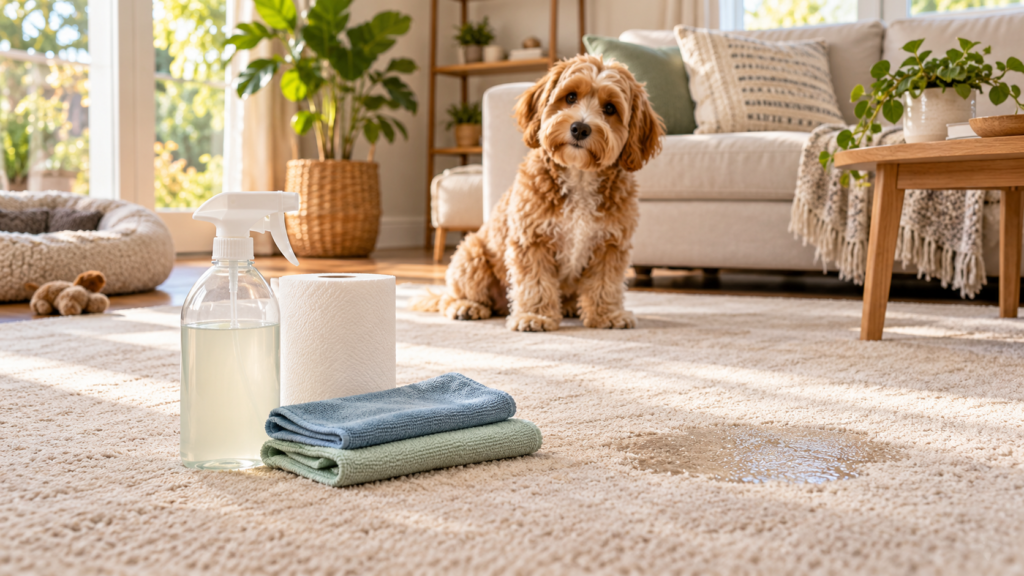
When your dog has an accident, ordinary cleaning may remove the visible spot without fully addressing odor deeper in an absorbent surface. You might clean the spot until it looks spotless, only for the smell to return days later—or for your dog to return to the exact same spot.
That is where an enzyme cleaner for dog urine comes in. Rather than just masking smells with heavy perfume or lifting surface dirt, enzyme-based and bacteria-based cleaners help break down the organic urine residues that cause persistent odors.
In this guide, you will learn how an enzymatic cleaner for dog urine works, how to pick the right formula for your floors, a simple five-step method for using it safely, and what to do when an odor persists.
Quick Summary: What Enzyme Cleaners Do (and Don’t Do)
- What they do: Enzyme-based and bacteria-based pet cleaners can help break down odor-causing organic residues from urine. Their effectiveness depends on the formula, the surface, and whether the cleaner reaches the affected material.
- What they don’t do: Ordinary pet cleaners are not substitutes for authorized disinfectants designed to kill germs, and they cannot reliably fix physical damage like deep wood discoloration or urine-soaked carpet padding.
- The Golden Rule: Always check the bottle label for surface safety, follow the specific application and dwell directions, and keep pets away until the treated area is completely dry (or longer if the label instructs).
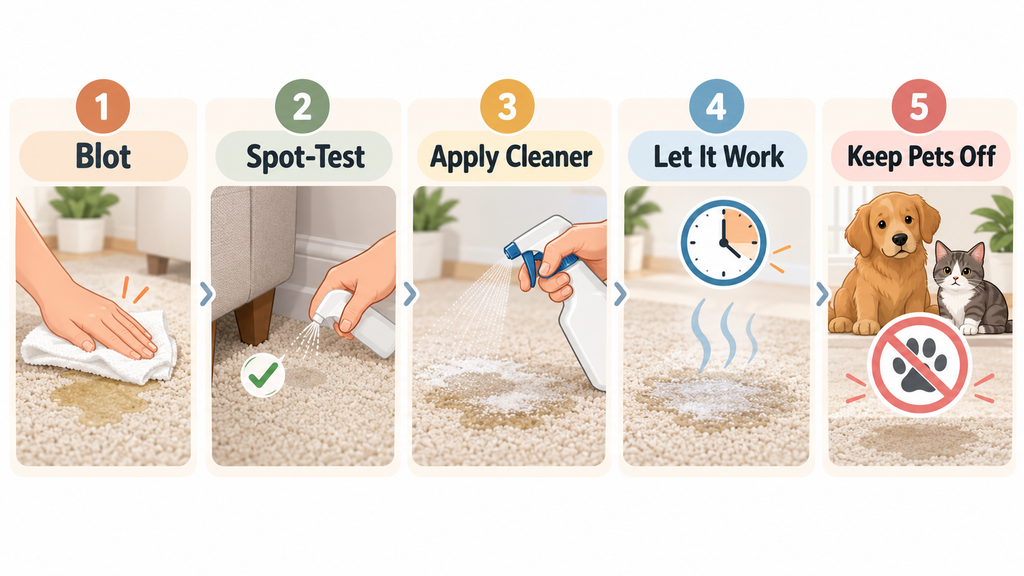
5 Steps to Use an Enzyme Cleaner Correctly
Before applying any liquid, check both the material’s care instructions and the cleaner label. Wool, silk, specialty rugs, leather, and water-sensitive finishes may exclude a formula or need specialist care. Do not apply a water-based urine cleaner to S- or X-coded upholstery unless the furniture maker explicitly permits it. For a compatible surface, use these five steps:
- Blot Up Fresh Urine Immediately
Use paper towels or clean cloth towels to blot up as much liquid as possible. Press down firmly to absorb the urine. Avoid vigorous scrubbing, which can spread the affected area or damage delicate carpet fibers. - Check the Label and Spot-Test
Confirm that your cleaner is approved for the surface you are treating (such as synthetic carpet, tile, or sealed hardwood). Always test a small, hidden area first to check for colorfastness or finish dulling. - Apply the Cleaner According to the Label
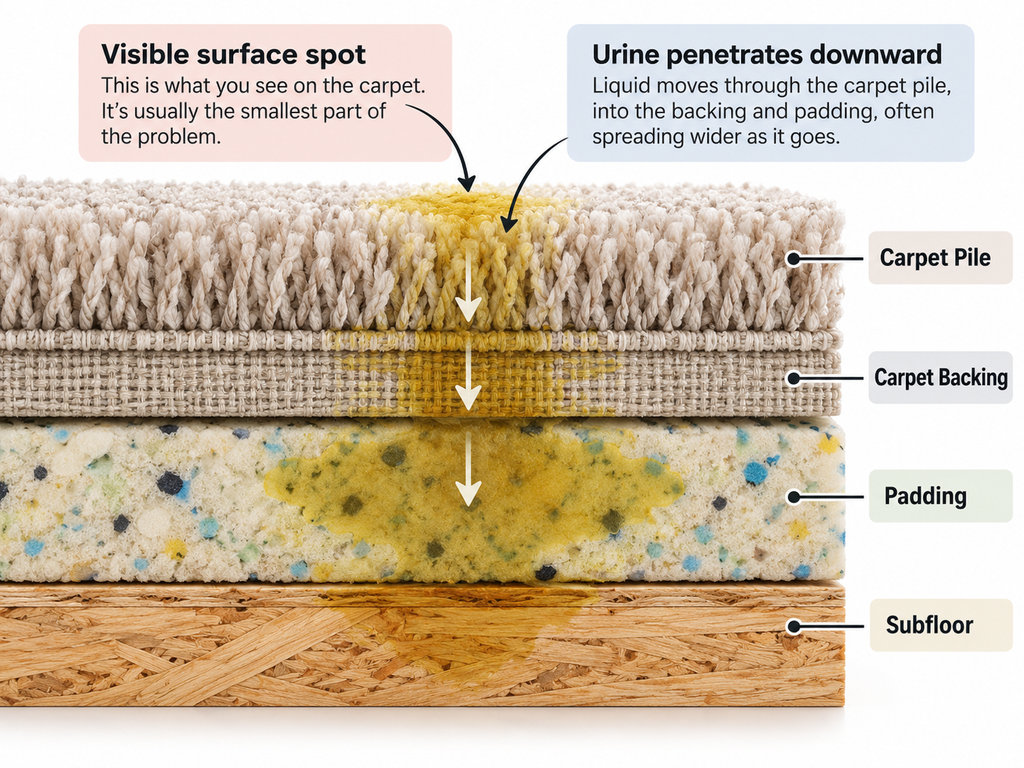
Treat the affected area with the quantity and method specified for that surface. On carpet, consider whether urine has penetrated beyond the pile into the backing or padding; deeper contamination may require a different treatment procedure. Do not flood wood, laminate seams, or upholstery. - Allow the Instructed Contact Time and Finish as Directed
Some products instruct you to blot or extract liquid after a set dwell period; others tell you to leave an odor-treated area to air-dry naturally. Follow the product’s instructions for stain removal or odor removal, whichever applies. - Keep Pets Off Until Fully Dry
Keep dogs, cats, and children away from the treated area until it is completely dry. Ingestion of wet enzyme formulas can cause stomach upset per guidance from the ASPCA Animal Poison Control Center. Once dry, vacuum carpets to restore pile texture, or wipe hard floors if recommended by the label.
How to Choose the Right Cleaner: Label Buying Checklist
Not all pet stain removers are formulated identically. Finding the best enzyme cleaner for dog urine comes down to reviewing five key features on the bottle label or manufacturer’s product page:
1. Surface Approval & Exclusions
Always verify what materials the product is approved for:
- Carpets & Rugs: When choosing an enzymatic cleaner for carpet, ensure safety for synthetic fibers. Some cleaners are unsuitable for wool, silk, or specialty rugs; verify both the rug manufacturer’s guidance and the cleaner label.
- Hardwood, Laminate & Engineered Flooring: Look for formulas explicitly labeled safe for sealed hard floors. Avoid unsealed wood or damaged finishes.
- Leather & Upholstery: Confirm that both the fabric care tag and the cleaner label permit treatment.
2. Formula Type: Enzymes, Bacteria, or Both
Some pet urine cleaners contain added enzymes, some rely on selected bacteria, and some use blends. Choosing an enzyme based cleaner for dog urine helps target organic waste in a deposit, while beneficial bacteria produce fresh enzymes on-site. The formula category alone does not establish how quickly or thoroughly a product will remove odor, and neither approach guarantees success if the cleaner cannot reach the source of contamination. Always choose a product explicitly intended for pet urine and your specific surface.
3. Scent Preference
Choose an unscented or lightly scented product according to household preference and sensitivity. Fragrance alone does not remove urine residue, though a scented product can still contain effective cleaning ingredients. Heavily scented products may cover smells temporarily, but some pets and people are sensitive to strong fragrances.
4. Format and Application Options
Select a format suited to your cleaning needs:
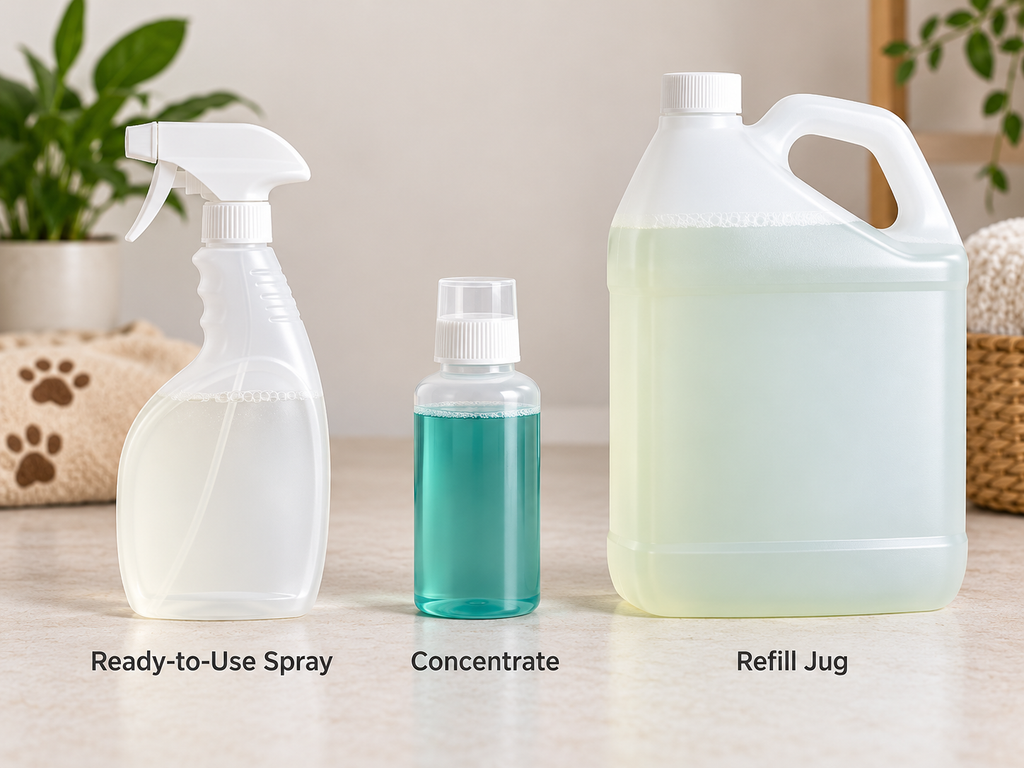
- Ready-to-Use (RTU) Trigger Sprays: An enzyme spray for dog urine is best for immediate spot cleaning on carpets or upholstery. Adjustable nozzles with stream settings help target carpet pile, while foam settings help cling to vertical surfaces.
- Liquid Concentrates: Using an enzyme floor cleaner for dog urine in concentrate form may cost less per use, depending on price, required dilution, coverage, and waste. Compare the cost of the ready-to-use amount needed for the job, not bottle size alone. Confirm compatibility with the exact tile or vinyl product and dilute strictly according to bottle directions.
- Bulk Refill Jugs: Convenient for refilling spray bottles during puppy house-training or treating frequent accidents.
5. Clear Pet-Safety Directions
Look for a pet safe enzyme cleaner labeled suitable for homes with animals when used as directed. Even when a cleaner is marketed for homes with pets, follow all label precautions and keep animals away until dry—or longer if directed.
Surface Comparison Guide
Different household surfaces require different cleaning approaches. Use this quick comparison table to protect your home:
| Surface | Recommended Cleaning Approach | Key Warnings & Limitations |
|---|---|---|
| Carpet & Rugs | Blot fresh urine. When applying an enzymatic cleaner for dog urine on carpet, follow the label’s specific instructions. If odor comes from underlying padding or backing, a deeper treatment method may be necessary. | Avoid uncontrolled over-wetting. Follow product-specific directions for blotting, extraction, or air-drying; confirm compatibility with delicate fibers. (For step-by-step carpet emergency steps, see our guide on How to Get Dog Pee Out of Carpet). |
| Sealed Hardwood & Laminate | Use a cleaner approved for sealed wood or laminate. Apply lightly as directed by the label, observe dwell time, and wipe completely dry. | Never soak or pool liquid on wood, engineered flooring, or laminate seams. Trapped moisture can warp boards, cause cupping, or cloud finishes. |
| Tile, Grout & Concrete | Use a product approved for the tile, grout, finish, or concrete surface. Treat the affected area according to the label, then allow it to dry as directed. | Porous or unsealed materials may retain contamination below the surface. Avoid assuming extra liquid alone will resolve deep odor. |
| Upholstery & Fabrics | Check fabric care tags (look for ‘W’ or ‘WS’ codes) and confirm the cleaner’s label permits upholstery use. Spot-test for colorfastness before treating. | Avoid soaking delicate cushion foam if it cannot dry thoroughly. Always follow both the furniture tag and product label. |
How Enzyme Cleaners Differ from Alternative Cleaners
Understanding your cleaning cabinet helps you choose the right product for the job:
- Enzyme & Bacteria Cleaners: Help break down organic urine components into simpler compounds, targeting the source of pet odors.
- Standard Detergents & Spot Removers: Use surfactants to lift surface dirt and pigments. Excellent for cosmetic spots, but may leave underlying organic residues behind.
- Odor Maskers: Cover bad smells with heavy fragrance. Once the fragrance fades, underlying urine odors may return if the residue remains.
- Disinfectants: Make specific germ-killing claims for the surfaces and uses on their labels. Many household disinfectants are intended for hard, non-porous surfaces; some products have authorized soft-surface or laundry uses. A soft-surface sanitizing claim is not the same as a disinfecting claim, and a hard-surface label does not authorize use on carpet or upholstery. In the U.S., products making disinfectant claims are regulated as pesticides under FIFRA per guidance from the U.S. Environmental Protection Agency (EPA). Ordinary enzyme pet cleaners should not be assumed to disinfect unless explicitly labeled and authorized for that purpose.
⚠️ Critical Safety Rule: Never Mix Household Chemicals
Never combine household cleaning products. In particular, do not apply bleach to urine or mix bleach with ammonia, vinegar, or other cleaners: These combinations can generate hazardous gases, including chloramines (from ammonia-containing substances like urine) or chlorine gas (from acids like vinegar), as detailed by Transport Canada. The CDC likewise warns against mixing household bleach with other cleaners. Use a pet urine cleaner by itself according to its label. Residues from incompatible chemicals may also interfere with enzyme- or bacteria-based formulas.
Why Does the Smell Persist? (Troubleshooting & Limits)
If an odor remains after cleaning, several factors may explain why:
- Premature Drying
Some formulas require a specified moist contact time; others direct natural air-drying. Follow the label rather than keeping every surface wet. Reapply only if the product and material instructions permit it, using the stated amount and interval. Do not add water, cover the area, or repeatedly soak carpet, foam, wood, or laminate to extend dwell time unless explicitly allowed. If backing or padding stays damp, stop adding liquid and seek professional advice. - Subsurface Saturation
When urine repeatedly saturates carpet, liquid soaks deep into the underlying pad and subfloor. Surface sprays cannot easily reach deep reservoirs. In severe cases, replacing the carpet pad and treating or sealing the subfloor is necessary. - Interfering Chemical Residues
If a previous cleaner was used first, check the directions for both products. Where the surface permits, remove residues using the approved rinse or extraction method and allow the material to dry before re-treatment. Avoid saturating wood floors, laminate seams, or upholstered cushions. - Wood Material Damage
An appropriate cleaner may reduce odor if it can reach the affected material, but it cannot reliably reverse deep discoloration or structural damage. Persistent staining or odor on hardwood may require professional evaluation, refinishing, or board replacement. - Unidentified Accident Spots
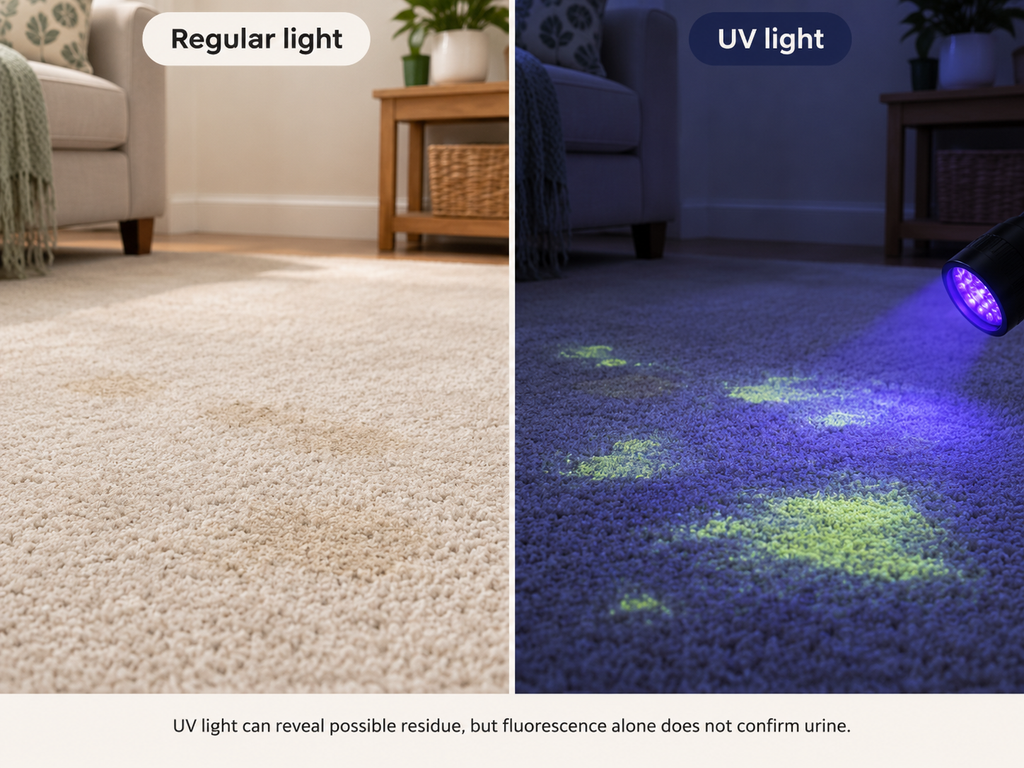
A UV flashlight can help you identify possible hidden accident areas, but many household substances fluoresce, and not every urine stain will glow clearly. Treat UV findings as helpful clues rather than definitive confirmation.
Frequently Asked Questions
Do enzyme cleaners kill germs or disinfect floors?
Ordinary enzyme-based urine cleaners are intended for stain and odor treatment, not for disinfection unless the particular product is also labeled and authorized for that use. Disinfection may be appropriate after urine or fecal contamination, during illness, or where people are especially vulnerable to infection. First remove the organic mess. Then use a disinfectant only if its label authorizes the surface and intended use, following contact time, rinsing, and pet re-entry directions. For absorbent textiles, follow the care label and use only an explicitly authorized textile treatment; do not apply a hard-surface disinfectant indiscriminately. Do not mix products or layer incompatible residues.
Can I mix an enzyme cleaner with vinegar or bleach for extra cleaning power?
No. Never mix household cleaning products. Bleach can release hazardous gases when combined with ammonia-containing residues, including urine, or acidic products such as vinegar. Use a pet urine cleaner on its own according to its label; incompatible cleaners may also interfere with enzyme- or bacteria-based formulas.
How long does an enzyme cleaner take to work?
Contact times vary by brand, surface, and stain depth. For example, some product labels specify 10 minutes for stain blotting, while others recommend longer dwell times or leaving odor treatments to air-dry naturally. Always follow the directions on your specific bottle.
Why might an old urine spot smell stronger when rewetted?
Rewetting dried contamination can make existing odors noticeable again. That does not establish that an enzyme cleaner is working. Reassess once the area is fully dry; if the odor remains, check whether the product reached the affected layer or whether another source was missed.
Sources & Label References
- U.S. Environmental Protection Agency (EPA): Determining If a Cleaning Product Is a Pesticide Under FIFRA: Clarifies distinctions between general cleaning claims and EPA-registered disinfectant claims.
- ASPCA Animal Poison Control Center: Poisonous Household Products: Notes potential stomach upset from pet cleaner ingestion and recommends keeping pets away until surfaces dry.
- Transport Canada: Improper Mixing of Common Household Cleaning Products: Explains hazardous gas formation risks (chloramines and chlorine gas) when combining bleach with ammonia or acids.
- U.S. Centers for Disease Control and Prevention (CDC): Cleaning and Disinfecting with Bleach: Warns against mixing bleach with ammonia, acids, or other household chemicals due to hazardous gas formation.
- Nature’s Miracle: Stain and Odor Remover for Dogs (Product Directions): Illustrates product-specific directions for stain blotting vs. odor treatment and pet re-entry guidelines.
- Rocco & Roxie Supply Co.: Stain & Odor Eliminator (Product Instructions): Illustrates variations in recommended dwell times and deep-treatment protocols across brands.