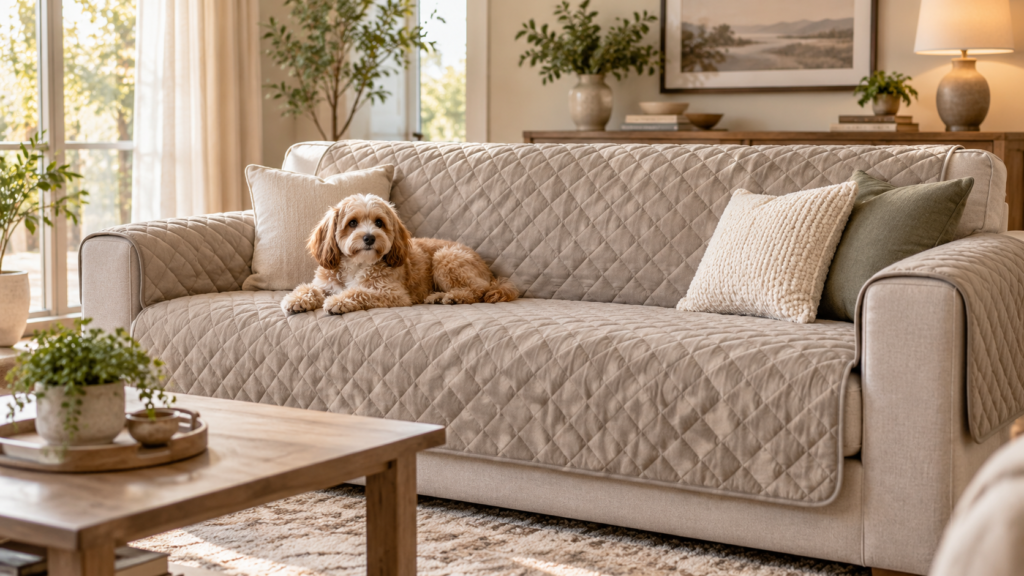
Sharing your living room with a dog often means balancing comfortable lounging against shedding hair, muddy paws, drool, and the occasional accidental spill. If you love your existing couch, replacing it isn’t necessary. If you’re looking for how to protect a couch from a dog, adding a well-fitted dog sofa cover helps protect your upholstery from daily wear while keeping your home looking clean and stylish.
The key to finding the best sofa covers for dogs—whether you need a full slipcover or a targeted sofa protector for dogs—is matching the cover style to your sofa’s shape and your dog’s daily habits. Here is how to find the right fit, fabric, and protection level for your home.
Which Dog Sofa Cover Fits Your Situation?
Before measuring or browsing fabrics, start with your primary household goal. Different cover designs solve different problems:
| Primary Household Need | Good Starting Option | Main Advantage | Key Tradeoff to Check |
|---|---|---|---|
| Shedding & everyday fur | Washable fitted panel protector or throw drape | Fast to put on and take off for frequent washing | Requires occasional re-tucking after heavy dog movement |
| Muddy paws & dirt | Quilted panel protector with seat and arm coverage | Solid defense for high-contact seating areas | Leaves lower sides and rear frame of sofa exposed |
| Accidents & puppy training | Washable cover with a continuous liquid-barrier backing | Reduces liquid penetration through covered fabric | Seams, gaps, and run-off at edges may still let liquid reach the sofa |
| Full-sofa appearance refresh | Fitted stretch slipcover | Encases most of the sofa frame for a clean, custom look | Takes more effort to remove and re-fit for laundering |
| L-shaped sectional or chaise | Modular multi-piece sectional cover set | Fits individual sofa runs and chaise modules cleanly | Requires careful measuring and overlap at corner joins |
| Digging, scratching, or clawing | Heavy-duty woven canvas or tightly woven microfiber cover | Higher resistance to claw snags and fabric pulling | Claws can still snag loose yarns; repeated digging damages seams; no cover is chew-proof |
1. Understanding the 5 Main Cover Types
Matching cover construction to your sofa shape prevents constant shifting and gaps in coverage.
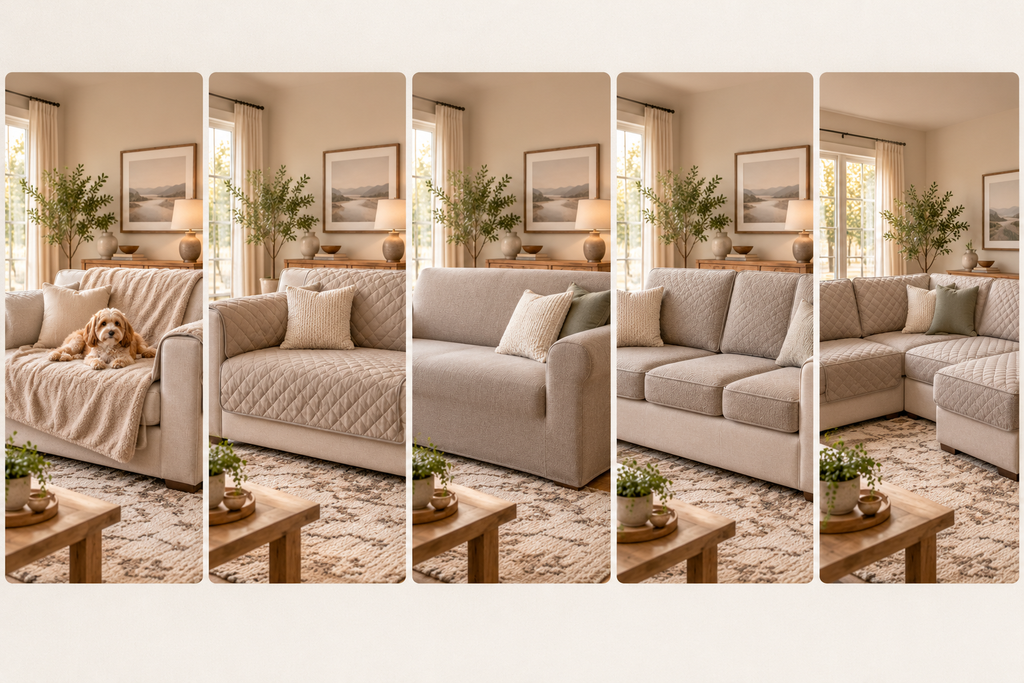
- Throws and Drapes: Blanket-style covers that drape over seat cushions, backrests, and armrests. They are extremely easy to remove and wash, making them ideal for protecting a dog’s favorite spot or for quick setup when guests arrive.
- Fitted Panel Protectors: Quilted fabric panels that lay over the main seating deck, backrest, and armrests while leaving the lower sides partially exposed. They use elastic back straps, non-slip backings, or foam rods wedged into cushion crevices to stay in place.
- Full Slipcovers: Encase most of the visible sofa frame and cushions for broad coverage. While buyers often look for a completely “dog-proof couch cover,” full slipcovers offer the closest fit, using either stretch or structured fabric.
- Stretch-Fit: Made from stretch-knit or elastic polyester-spandex fabrics (including some stretch jacquards) that contour closely around sofa curves.
- Structured Woven: Made from non-elastic canvas, twill, or linen, using ties or Velcro straps for a crisp, tailored look.
- Washable Cushion Overcovers: Removable protective covers sized to fit over the existing upholstery on individual seat or back cushions. They let you wash the protective layer without removing the sofa’s original casing. Check the seller’s dimensions and intended installation: some zippered products are replacement cushion casings, not protective overcovers, and may be made to fit a bare cushion insert. (Note: A zipper on your sofa’s original upholstery casing does not automatically mean the original fabric is machine washable.)
- Sectional and Chaise Covers: Sized specifically for L-shaped, U-shaped, or chaise sectionals. For a tailored fit, a sectional sofa dog cover usually consists of a multi-piece modular set sized for each individual sofa run or a cover designed for that exact layout.
2. How to Measure Your Sofa for a Protective Cover
Manufacturer sizing terms like “3-Seater” or “Extra Large” vary significantly between brands. Taking physical measurements with a flexible tape measure improves the chance of selecting the correct size.
Step 1: Measure Based on Your Cover Style
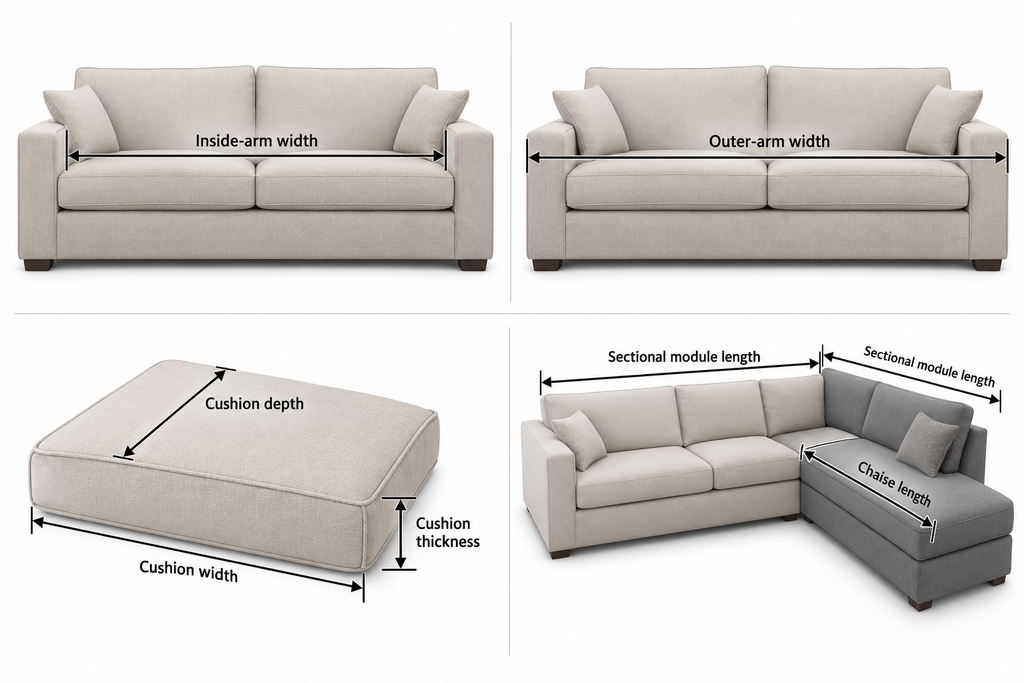
- For Fitted Panel Protectors: Measure the seating deck width (inside arm to inside arm), seat depth (front edge to backrest seam), backrest drape height, and armrest width and coverage depth.
- For Full Stretch Slipcovers: Record the exact dimensions specified in the seller’s measurement diagram—typically overall sofa width across the back (outer arm to outer arm), total height from floor to backrest top, and overall sofa depth.
- For Individual Cushion Covers: Measure each cushion’s width seam-to-seam, depth from front to back piping, and vertical thickness. Check whether the cover fabric stretches or requires an exact dimensional fit.
- For Sectionals and Chaises: Measure each module as an independent piece. For a chaise, measure full length from backrest to footrest end. Confirm chaise orientation (left-arm vs. right-arm facing) using the seller’s specific diagram, as terms vary by brand.
Step 2: Compare with the Seller’s Size Chart
Always check your measurements against the specific manufacturer’s dimension guide. Pay close attention to recommended armrest shapes (rolled versus square) and maximum fabric stretch limits. When buying sectional covers, ensure individual covers overlap generously at corner junctions to prevent gaps where fur and dirt collect.
3. Water-Resistant vs. Waterproof: What a Cover Can Actually Protect
When shopping for a waterproof sofa cover for dogs, understanding what fabric protection can and cannot do helps set realistic expectations for pet messes.
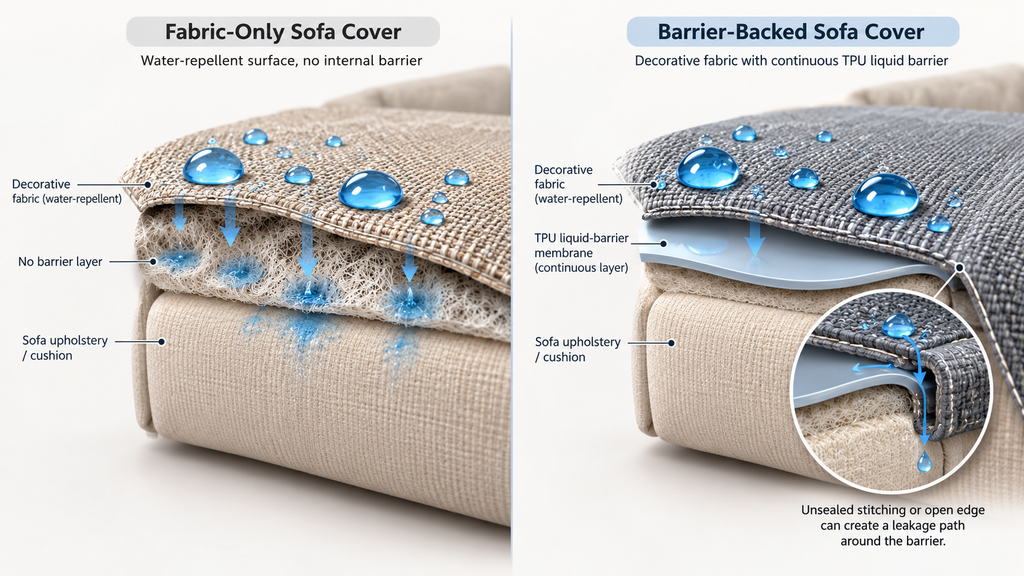
- Surface Water Repellency: A water-resistant coating causes light splashes, drool, or damp paws to bead up on the fabric surface so you can wipe them off quickly.
- Liquid-Barrier Backing: A continuous internal barrier—such as a thin Thermoplastic Polyurethane (TPU) membrane bonded beneath the top fabric—reduces liquid penetration through the covered seating area into your sofa cushions.
- Seam and Edge Leakage: Even if a cover uses a liquid-barrier backing, liquid can still seep through unsealed needle stitching on quilted designs, zipper tracks, or open perimeter edges if a spill is allowed to pool under body pressure. Clean up liquid spills promptly to prevent edge and seam leaks.
Independent Certifications & Chemical Claims
If chemical screening or fabric safety matters to you, check how sellers substantiate their claims:
- OEKO-TEX® STANDARD 100: The official STANDARD 100 overview describes testing against harmful-substance criteria. Check the certificate’s scope: a certified component is not necessarily certification of the entire cover. Verify the label or certificate number using the official OEKO-TEX® Label Check. This is not a test of waterproof performance, claw resistance, or safety if chewed.
- PFAS and Fluorine-Related Claims: Sellers may use terms such as “PFAS-free,” “fluorine-free,” or “no intentionally added PFAS,” but these claims do not necessarily mean the same thing. Check what the claim covers and what testing or supplier documentation supports it. “No intentionally added PFAS” does not rule out trace contamination. OEKO-TEX describes a total-fluorine limit in its official notice on fluorine screening; meeting a screening limit is not proof of absolute absence of every PFAS. Ask for the applicable certificate scope and any product-specific test method and reporting limit rather than treating a logo as an unrestricted “PFAS-free” guarantee.
4. Fabrics, Grip, and Cleaning Rules
Selecting the right textile and caring for it properly extends the life of both your cover and your underlying sofa. If you are searching for durable couch covers for dogs, pay close attention to weave tightness and fiber type:
Choosing the Right Fabric
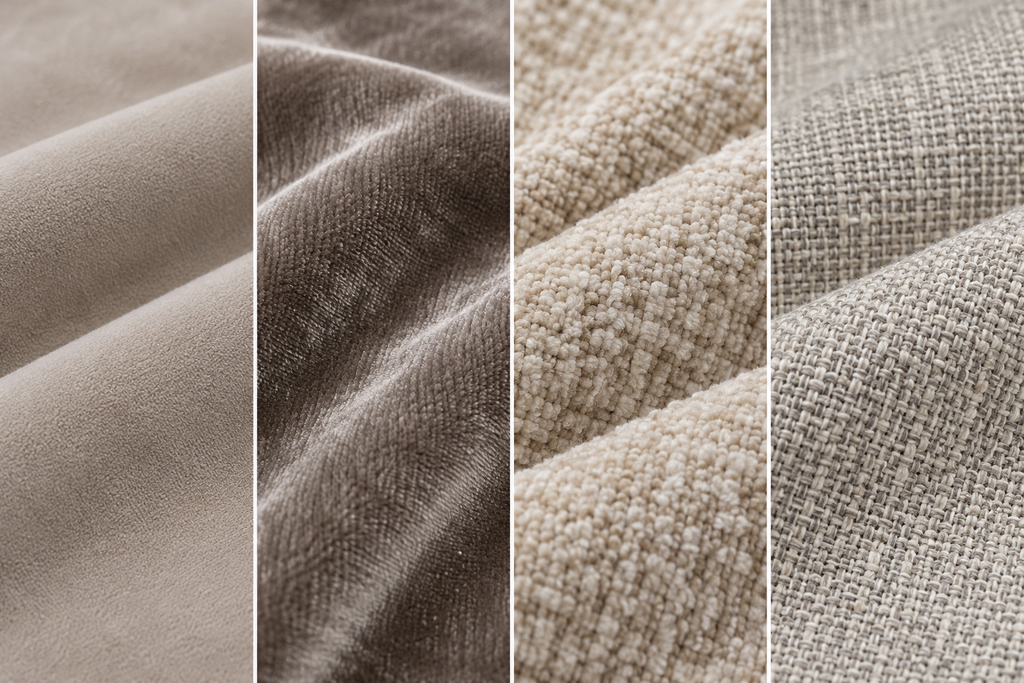
- Microfiber and Tightly Woven Fabrics: If you need an effective sofa cover for dog hair, smooth microfiber and tightly constructed weaves make it easy to vacuum or brush away fur. Examine the fabric surface for loose yarns, and check product durability details rather than relying on the fabric name alone.
- Velvet and Chenille: Offer a soft, plush feel and a cozy look, but some pile constructions can trap pet hair, show pressure marks, or snag under sharp claws.
- Cotton and Linen Covers: Provide a natural look and feel in woven designs, but check the product label for shrinkage, stretch limits, and washing restrictions.
Protecting the Sofa Underneath (Upholstery Care Codes)
Before spot-cleaning the underlying sofa or applying cleaning products, check the care tag on your couch frame. For fabric upholstery:
- Code W: Upholstery can be spot-cleaned with water-based cleaners. (Note: Code W applies to upholstery spot-cleaning and does not automatically authorize machine-washing original cushion casings.)
- Code S: Spot-clean only with water-free solvent cleaners. Water can leave permanent marks or ring stains.
- Code WS: Safe for either water-based or mild solvent cleaners.
- Code X: Vacuum or light brushing only. Do not apply liquid cleaners.
Let the cover dry completely before putting it back on the sofa. If its care instructions recommend damp re-fitting, first confirm this is also compatible with the underlying upholstery.
Laundry Guidelines
- Follow the Cover’s Sewn-In Label: Washing and drying instructions vary by product. Always follow the specific care tag attached to your cover.
- Wash Settings: Most washable covers benefit from cold or cool water on a gentle cycle using mild liquid detergent. Close all zippers before washing to prevent snagging.
- Avoid Softeners and Excessive Heat: Skip liquid fabric softeners, which can coat fibers and reduce surface water repellency. Follow drying restrictions on the care label—line dry or tumble dry on low heat as instructed to prevent fabric shrinkage or damage to internal barrier layers.
- Respond to Accidents Promptly: Blot up liquid, then lift or remove the cover and check the sofa underneath for moisture, especially near seams and edges. If the sofa is affected, clean it only as its upholstery or leather-care instructions allow and let both surfaces dry before covering them again. Wash the protective cover according to its label. Acting promptly helps reduce stains and lingering odors but cannot guarantee prevention.
(For practical hair-removal techniques across your home, read our guide on removing pet hair at home. To treat deep odors in unprotected cushions, see our steps for getting dog smell out of a couch.)
Leather Sofa & Gripper Caution
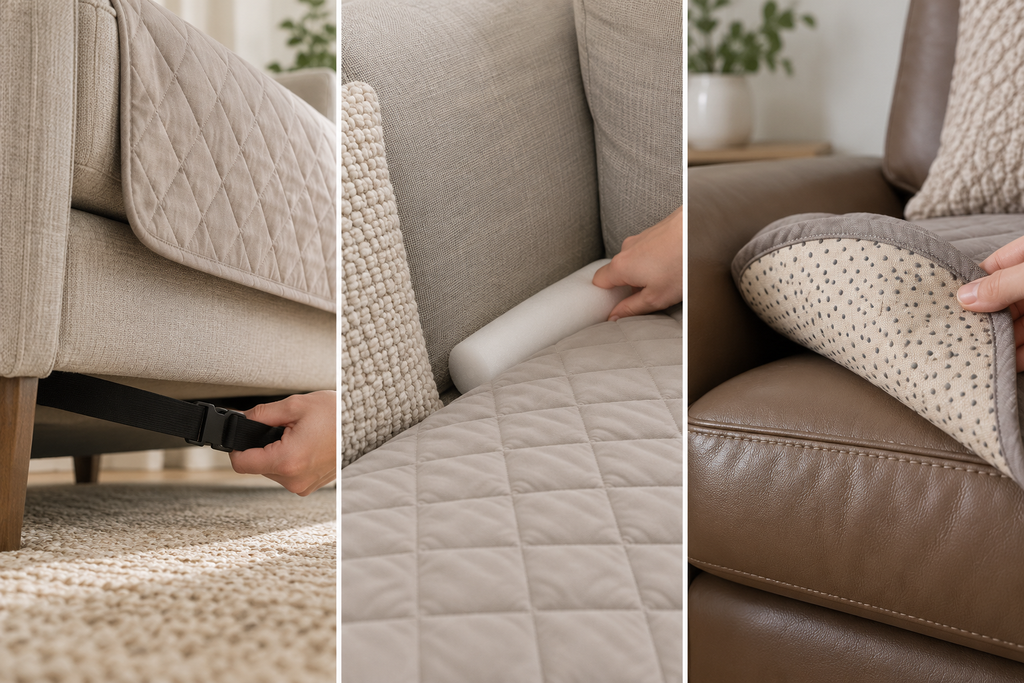
Some covers can slide more easily on smooth leather or faux leather. Choose a cover with a textured non-slip backing or use foam tuck anchors wedged deep into seat crevices. Check your leather sofa manufacturer’s care guidelines first, test non-slip backings on an inconspicuous area, and inspect contact surfaces periodically for residue or marks.
Pet Safety Note
Ensure elastic straps, foam crevice anchors, and zipper pulls are securely tucked away so dogs that like to chew don’t play with or swallow loose components. Inspect covers periodically for loose threads or worn seams.
5. Practical Shopping Checklist
Use this checklist when evaluating a dog sofa cover before buying:
| Feature | What to Verify | What to Avoid |
|---|---|---|
| Fit & Coverage | Exact sofa measurements matched against seller chart; confirm seat, back, arms, and chaise orientation are covered | Relying solely on generic “3-Seater” or “XL” labels without measuring |
| Liquid Protection | Liquid-barrier backing (e.g., TPU membrane) for accident protection; check seam and edge limitations | Surface-only repellency when you need a liquid barrier across the covered seating area |
| Stability & Grip | A credible grip method compatible with your couch and dog’s habits | Vague “non-slip” claims without evidence that the backing or fit will work on your sofa material |
| Care & Maintenance | Machine washability and drying limits that fit your home cleaning routine | Cover care requirements that clash with how often you need to wash it |
| Product Evidence & Risk | Clear care labels, retailer return/exchange terms (including return shipping), and traceable testing claims | Unverified “eco-friendly” or “100% leakproof” claims without proof |
6. Frequently Asked Questions
How do I stop a dog sofa cover from sliding on leather?
Check your sofa manufacturer’s care guidelines first to ensure rubber or silicone grippers are compatible with the leather finish. Select a cover equipped with non-slip backing, under-frame elastic straps, or foam crevice anchors. Test on an inconspicuous area and inspect contact surfaces periodically for marks or transfer.
What should I do if my sofa measurements fall between two sizes?
Check the seller’s measurements and fit guidance rather than automatically choosing a larger size. A larger stretch cover may provide more tuck-in fabric, but excess material can also bunch. If your sofa falls between two listed ranges, confirm the intended fit with the seller before ordering.
How do I protect an L-shaped sectional or chaise sofa?
Measure each section independently (main seating run and chaise lounge). Choose a multi-piece sectional cover set or separate covers that overlap where the modules meet, confirming chaise orientation on the seller’s diagram.
Will machine washing damage a waterproof dog sofa cover?
It depends on the product and its care instructions. Some waterproof-backed covers are machine washable, while others have strict temperature and drying restrictions. Follow the sewn-in label, avoid prohibited heat or softeners, and check the cover for wear after repeated washing.
Is a waterproof cover enough for puppy accidents?
A cover with a liquid-barrier backing reduces soak-through across the fabric it covers, but it is not a guarantee against leaks at seams, zipper tracks, or open edges. Clean spills promptly to prevent liquid from running off covered areas.