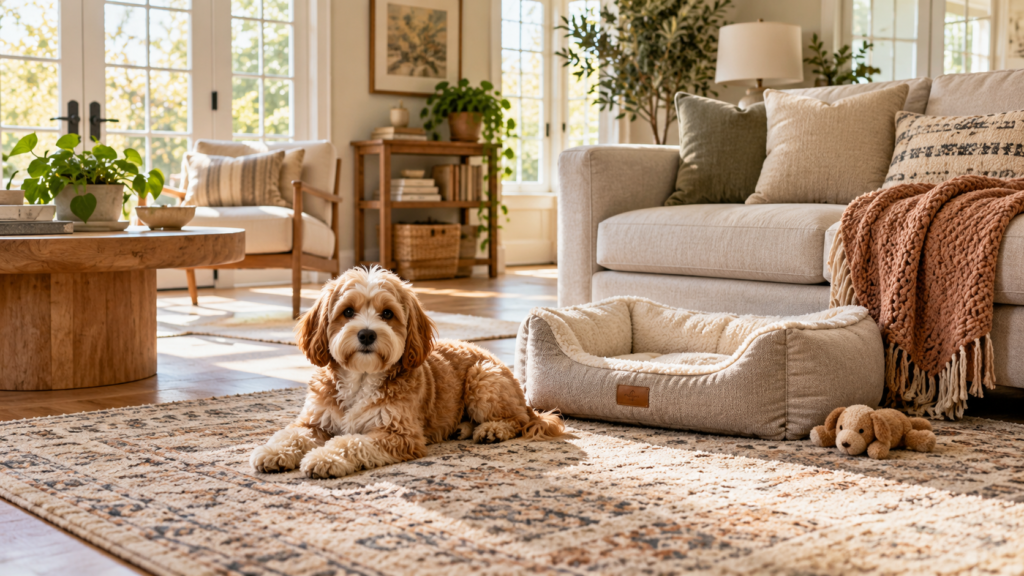
If you notice a persistent dog smell at home, lighting a scented candle or spraying an air freshener might offer a few hours of relief. However, synthetic fragrances only layer perfumed smells over active odor sources. Once the spray fades, the stale dog smell returns.
To reduce dog odors at home, use a source-first approach: locate where organic materials—like coat oils, dander, saliva, or past accidents—have settled, clean those specific items, and set up simple habits to prevent odor from building up again.
Quick Start: What to Clean First
Cleaning every room at once can feel overwhelming. Start with these steps to tackle the strongest odor sources first:
- Target high-contact fabrics: Remove washable dog bed covers, blankets, and couch throws. These soft fabrics can accumulate coat oils and odors quickly.
- Start a wash load: Machine-wash removable covers using the cycle and water temperature recommended on their care labels.
- Check for hidden accidents: Look closely at carpet corners, rug edges, and behind furniture for dried urine spots, vomit, or tracked-in dirt.
- Inspect your dog’s coat: Check if your dog is wet, visibly dirty, or in need of grooming—sometimes the odor source is walking right beside you.
- Open windows if weather permits: When outdoor conditions allow, open windows on opposite sides of your home to flush out stale indoor air.
Step 1: Find the Source of the Smell
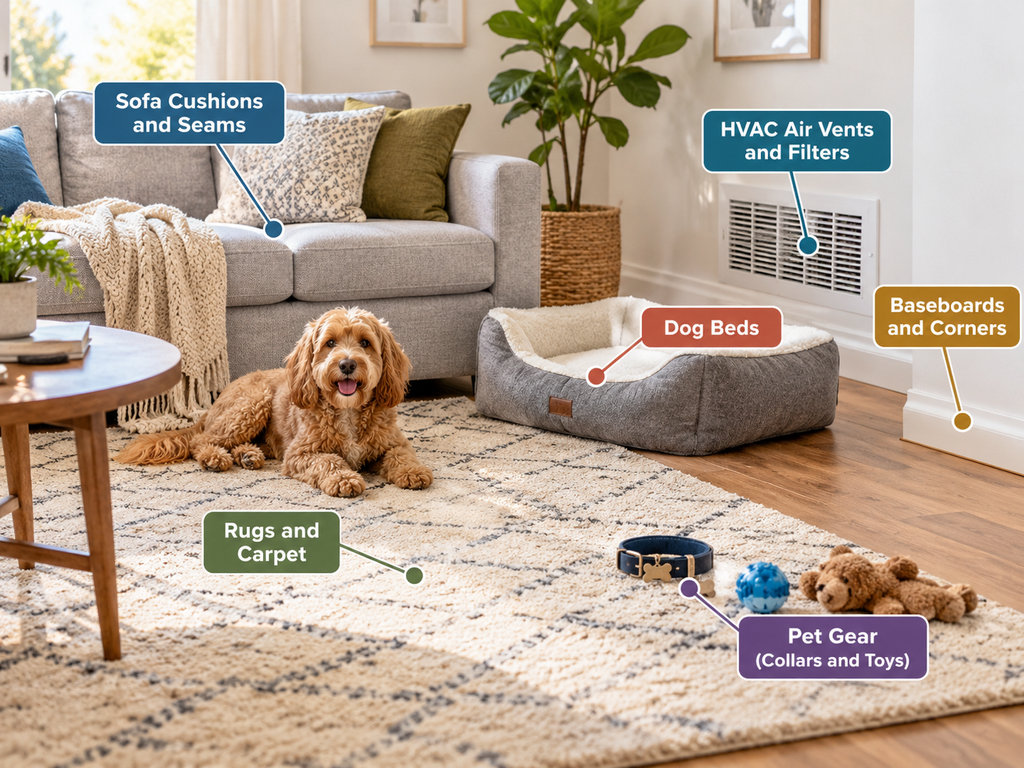
Trace the odor to its source before applying any cleaning products. Dog smells rarely hover evenly in mid-air; they concentrate in materials where dogs rest, play, or lean.
Odor Diagnosis Table
Use this quick guide to match the smell you notice with where to inspect first and what action to take:
| What You Smell | Likely Source Location | First Action to Take |
|---|---|---|
| Stale, oily “doggy” smell | Dog beds, couch cushions, favorite rug spots | Wash covers only if their care labels permit; vacuum upholstery and rug pile with a compatible attachment. |
| Sharp urine or ammonia smell | Carpets, rug padding, lower wall corners, baseboards | Blot fresh liquid first; check material care directions before choosing a compatible urine cleaner. UV fluorescence is only a clue, not proof of urine. |
| Musty, damp odor | Orthopedic foam inserts, carpet under-padding, wet gear | Inspect for trapped moisture; dry thoroughly with fans or replace if damaged. |
| Odor that follows the pet | Dog’s coat, ears, skin folds, or paws | Towel-dry or brush coat; check ears/skin; consult a vet if smell persists. |
| Dusty, stale room air | HVAC filters, clogged air vents, behind furniture | Vacuum behind furniture; inspect and replace furnace air filters if dirty. |
Using a UV Flashlight to Spot Hidden Accidents
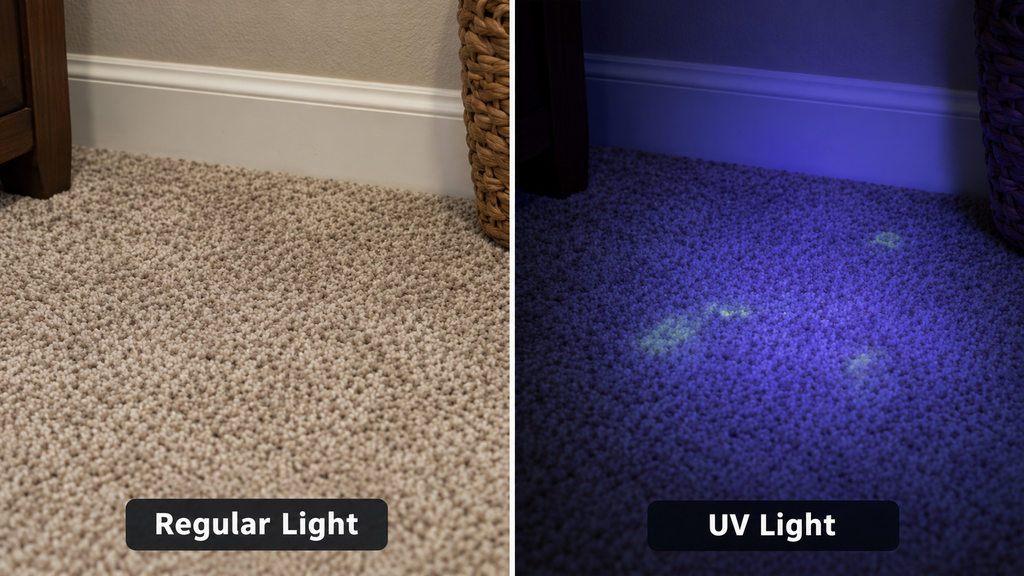
Some dried urine stains are hard to see in normal light. A UV flashlight may help you identify suspicious spots on exposed carpet or upholstery surfaces.
- How to inspect: In a darkened room, scan exposed surfaces slowly. Some urine residues may fluoresce, but appearance varies depending on the surface material and age of the stain.
- Important caution: Fluorescence is a clue, not proof of urine: other substances can glow too, including carpet cleaners, lint, and detergent residues. Use the odor history and visible signs to decide which areas need closer inspection, and avoid shining the UV light into anyone’s eyes. Mark the boundary lightly with painter’s tape or a photo before treating.
Step 2: Remove Odors from Main Household Hotspots
Once you have identified where the smell is coming from, apply material-appropriate cleaning techniques.
Dog Beds and Washable Fabrics
Dog bedding can be a major source of lingering household odor because skin oils and shed dander collect in the fibers over time.
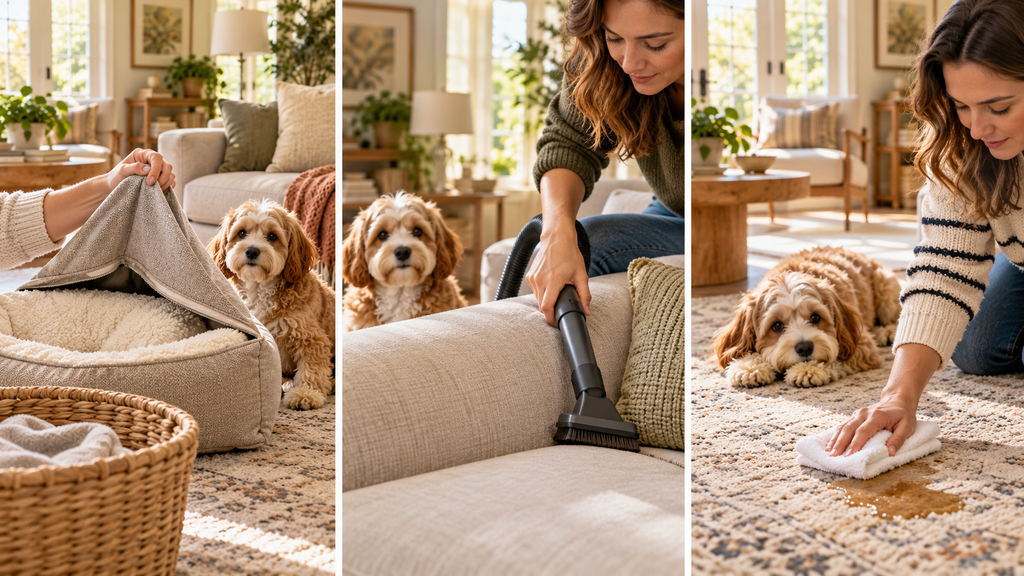
- Shake and vacuum first: Before putting bedding in the washing machine, take it outdoors to shake off loose fur, or vacuum it thoroughly. Hair left on wet fabric can clog machine filters and stick to laundry.
- Wash removable covers: Machine-wash covers using the water temperature and wash cycle specified on the care label. Use a suitable laundry detergent; fragrance-free options are helpful if your pet has sensitive skin.
- Skip fabric softener unless the care label recommends it: Fabric softeners can leave a residue on textiles and may reduce absorbency. Washing thoroughly and drying completely matter much more for odor control.
- Dry completely: Follow the care label: tumble-dry only if permitted, at the specified setting, or air-dry fully before putting the bed back together. Damp fabric returned to a dog bed can quickly develop musty mildew odors.
For detailed steps on handling memory foam, inner liners, and delicate dog beds without ruining their shape, read our guide on how to wash a dog bed without damaging it.
If an accident has reached your own bed, laundering the sheets is a separate task from treating the mattress. Our guide to getting dog pee out of a mattress explains model-specific care restrictions, low-moisture cleaning limits, and when replacement may be appropriate.
Couches and Upholstery
Couches absorb body heat, oils, and dander whenever your dog sleeps or leans against them.
- Vacuum thoroughly: Use a compatible upholstery attachment to remove hair from cushion seams, fabric folds, and under the couch frame. Use a rubber pet-hair brush only if the fabric construction and care instructions permit friction tools. For deeper pet hair removal strategies across all furniture types, see our guide on how to remove pet hair throughout your home.
- Check the upholstery care code: W generally permits an appropriate water-based cleaner when used as directed; S requires a suitable solvent-based method; W/S permits either approved method; and X calls for vacuuming or light brushing only, with no liquid cleaners. Follow the manufacturer’s instructions and consider professional cleaning for S-coded or delicate fabrics.
- Freshen non-washable upholstery: Vacuum thoroughly and follow the furniture’s care code. If odor persists, use a product specifically approved for that upholstery material, testing it first in an inconspicuous spot. Avoid loose deodorizing powders unless both the upholstery and vacuum manufacturers allow them.
- Spot-clean stains safely: Test any permitted cleaner in an inconspicuous area before treating a visible slobber or dirt stain. Follow product label instructions and do not apply liquid cleaners to X-coded fabrics.
If your couch cushions have deep-seated odors or liquid spills, follow our complete walkthrough on how to get dog smell out of a couch.
Carpets, Area Rugs, and Pet Accidents
Carpet fibers trap dander, dirt, and liquid spills. When liquid accidents reach carpet backing or foam under-padding, odors become persistent.
- Blot fresh liquid spills immediately: Press dry paper towels or clean cloths firmly into fresh urine or vomit spots to absorb as much liquid as possible. Avoid rubbing, which pushes liquid deeper into carpet padding and spreads the stain.
- Treat urine with an appropriate odor remover: Blot the accident first. Choose a pet-urine cleaner suitable for the carpet and follow its directions for amount, contact time, blotting or rinsing, and drying. Avoid over-wetting the backing or padding. If urine has penetrated deep into the pad or subfloor, professional treatment or replacement of affected material may be needed.
- Avoid steam-cleaning fresh urine: Do not use hot steam cleaners on untreated urine spots. Heat can set urine stains and make odors significantly harder to extract from synthetic carpet fibers.
- Avoid ammonia-based cleaners: Strong chemical odors, including ammonia-based cleaners, may encourage some dogs to mark an area again (Humane World — Pet Stains and Odors). Use a carpet-compatible pet-urine product and follow its label directions instead.
For step-by-step instructions on handling severe or set-in carpet accidents, read our detailed guide on how to get dog pee out of carpet.
Walls, Baseboards, Hard Floors, and Toys
Odors often linger on hard surfaces where dogs rub their coats, slobber, or play.
- Wipe walls and baseboards: Dogs frequently rub against hallway corners, lower walls, and baseboards, leaving behind invisible oil layers. Follow the paint or finish maker’s care instructions; if permitted, use a soft microfiber cloth lightly dampened with water and a little mild soap, then dry. Spot-test first and avoid soaking unfinished wood or moisture-sensitive trim.
- Clean hard floors safely: Sweep or vacuum loose hair and grit first. Clean sealed tile, vinyl, laminate, or hardwood floors using a cleaner formulated for your specific flooring material. Avoid leaving standing water on moisture-sensitive wood or laminate joints, and inspect grout lines if a persistent urine odor remains.
- Wash dog gear and toys: Hand-wash hard toys in warm, soapy water or use the dishwasher only if the manufacturer labels them dishwasher-safe; follow any rack, temperature, and detergent instructions (CDC — Cleaning Pet Supplies). Launder machine-washable plush toys according to their care labels, then dry completely.
- Soak collars and leashes: Nylon and fabric collars absorb neck oils and moisture. Follow the gear maker’s instructions; soak only washable items whose materials and hardware allow it. Use mild soap as directed, rinse thoroughly, and air-dry completely before placing them back on your dog.
Step 3: Freshen Indoor Air Without Masking
Once you have cleaned physical odor sources, improving air exchange helps remove lingering airborne smells. Ventilation exchanges indoor and outdoor air, while particle filters capture airborne dander particles. Neither removes contamination embedded in fabrics.
Open Windows for Air Exchange
When outdoor weather and air quality permit, open windows on opposite sides of your home to create cross-ventilation. Bringing in fresh outdoor air helps flush out stagnant indoor air and stale odors naturally.
Avoid opening windows during periods of outdoor smoke, high pollen counts, extreme humidity, or temperature extremes, as bringing in outdoor pollutants or excessive moisture can degrade indoor air quality.
Use Air Filters Correctly
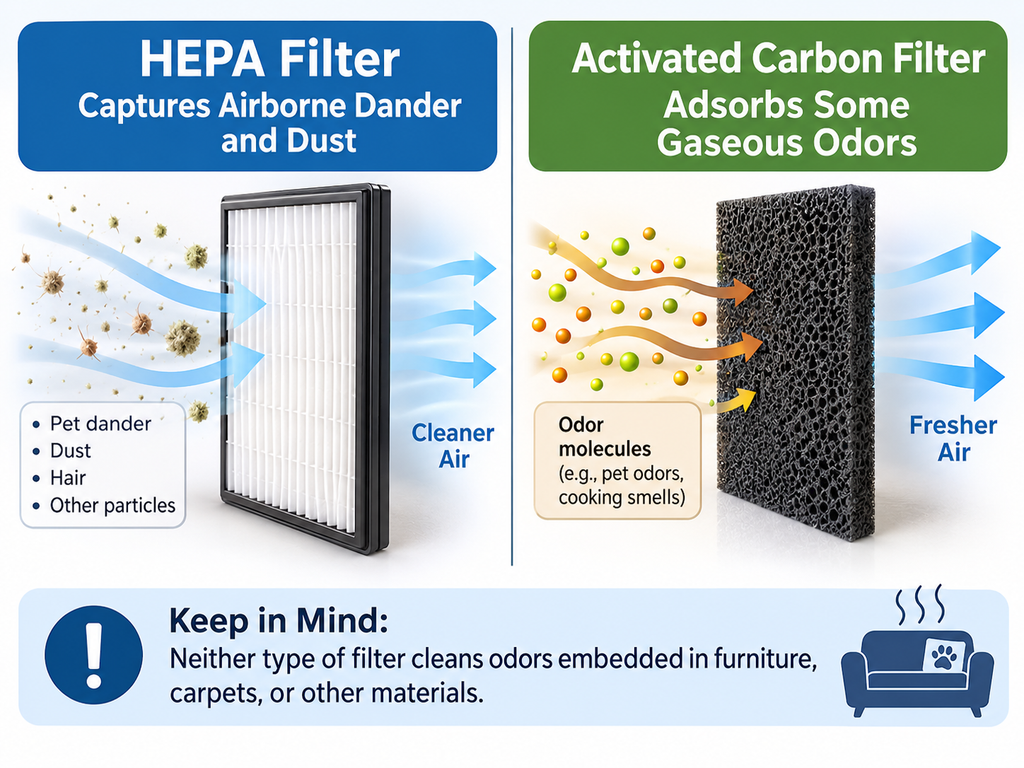
Air filtration helps manage airborne particles and dander, but different filter types perform distinct jobs:
- HVAC furnace filters: Your central heating and cooling system recirculates air throughout the entire house. Inspect furnace filters monthly and replace them according to the equipment manufacturer’s schedule. Use a filter rated MERV 13 or the highest compatible rating supported by your HVAC system to capture fine dander and dust without restricting system airflow.
- HEPA air purifiers: Portable High-Efficiency Particulate Air (HEPA) purifiers capture airborne dander and fine dust particles from room air; larger settled hair still requires vacuuming. Place HEPA purifiers in high-traffic rooms where dogs spend the most time, ensuring the unit’s Clean Air Delivery Rate (CADR) matches the room size.
- Activated carbon for gaseous odors: Standard HEPA filters trap physical particles, not gaseous odors. To reduce airborne gas compounds, choose an air purifier that includes an activated carbon filter with sufficient sorbent material.
- Avoid ozone generators: Do not use air-cleaning devices that intentionally produce ozone in occupied living spaces. Ozone is a lung irritant that can worsen respiratory issues and is not a safe or effective method for managing everyday household pet odors (EPA — Ozone Generators). Exercise caution with electronic, ionizing, or plasma air cleaners that may produce ozone as a byproduct.
What Not to Use or Overdo
Certain popular cleaning habits can damage household surfaces, harm pets, or make odors worse. Keep these precautions in mind:
- Never mix household cleaning chemicals: Never combine cleaning products—especially chlorine bleach with ammonia or acidic cleaners like vinegar. Mixing these chemicals generates hazardous, toxic gases that can cause severe respiratory distress in humans and pets.
- Do not rely on fragrance to solve odors: Air fresheners and scented plug-ins may make a room smell different temporarily without removing the source. Strong fragrances may bother sensitive pets. If you use essential-oil diffusers, keep oils inaccessible to pets and take extra precautions around animals with respiratory problems; concentrated essential oils can be harmful if ingested or applied to the coat (ASPCA Animal Poison Control Center).
- Do not soak non-washable foam: Do not submerge foam unless the specific bed maker explicitly permits it. Thick foam can retain moisture and develop mold or mildew. Spot-clean only if the maker allows it, using the specified method; press with dry towels and allow all layers to dry fully.
- Disinfect when the situation calls for it: Routine odor control usually starts with soap or detergent and thorough drying. Items or suitable hard surfaces contaminated by feces or urine may need cleaning followed by disinfection; disinfection may also be appropriate during illness or when household members are especially vulnerable to infection (CDC — Cleaning Pet Supplies). Use only products labeled for the surface, follow contact-time and rinsing instructions, and keep pets away until it is safe to return. For absorbent carpet or upholstery, focus on removing contamination and odor without applying a hard-surface disinfectant indiscriminately.
Step 4: When the Smell Comes from the Dog (or Hidden Moisture)
If your house still smells like dog despite thorough cleaning, the source may be the animal itself or concealed moisture inside building materials.
Grooming and Canine Health
Household cleaning cannot resolve odors originating directly from your dog’s coat or skin:
- Dry coats thoroughly: After baths, rain walks, or swimming, gently blot and towel-dry your dog, taking care around sensitive skin and tangles. Avoid hot hair dryers. If using a pet dryer, follow its safety instructions, use an appropriate unheated or low-heat setting, and supervise continuously; ask your groomer or veterinarian if unsure.
- Maintain regular grooming: Brush your dog’s coat regularly to remove dead hair and trapped dander before it sheds onto furniture and carpets.
- Avoid unnecessary or harsh bathing: Bath frequency depends on your dog’s coat, lifestyle, and skin health. Overbathing or using unsuitable shampoos can remove protective coat oils and irritate the skin (WSU Vet Medicine — Bathing Your Dog). Use a dog-formulated shampoo and follow your veterinarian’s advice if your dog has a skin condition.
- Consult your veterinarian: If your dog emits an unusually strong or persistent odor despite routine baths and clean bedding, schedule a veterinary checkup. Ear infections, skin infections, dental disease, and impacted anal glands are common medical causes of strong odors that require professional veterinary treatment.
Saturated Padding and Structural Moisture
When liquids penetrate deep into structural padding or building materials, standard surface cleaning is no longer effective:
- Follow the 24-to-48-hour drying guideline: The U.S. Environmental Protection Agency (EPA) recommends drying water-damaged or saturated materials as promptly as possible—ideally within 24 to 48 hours—to reduce mold growth risk (EPA — Mold Course). The EPA drying timeline is a moisture-control benchmark for clean water, not a sanitizing procedure for urine-soaked materials; heavily contaminated padding may need professional assessment or replacement.
- Inspect underlying layers: Check carpet backing, subflooring, and inner bed foam rather than judging dryness by the surface alone. Moisture trapped beneath carpet padding can cause persistent odors and structural damage.
- Replace severely contaminated materials: If carpet under-padding or thick foam inserts have been heavily saturated with urine or remain damp for extended periods, surface treatments will not resolve the odor. Replacing the affected padding or foam is often necessary to restore a clean indoor environment.
Simple Ongoing Prevention Routine
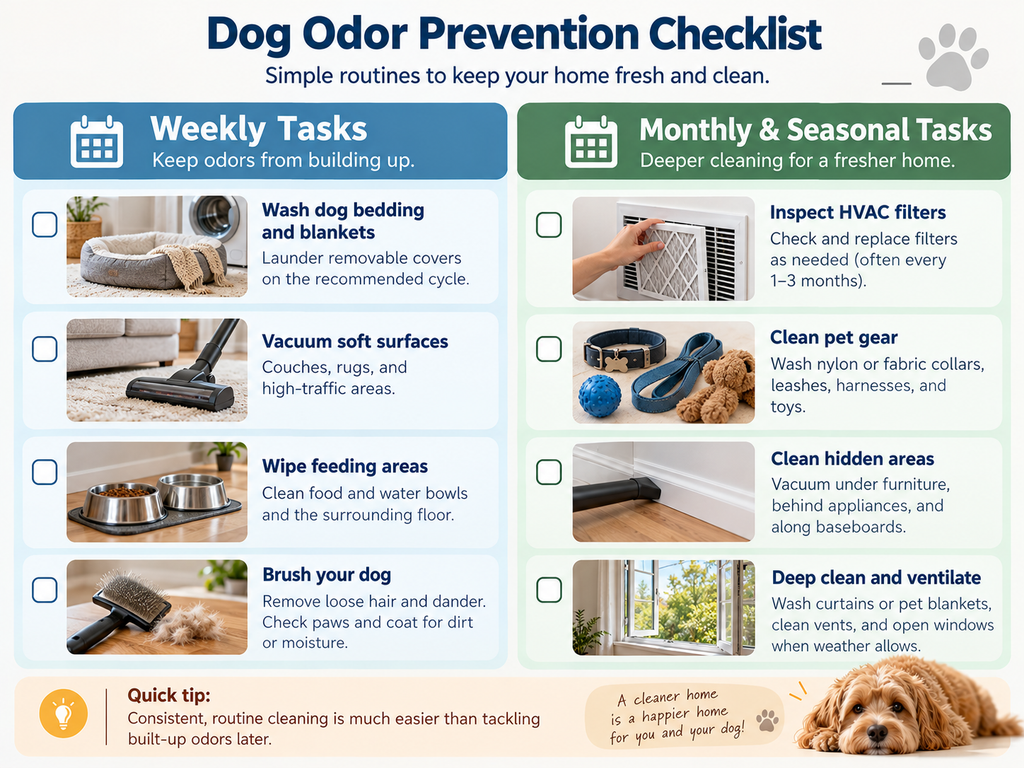
Consistent habits help keep odors from building up. Adapt this maintenance routine to your dog, materials, and household:
Weekly Tasks
- Wash removable dog bed covers, throw blankets, and couch covers using the care label’s recommended cycle.
- Vacuum carpets, area rugs, and upholstered furniture using a brush attachment to remove accumulated hair and dander.
- Wipe down hard crate trays, food mats, and feeding areas with warm, soapy water.
Monthly & Seasonal Tasks
- Inspect HVAC furnace air filters and replace them according to equipment manufacturer guidelines.
- Wash fabric dog toys in a gentle machine cycle and clean hard rubber toys according to their care instructions.
- Vacuum hidden dust and hair accumulation behind couches, under beds, and around lower wall baseboards.
- Wash nylon or fabric collars and leashes in warm soapy water and air-dry them completely.
Frequently Asked Questions
Do air purifiers completely remove dog smell?
HEPA purifiers capture airborne particles such as pet dander and fine dust. They do not remove odor trapped in fabric, and visible hair settled on floors or furniture still needs vacuuming. A sufficiently sized activated-carbon filter may help with some gaseous odors when used alongside direct cleaning of physical odor sources.
Why does my room still smell like dog after I washed everything?
If odor persists after washing bedding and fabrics, the smell may remain in non-washable surfaces, hidden padding, or on your dog. Use a UV flashlight to look for possible surface stains, but remember that it cannot reveal urine concealed under carpet backing or padding. Additionally, inspect whether wall rub zones need wiping, check if your furnace filter needs changing, or evaluate your dog’s coat, ears, and skin.
How can I make my house smell good without synthetic fragrances?
Focus on removing odor sources first: wash pet bedding and throws, vacuum carpets and upholstery, and wipe down frequently touched hard surfaces. When outdoor air quality and weather are suitable, open windows to improve ventilation. For a persistent carpet odor, identify and clean the affected area instead of covering it with fragrance or carpet powder.
Sources & References
- U.S. Environmental Protection Agency (EPA): Guide to Air Cleaners in the Home — Guidance on source control, ventilation, MERV filter ratings, HEPA particle capture, activated carbon sorbent filters, and air cleaner safety.
- U.S. Environmental Protection Agency (EPA): Ozone Generators That Are Sold as Air Cleaners — Technical assessment of health risks and hazards associated with ozone-producing devices in occupied spaces.
- U.S. Environmental Protection Agency (EPA): Mold Course: Chapter 4 — Prevention and Moisture Control — Guidelines for drying wet and water-damaged materials within 24 to 48 hours to prevent mold proliferation.
- Centers for Disease Control and Prevention (CDC): About Cleaning and Disinfecting Pet Supplies — Practical rules for cleaning versus disinfecting pet gear, washing textiles, and product safety around animals.
- Carpet and Rug Institute (CRI): Technical Bulletin: Pet Urine and Carpet — Background on urine-related carpet damage, prompt spot treatment, possible backing damage, and limitations of odor removal.
- Carpet and Rug Institute (CRI): Cleaning and Maintenance — Best practices for carpet vacuuming, spot removal, and care-code compliance.
- Humane World: Get urine smell and pet stains out of carpet — Guidance on blotting pet spills, avoiding heat on urine, and applying enzymatic stain-and-odor removers.
- ASPCA Animal Poison Control Center: The Essentials of Essential Oils Around Pets — Safety considerations and exposure precautions for essential oils and fragrances around domestic animals.
- Washington State University Veterinary Teaching Hospital: Bathing Your Dog — Veterinary guidance on dog bathing frequency, shampoo selection, and skin oil preservation.
- Merck Veterinary Manual: Seborrhea in Animals — Clinical reference on canine seborrhea disorders and disease-specific dermatological management.