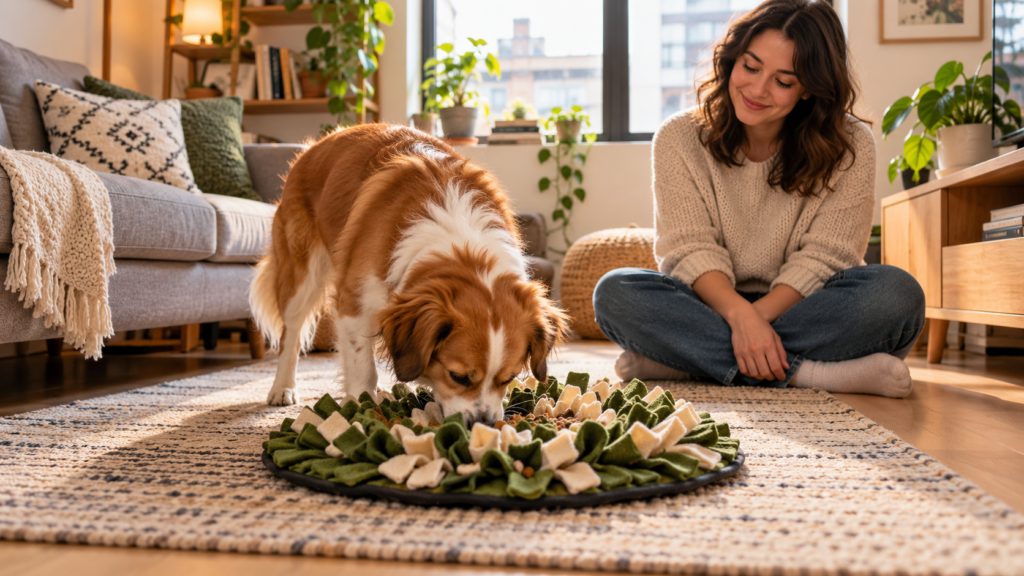
When bad weather, busy days, or apartment living keep your dog indoors, indoor enrichment for dogs offers a practical way to channel their energy without needing a huge yard. Brain games, sniffing puzzles, and gentle indoor play for dogs engage your dog’s natural instincts, helping keep them content and curious within a small living space.
Safety & Scope Note: Indoor enrichment activities provide valuable mental stimulation and help prevent boredom, but they do not replace outdoor physical exercise, routine toilet breaks, veterinary medical care, or professional behavior therapy for clinical anxiety or reactivity.
Quick Summary: How to Start in a Small Space
If you are short on time or space, here is the simplest way to introduce indoor dog enrichment activities safely:
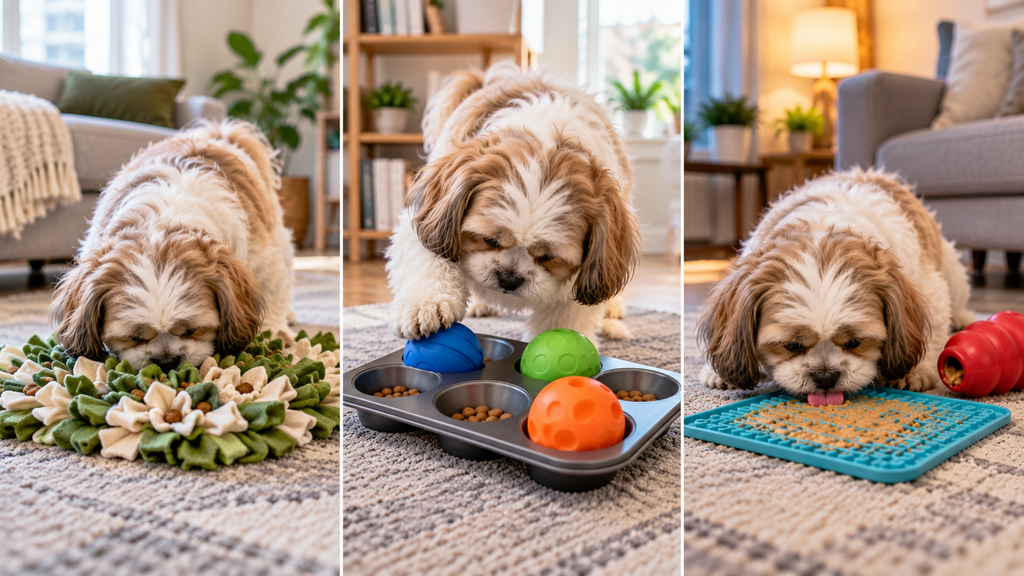
- Best Low-Space Games: Start with simple scent games like scattering a handful of dry kibble on a flat rug, rolling treats loosely in a bath towel, or spreading wet food onto a silicone lick mat.
- The Safety First Rule: Always supervise your dog during play—especially with fabric, cardboard, or plastic items. Stop the activity immediately if your dog tries to chew or swallow non-food materials.
- Keep It Fun & Easy: Begin every new game on “easy mode” so your dog wins rewards within seconds. If they whine, bark, or walk away, simplify the puzzle or take a break.
1. Space-Conscious Game Ideas for Small Rooms
You don’t need a sprawling living room or a big backyard to give your dog a satisfying mental workout. These low-footprint indoor activities for dogs focus on scent tracking, licking, and gentle problem-solving right on a small floor rug or hallway.
Sniffing and Foraging Games (Quiet & Low-Footprint)
A dog’s sense of smell is their primary way of exploring the world. Scent work gives dogs a rewarding cognitive outlet without requiring fast running.
1. Scatter Feeding
- What you need: A portion of your dog’s regular dry kibble and a clean, low-pile rug or flat snuffle mat.
- How to set up: Toss kibble across the rug or tuck pieces loosely into the mat.
- Easy mode: Leave kibble resting right on top in plain view.
- Make it harder: Tuck a few pieces of kibble into shallow folds of a clean, stable snuffle mat, but only if your dog does not bite or pull at the fabric.
- When to stop: Discontinue if your dog begins biting, shaking, or chewing the fabric mat itself.
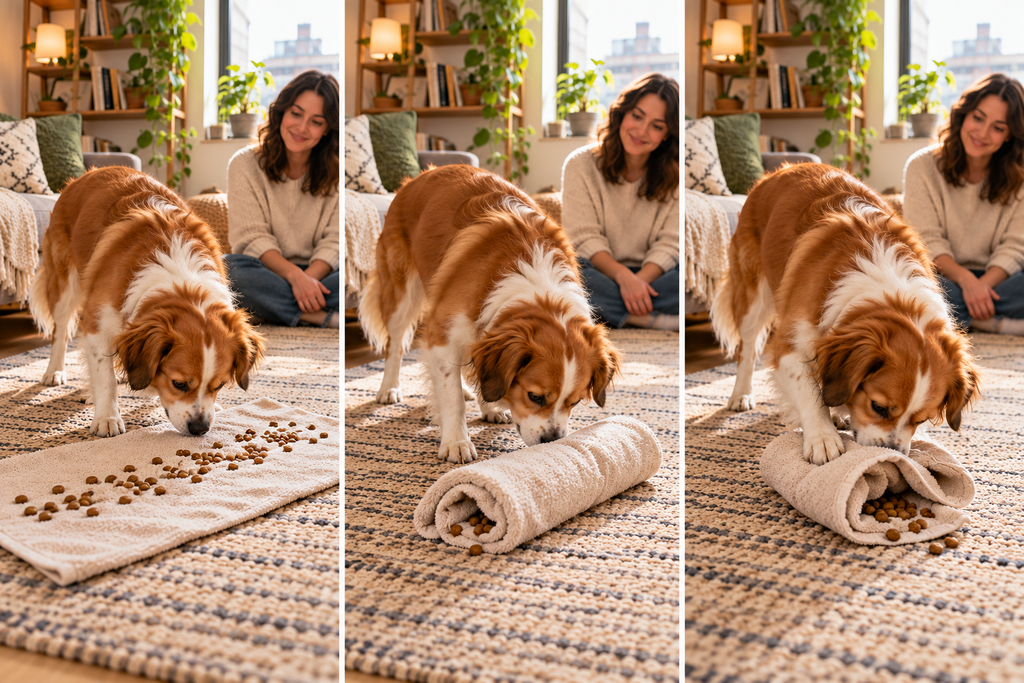
2. Rolled Towel Search
- What you need: A clean, intact bath towel without fraying or loose threads, plus a few pieces of dry kibble or low-calorie treats.
- How to set up: Lay the towel flat on the floor, sprinkle food along its length, and roll it up loosely like a burrito.
- Easy mode: Roll the towel loosely with food visible near the outer edge.
- Make it harder: Roll the towel slightly tighter or fold the ends gently.
- When to stop: Stop immediately if your dog starts biting, ripping, or swallowing fabric threads (ASPCA — Canine DIY Enrichment).
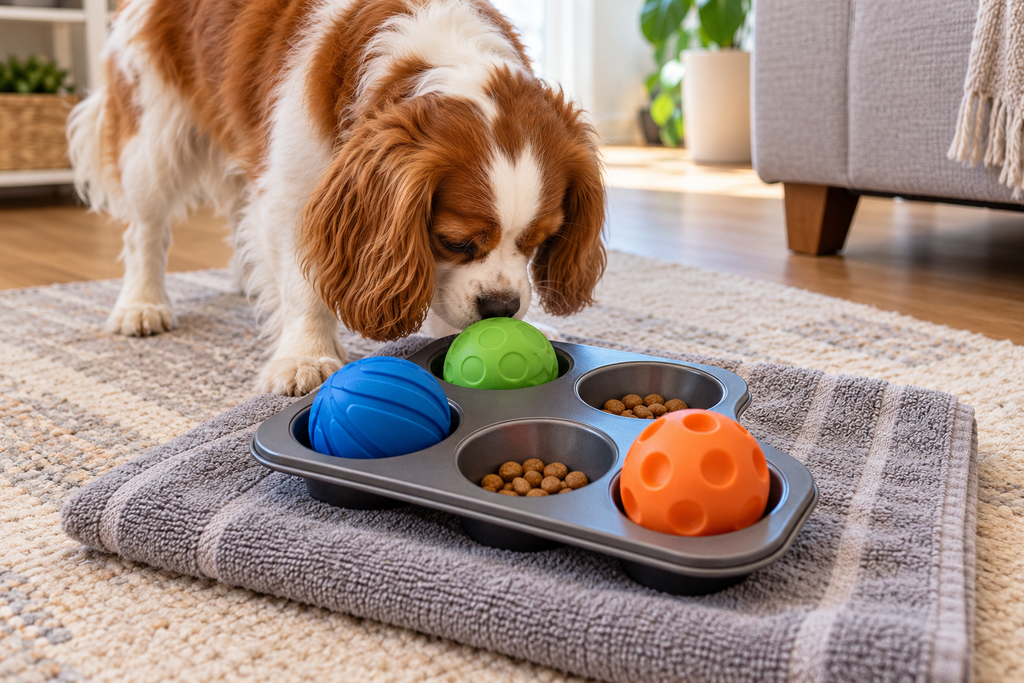
3. Muffin Tin Nosing Game
- What you need: A 6- or 12-cup muffin tin, kibble, and sturdy, smooth rubber balls or toys sized too large for your dog to swallow.
- How to set up: Drop a few pieces of food into the cups and cover each cup with a ball or toy. Place a folded towel under metal tins to muffle rattling noise on hard floors.
- Easy mode: Leave half the cups uncovered so your dog gets immediate success.
- Make it harder: Cover every cup or place food in only a few hidden cups.
- When to stop: End the game if your dog chews on the balls or attempts to gnaw the metal tin (VCA — How to Choose the Best Chew Toy for Your Dog).
4. The “Magic Cup” Shell Game
- What you need: Two or three sturdy plastic or silicone cups/bowls and smelly treats.
- How to set up: Place the cups upside down on a non-slip rug. Hide a treat under one cup while your dog watches.
- Easy mode: Let your dog nudge or paw the cup right after hiding the treat.
- Make it harder: Gently shuffle the cups around before letting your dog search.
- When to stop: Stop the game immediately if your dog tries to crush, bite, or chew the cups.
Lick Mats and Stuffed Rubber Toys
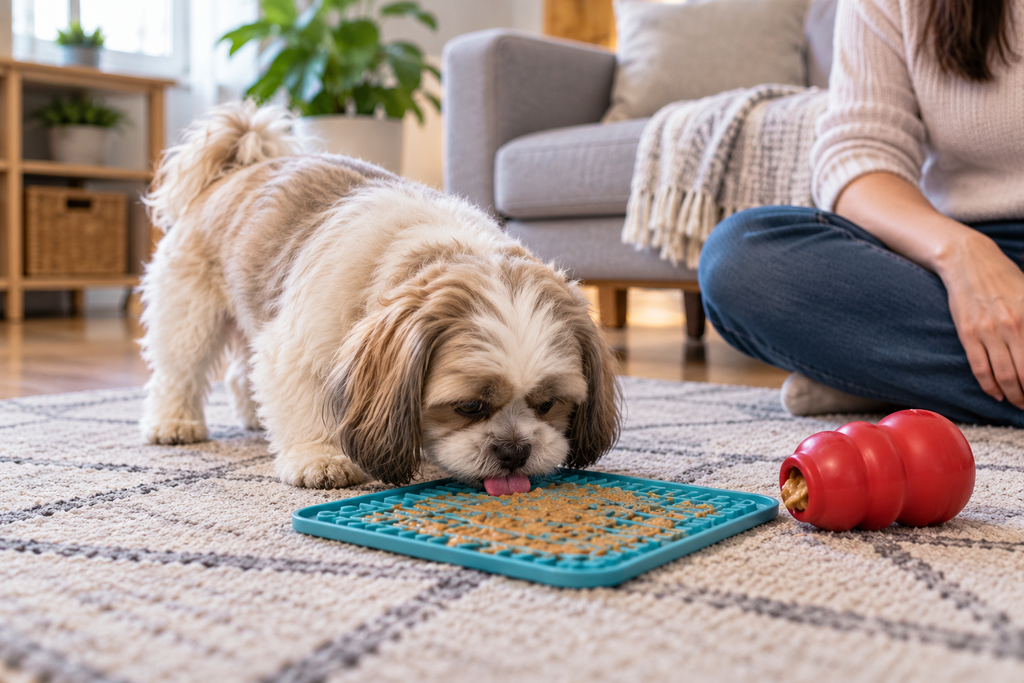
Lick mats and food-stuffed rubber toys provide low-movement feeding activities that some dogs find settling.
- Lick Mats & Stuffed Rubber Toys (e.g., KONG, Toppl):
- How to set up: Spread a thin layer of wet dog food, plain canned pumpkin (not sweetened pie filling), or peanut butter suitable for your dog across a textured silicone lick mat or inside a hollow rubber toy. Check the ingredient label first: never use peanut butter or any spread containing xylitol (also called birch sugar), which is toxic to dogs. If ingestion is suspected, contact a veterinarian or emergency animal clinic immediately. For dogs on therapeutic or special diets, use their approved wet food or mashed kibble.
- Pro tip: Use a portion of your dog’s regular daily meal allowance rather than extra treats to keep calories balanced.
- Summer variation: Chill or briefly freeze the filled toy if your dog enjoys it, checking that the food and toy remain appropriate for their chewing style and dental comfort.
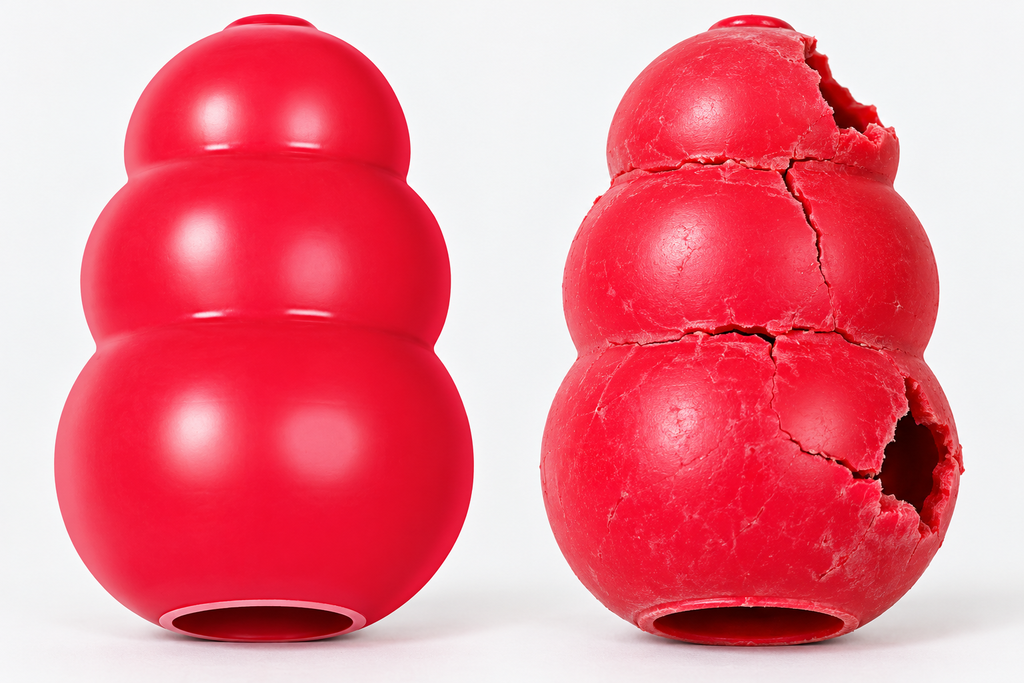
- Safety rule: Always supervise your dog—even with rubber or silicone items. Inspect toys regularly for cracks or missing pieces, and retire damaged toys immediately.
Gentle Indoor Play in Tight Spaces
When planning indoor games for dogs on rainy days, keep physical play controlled to prevent slipping, wall collisions, or loud noise for neighbors below.
- Gentle Roll-and-Retrieve: Instead of throwing a ball at high speed down a narrow hallway, gently roll a soft toy a few feet along a non-slip rug. This provides low-impact pursuit without sudden turns on slick floors.
- Quiet Soft Tug: Engage in a calm game of tug using a soft rope or fleece toy while keeping all four of your dog’s paws on a rug. Teach a gentle “Drop It” or “Leave It” cue by trading the toy for a piece of kibble.
Low-Space Cognitive Training
Short, positive training can be adapted for many dogs, including puppies and seniors. Match the exercises to your dog’s mobility, comfort, chewing habits, and ability to concentrate (Dogs Trust — Enrichment Activities).
- 5-Minute Micro-Training: Practice simple, known cues (sit, stay, touch, look at me) or practice impulse control games like “It’s Your Choice” (Edmonton Humane Society — Impulse Control Guide). Keep sessions brief—around 3 to 5 minutes—to keep it fun and positive.
- Cardboard Box Free-Shaping: Place an empty, clean cardboard box on the floor. Reward any voluntary curiosity—such as a nose touch or a gentle sniff. This encourages independent problem-solving and builds confidence in shy dogs.
2. Low-Cost, DIY, and Food-Free Dog Enrichment Ideas
You do not need expensive commercial gadgets to keep your dog entertained. Household items and creative non-food games offer wonderful mental exercise.
Supervised DIY Dog Enrichment Ideas
Crucial Cardboard Safety Rule: Paper and cardboard puzzles are only suitable for dogs that do not chew or swallow non-food materials. Before starting, remove all shipping tape, plastic labels, glue, and metal staples. Active supervision is required throughout play. If your dog attempts to bite off, chew, or swallow cardboard pieces, stop the activity immediately and remove the item. Swallowed cardboard or paper can cause dangerous gastrointestinal blockages (VCA — Ingestion of Foreign Bodies in Dogs). If your dog tends to eat non-food items, skip cardboard entirely and stick to supervised toy-finding or training games.
- Open Box Treat Search: Place dry kibble or a favorite toy inside an open, shallow cardboard box or clean egg carton so your dog can nose around easily without needing to tear or chew cardboard (ASPCA — Canine DIY Enrichment).
Food-Free & Low-Calorie Enrichment Ideas
For enrichment without food—for example, when following a calorie-controlled or veterinary-prescribed diet—try these activities:
- Indoor Hide and Seek: Have a family member gently hold your dog while you hide behind a couch or doorway in another room. Call your dog once, and celebrate enthusiastically with praise or a favorite toy when they find you.
- Find the Hidden Toy: Hide your dog’s favorite plush or rubber toy under a blanket or behind a chair cushion, and encourage them to “Find it!”
- Toy Rotation: Instead of leaving every toy in a basket on the floor, keep only 3 or 4 toys out at a time and rotate them weekly. Rotating toys may renew your dog’s interest in familiar items.
- Tactile Texture Walk: Lay out different safe, non-slip household surfaces across a rug—such as a yoga mat, a rubber door mat, or a flat woven rug—and encourage your dog to walk gently across them at their own pace. Exploring new textures offers gentle sensory exploration without extra calories.
3. Safety, Supervision, and Activity Limits
While indoor enrichment is fantastic for mental stimulation, improper setups can lead to choking, intestinal blockages, slipping injuries, or food guarding.
Material Hazards & Ingestion Risks
- Fabric & Towels: Dogs that chew and swallow fleece strips from snuffle mats, threads from rope toys, or pieces of towels are at serious risk for intestinal obstructions. Always supervise fabric toys and remove them if fraying occurs (ASPCA — Canine DIY Enrichment).
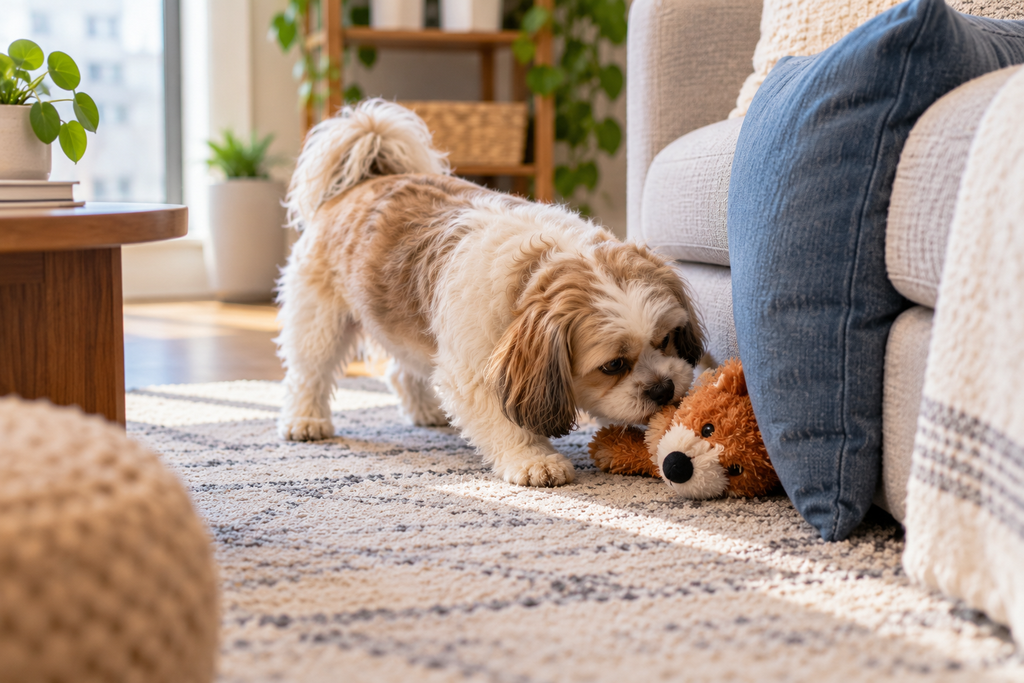
- Squeakers & Stuffing: Plush toys with squeakers must be watched closely. Many dogs enjoy dissecting soft toys to extract the plastic squeaker, which presents an acute choking hazard.
- Damaged Hard Toys: Inspect plastic and rubber puzzle feeders regularly. Crack lines, sharp tooth gouges, or split edges can cut gums or break off into swallowable pieces (VCA — How to Choose the Best Chew Toy for Your Dog). Retire damaged toys immediately.
If your dog swallows a piece of cardboard, fabric, rubber, plastic, or a toy component, contact your veterinarian promptly for advice. Swallowed objects sometimes pass, but others cause dangerous obstructions; do not assume that a dog appearing comfortable immediately afterward is in the clear (VCA — Ingestion of Foreign Bodies in Dogs).
Defining Active Supervision & Safe Flooring
- Active Supervision: Real supervision means staying in the room, keeping eyes on your dog throughout the activity, and intervening immediately if they chew on the toy’s structure instead of solving the puzzle. Never leave DIY cardboard, fabric, or thin plastic toys unattended.
- Non-Slip Flooring: Always conduct movement games and puzzles on non-slip surfaces like carpet, area rugs, or rubber mats. Hardwood and tile floors offer poor traction and can cause joint strains or slipping injuries (Toronto Humane Society — Dog-Friendly Small Homes).
Multi-Pet Households & Managing Food Access
To reduce conflict and manage food access in multi-dog homes:
- Separate Pets Completely: Always give food puzzles, lick mats, or high-value chews in separate rooms behind closed doors.
- Pick Up Empty Toys Safely: Collect toys, mats, and bowls before allowing dogs back into shared spaces. Collect items when you can do so safely. If a dog guards an item, do not reach for it or forcibly take it away. If safe to do so, toss a few high-value treats away from the item and let the dog move toward them before retrieving it. Seek guidance from a qualified, force-free behavior professional if guarding is recurrent or intense (Dogs Trust — Resource Guarding).
Dietary Safety & Calorie Limits
- Xylitol Warning: Always check peanut butter and spreadable food labels for xylitol (sometimes listed as birch sugar). Xylitol is extremely toxic to dogs and causes rapid, dangerous drops in blood sugar (FDA — Paws Off! Xylitol is Toxic to Dogs). If you suspect your dog has ingested xylitol, contact a veterinarian, emergency animal clinic, or poison control service immediately.
- The 10% Calorie Limit: Keep extra treats under 10% of your dog’s total daily caloric intake (Pet Nutrition Alliance — Creating a Nutritional Plan). The best approach is to measure out your dog’s normal daily kibble ration in the morning and use portions of that meal for puzzle toys and training throughout the day.
Recognizing Frustration & Ending Play
- Start Easy: Begin every game on the simplest setting so your dog earns treats within seconds.
- Watch for Distress: If your dog whines, barks excessively, bites furiously at a toy’s outer frame, or walks away, they may be frustrated, over-aroused, or uncomfortable. Pause the game, make it easier, or switch to a simpler activity.
- Use a “Finish” Cue: End every enrichment session with a clear verbal cue like “All Done” or “Finish” while showing open, empty hands. With consistent practice, a short “All Done” cue can become a predictable end-of-game signal.
4. Practical Activity Matrix & Small-Space Checklist
Note on Floor Space: Setup footprint figures reflect the approximate size of the activity materials, not minimum room dimensions. Always ensure your dog has enough space to stand, turn, and move comfortably.
| Activity Name | Setup Footprint | Estimated Cost | Apartment Noise Level | Primary Engagement Drive | Key Material Caution |
|---|---|---|---|---|---|
| Scatter Feeding / Snuffle Mat | About 2 × 2 ft | Free with rug; low-cost for mat | Quiet | Sniffing & Foraging | Require active supervision. Stop play if dog chews fabric strips. |
| Supervised Lick Mat / Stuffed KONG | About 1 × 1 ft | Purchase may be needed; price varies | Very Quiet | Licking & Feeding | Require active supervision. Verify ingredients are xylitol-free. |
| Muffin Tin & Rubber Balls | About 2 × 2 ft | Free with household items | Low to Moderate (depends on floor) | Problem-Solving & Nosing | Require active supervision. Use properly sized balls; place towel under tin. |
| “Magic Cup” Shell Game | About 2 × 2 ft | Free with sturdy cups | Quiet | Visual & Scent Tracking | Require active supervision. Use sturdy cups; stop before dog crushes material. |
| Cardboard Box Treat Search | About 3 × 3 ft | Free with clean recyclables | Medium | Nosing & Foraging | Require active supervision. Strictly for non-ingestors; remove tape & staples. |
| Gentle Roll-and-Retrieve / Tug | Hallway / Rug | Free with existing toy | Low to Medium | Gentle Play & Chase | Require active supervision. Play on non-slip rugs; teach a gentle “Drop It”. |
| 5-Minute Micro-Training | About 2 × 2 ft | Free (uses daily meal kibble) | Very Quiet | Cognitive Focus & Cues | Require active supervision. Keep sessions brief to keep it positive. |
5. Flexible Rainy-Day Routine for Small Homes
On a rainy day, try short activity blocks with rest between them rather than aiming for one long session. This is an optional example, not a daily quota: shorten or skip blocks to suit your dog’s age, health, energy, interest, and comfort. Continue appropriate exercise and toilet breaks. The times below are flexible starting points:
Morning Block: Breakfast Foraging & Focus (10–15 Minutes)
- Breakfast Scatter: Serve a portion of morning kibble on a snuffle mat or rolled towel.
- Micro-Training: Practice 2–3 minutes of basic cues (sit, stay, wait) before opening doors or presenting food.
Midday Block: Low-Space Brain Game (5–10 Minutes)
- Puzzle or Muffin Tin: Offer a supervised muffin tin puzzle or “Magic Cup” game during your lunch break.
- Quiet Scent Search: Hide 3 or 4 kibble pieces around one room for a quick “Find It” game.
Evening Block: Decompression & Rest (15–20 Minutes)
- Gentle Tug or Roll-and-Retrieve: Enjoy 5 minutes of quiet, controlled soft tug or rolling a soft toy on an area rug.
- Supervised Lick Mat: Offer a supervised lick mat as a quiet evening activity, if your dog enjoys it.
- Clear “Finish” Signal: Say “All Done,” show empty hands, and put toys away so your dog knows play time is over.
Frequently Asked Questions (FAQ)
Which indoor enrichment activities are quiet enough for an apartment?
Scent searches on a rug, supervised lick mats, muffin tin puzzles with a towel placed underneath, and short cue training are very quiet indoor games for dogs. Avoid high-speed ball bouncing, loud squeaky toys, or hard plastic toys that bang against hardwood floors or thin walls.
How long should an indoor enrichment session last?
There is no fixed ideal length. You might start with a few minutes of an easy activity and extend it while your dog remains comfortable and engaged. Pause or stop if they lose interest, become frustrated, or show signs of discomfort.
Are snuffle mats safe for all dogs?
No. Snuffle mats require active supervision. Dogs that tend to chew fabric or swallow non-food objects can eat the fleece strips, creating a dangerous intestinal blockage risk (ASPCA — Canine DIY Enrichment). If your dog tries to chew the mat, switch to a smooth rubber lick mat or a supervised toy-finding game instead.
How can I reduce conflict over food puzzles in a multi-dog home?
Give dogs separate spaces for food games, preferably behind closed doors. Pick up all empty puzzle toys, mats, and bowls before letting pets back into shared spaces, and consult an appropriately qualified behavior professional if resource guarding is already occurring (Dogs Trust — Resource Guarding).
Can indoor enrichment replace daily outdoor walks?
No. While mental enrichment is wonderful for boredom and brain exercise, it does not replace daily physical exercise, outdoor sensory exploration, or toilet breaks. If you need a designated indoor toilet option for an apartment, see our guide to setting up and maintaining an indoor dog toilet, including placement, hygiene, and training limitations.
Related Guides
- Indoor Dog Toilets for Apartments: Setup and Maintenance
- How to Remove Pet Hair Throughout Your Home
Sources & References
- ASPCA: Canine DIY Enrichment Guide
- VCA Animal Hospitals: Ingestion of Foreign Bodies in Dogs and How to Choose the Best Chew Toy for Your Dog
- U.S. Food and Drug Administration (FDA): Paws Off Xylitol; It’s Dangerous for Dogs
- Pet Nutrition Alliance: Creating a Nutritional Plan
- Dogs Trust: Enrichment Activities to Keep Your Dog Entertained and Resource Guarding in Dogs Explained
- East Bay SPCA: Enrichment Options for a Constructive Canine (PDF)
- Toronto Humane Society: How to Create Dog-Friendly Spaces in Small Homes
- Edmonton Humane Society: Dog Resource Guide: Impulse Control (PDF)