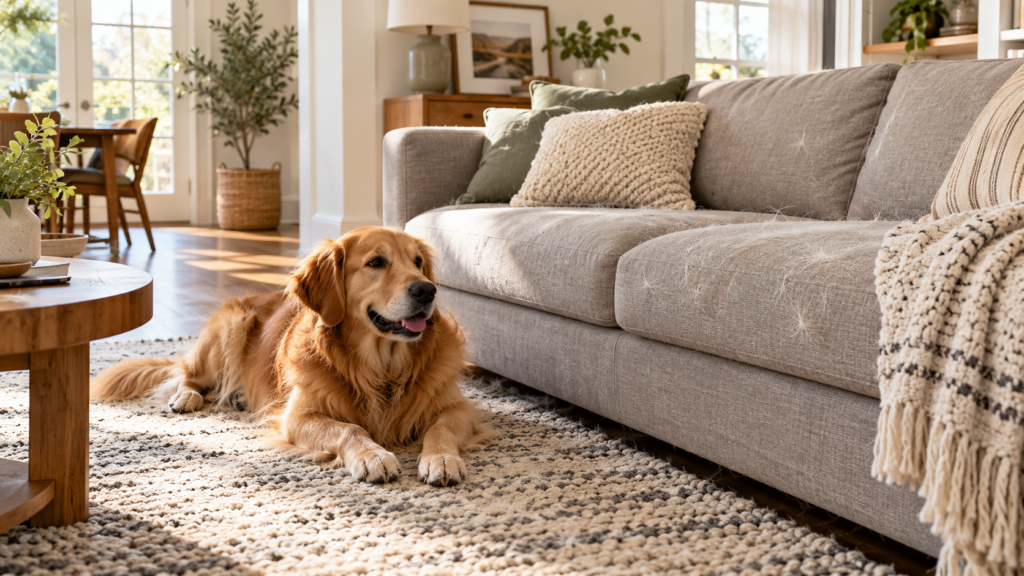
Sharing your home with pets brings endless joy—and plenty of loose fur on sofas, rugs, and clothing. If you are looking to get rid of pet hair across your living space, the secret isn’t buying every gadget on the market. It comes down to matching the right cleaning method to each specific surface in your home.
By using simple friction tools, pre-wash laundry steps, and a realistic cleaning routine, you can keep visible shedding under control while reducing the risk of damage to delicate fabrics or furniture finishes.
Quick Decision Guide: Surface-by-Surface Hair Removal
To help you get started right away, here is a quick guide to methods worth considering for common household surfaces. Check the specific material and tool instructions before use.
| Surface / Material | Try First | If Hair Remains | What to Avoid / Check |
|---|---|---|---|
| Woven Furniture & Microfiber | Vacuum with upholstery attachment using overlapping passes. | Reusable roller or rubber detailer only if the fabric maker permits friction tools; patch-test first. | Check furniture care code before applying any damp cloths, heavy friction, or liquids. |
| Leather & Vinyl | Dry, soft microfiber cloth or approved vacuum attachment. | Lightly damp cloth (if approved for finish) or furniture-maker approved leather care products. | Avoid adhesive tape rollers (can leave sticky residue), abrasive tools, and unapproved chemical wipes. |
| Velvet, Bouclé & Chenille | Compatible low-suction upholstery attachment; follow pile direction on velvet, avoid dragging across bouclé/chenille loops. | Gentle dry spot removal; try a barely damp cloth/glove only if the maker allows it and a concealed test is safe. | Avoid snagging loops, stiff brushes, aggressive friction, or unapproved moisture. |
| Delicate Garments (Fine Wool, Silk, Knits) | Care-label-approved, low-friction dry removal; a soft garment brush for compatible wool/knits. | A gentle lint tool only after a hidden-area test; professional care for fragile or dry-clean-only pieces. | DO NOT use metal-toothed scrapers, vigorous brushing, or strong adhesive on delicate fabric. |
| Clothes & Laundry | Brush or roll loose hair off dry fabric before washing. | Optional no-heat (air-only) dryer tumble before washing (if dryer-safe; check after ~10 mins). | Clean the dryer lint screen after every load; follow garment care labels. |
| Carpets & Rugs | Vacuum with brush roll (for compatible cut-pile carpets). | Maker-approved rubber carpet rake or squeegee broom in light, short strokes; avoid delicate loops, fringe, and long pile. | Switch to suction-only vacuuming for shag or sensitive thick-loop constructions (including some wool/wool-blend styles). |
| Hard Floors (Tile, Hardwood) | Rubber bristle broom or hard-floor vacuum attachment. | Dry microfiber dust mop (or barely damp mop if finish permits). | Avoid standard bristle brooms that kick hair airborne or excess standing water. |
1. Couches & Upholstered Furniture
Furnishings collect fur quickly, especially in cushion seams and along armrests. When looking into how to remove dog hair from upholstery, always start with a dry method before introducing moisture or friction.
Understanding Upholstery Care Codes First
Before applying a damp cloth or any cleaning liquid to furniture, check the care tag (usually located under sofa cushions or along the base frame):
| Care Code | What It Means for Hair Removal |
|---|---|
| W | Water-based spot cleaning allowed according to La-Z-Boy’s fabric care guide. A barely damp cloth may be appropriate for compatible fabrics after an inconspicuous spot test; avoid saturating fabric. |
| S | Solvent-based cleaning only. Do not use water-based damp gloves, spray mists, or steam. Use dry vacuuming or dry friction tools. |
| W/S or S/W | Either water- or solvent-based methods are permitted per manufacturer directions. |
| X | Vacuum or light dry brushing only. No liquids, damp tools, or heavy friction rollers. |
Surface Techniques
Choose tools according to both the furniture care code and the fabric construction. On Code-X furniture, limit treatment to vacuuming or light dry brushing unless the manufacturer explicitly permits another method. Test rollers, rubber detailers, and any damp friction technique on a concealed area before use.
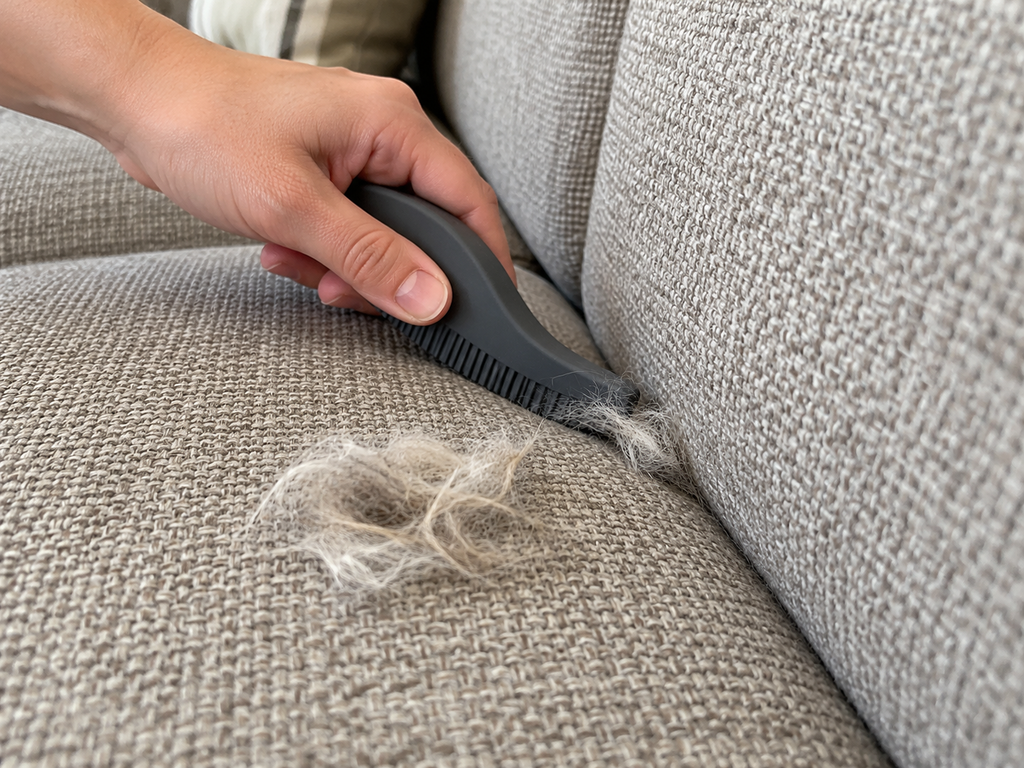
- Woven Fabrics & Microfiber: For compatible woven upholstery, vacuum cushions and seams using an upholstery attachment, working in overlapping directions to lift trapped fur. Follow up with a reusable electrostatic roller as a handy pet hair remover for furniture cushions, or use a multi-edged rubber detailer to pull hair out of tight 90-degree seams and corners. If the fabric care code allows water (W or W/S), a lightly dampened microfiber cloth wiped in one direction helps gather loose strands into clean lines.
- Leather & Vinyl: Lift loose hair with a clean, soft, dry microfiber cloth or a vacuum attachment approved for the surface. Avoid abrasive scraping tools and do not assume adhesive rollers or wet wipes are suitable for every leather finish. If additional cleaning is needed, follow the furniture manufacturer’s finish-specific instructions. Vitra’s leather care guide recommends gentle cloth cleaning and appropriate leather-care products; it does not evaluate pet-hair rollers or cleaning wipes.
- Velvet, Bouclé & Chenille: Hard scrubbing or stiff brushes can crush velvet pile and tear chenille or bouclé loops. For velvet, follow the maker’s pile-direction guidance and use a low-suction upholstery attachment with a soft brush. For bouclé and chenille, use a gentle vacuum attachment without dragging or catching loops. Only try a lightly damp rubber glove or microfiber cloth if both the care label and an inconspicuous spot test indicate that moisture and friction are safe. Avoid steam unless the specific furniture maker explicitly recommends it.
2. Clothes, Bedding & Laundry
Washing fur-covered garments directly often leaves hair stuck to wet fabrics or redeposited across the rest of the wash load. If you are wondering how to remove dog hair from clothes effectively, a pre-wash mechanical step makes a big difference.
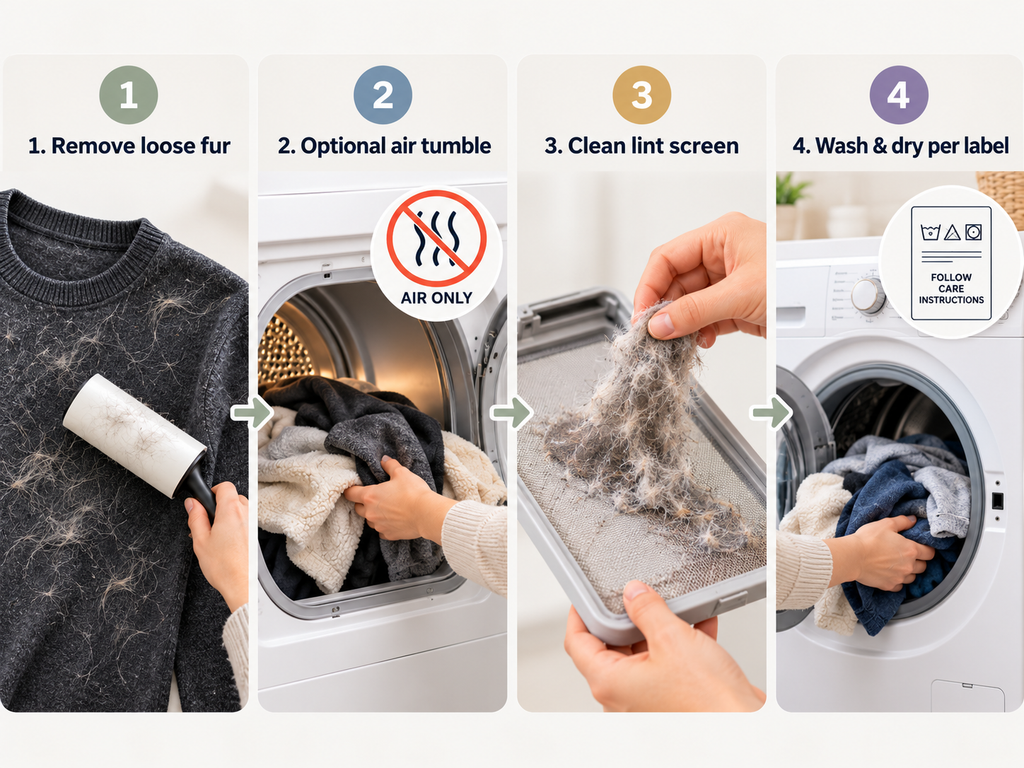
How to Remove Pet Hair in Laundry: The Dry-Before-Wash Sequence
- Remove Loose Fur While Dry: Before putting clothes or pet blankets into the washing machine, give them a vigorous outdoor shake or use a sticky lint roller or soft garment brush to remove heavy surface fur.
- Optional Pre-Wash Air Tumble: For dryer-safe garments, Maytag’s pet hair laundry guide suggests an optional tumble in the dryer on a no-heat or “air-only” setting, checking after about 10 minutes. The tumbling action and airflow help loosen fur, drawing loose strands into the lint trap.
- Clean the Lint Screen: Always clean the dryer lint screen immediately after the pre-tumble cycle and after every regular dryer load to maintain proper airflow.
- Wash & Dry Per Care Label: Wash clothes in uncrowded loads using your normal laundry detergent. Overloading the drum prevents water from circulating, trapping loose hair right back onto your laundry. Dryer sheets are optional: use them only if both the textile and dryer instructions allow them. Skip them on items whose labels prohibit softeners, including some absorbent or barrier-backed pet textiles. Dryer balls are also optional and must be compatible with the load and appliance; neither replaces removing loose fur before washing.
Note on Laundry Additives: Vinegar is often promoted online for pet-hair laundry, but its effectiveness for this purpose is not established here. Whirlpool’s laundry maintenance guide cautions that repeated use of vinegar inside washing machines can degrade rubber seals and internal hoses over time. Prioritize dry brushing or rolling before washing, and follow your washer’s use-and-care instructions before adding any laundry additive.
Bedding & Blanket Care
- Clump Before Washing: Shake washable pet blankets outdoors, then use a rubber glove to gather fur only if the textile permits friction. Dampen the glove only if moisture is allowed, and test a hidden area first.
- Washing Pet Bedding: Wash pet bed covers and blankets regularly using the water temperature and cycle on their care tags. Foam inserts may have different restrictions; see how to wash a dog bed without damaging it.
3. Rugs, Carpets & Hard Floors
Pet hair weaves into carpet fibers and floats across hard floors, settling under baseboards and furniture.
Carpets & Low-Pile Rugs
Understanding how to remove dog hair from carpet starts with matching your tool to the rug’s construction.
- Vacuuming Strategy: On cut-pile carpets whose care instructions permit a rotating brush, vacuum high-traffic areas regularly in multiple directions to lift fibers and pull out deeply embedded undercoat. For other constructions, follow the carpet or rug maker’s vacuum guidance.
- Rubber Rakes & Brooms: Where the rug maker permits friction tools, a long-handled rubber broom or carpet rake serves as an effective pet hair remover for carpet surfaces. Test on a small hidden area first and use light, short strokes to gather matted undercoat rolls. Avoid rakes on delicate loops, fringe, long pile, or any surface that snags or develops fuzzing.
- Shag, Loop-Pile & Wool Rugs: Caution: Shag rugs and thick loop-pile carpets—especially some wool and wool-blend styles—may need suction-only vacuuming or a raised, non-contact brush. Per Shaw Floors’ carpet care guidelines, rotating brushes can wrap long yarns or roughen sensitive loop pile. Check the specific rug’s care instructions rather than assuming all wool rugs are alike.
Hard Floors (Tile, Hardwood, Laminate)
- Rubber Brooms vs. Bristle Brooms: Standard broom bristles tend to flick lightweight pet hair into the air, where it floats and settles right back onto furniture. Use a rubber bristle broom or squeegee broom instead—the rubber edges pull fur along hard surfaces with less scattering than standard bristle brooms.
- Microfiber Mops & Vacuums: The best way to clean dog hair on hardwood floors is using a dry microfiber dust mop or hard-floor vacuum attachment for routine fur collection, aligned with National Wood Flooring Association maintenance guidance. Avoid wet or steam mops on wood flooring. For laminate or vinyl flooring, check the specific manufacturer’s cleaning and moisture guidelines.
4. Which Pet-Hair Removal Tool Should You Choose?
With dozens of pet hair gadgets available, here is how the primary tool categories compare in practical home use:
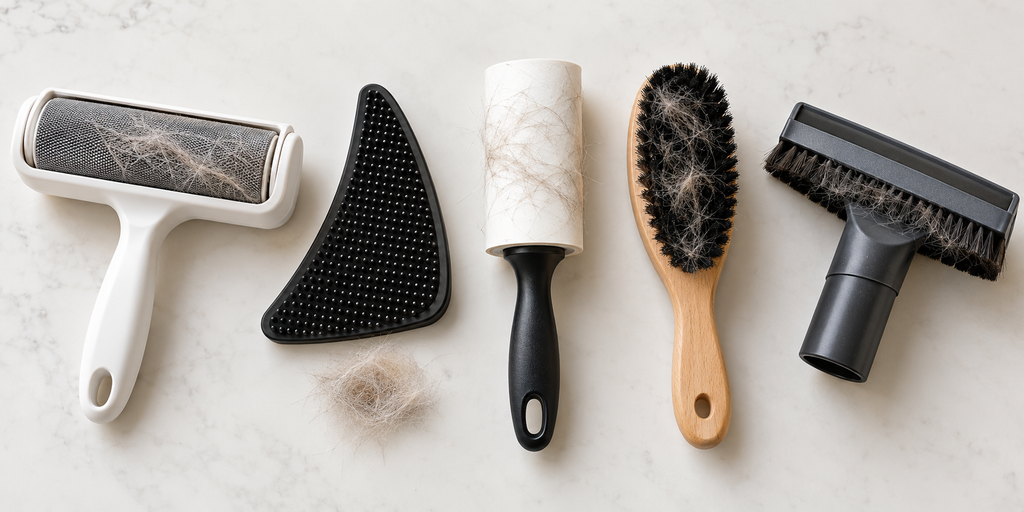
- Reusable Electrostatic Rollers (e.g., ChomChom): Feature fabric pads and a central rubber blade that collect fur into an internal chamber when rolled back and forth. Often useful for large flat cushions and bedding; requires no disposable refills. Tradeoff: Rigid shape makes them difficult to use on tight seams or loose clothing.
- Rubber Detailers & Rakes (e.g., FurDozer, Lilly Brush): Flexible rubber edges are designed to pull short undercoat fur out of tight 90-degree sofa seams, car seats, and rug edges. Tradeoff: Raking large floor areas by hand takes physical effort.
- Sticky Disposable Tape Rollers: Pressure-sensitive adhesive sheets quickly pick up fine hair from everyday garments, trousers, and compatible fabric lampshades (after a concealed test). Tradeoff: Generates ongoing paper waste, and adhesive contact should be tested first on delicate knits or avoided on leather.
- Soft Garment Brushes: Soft natural or synthetic bristles can help remove surface hair from compatible wool and knitwear. Check the garment’s care guidance and use minimal pressure, particularly on silk or fragile fabrics.
- Vacuum Attachments: Choose an attachment approved for both your vacuum and the material. Motorized brushes can help on compatible sturdy fabrics but may snag loops or damage delicate pile; use the maker-recommended suction-only or soft-brush tool instead where required.
5. Cleaning Mistakes That Can Damage Fabrics or Surfaces
Avoiding common cleaning missteps protects your home furnishings from unnecessary wear:
- Metal Scraping Tools on Delicates: Metal-toothed removers can snag or tear knitted garments, fuzzy sweaters, and delicate upholstery. In independent tests by Good Housekeeping, one metal-toothed remover snagged polyester knits and fuzzy fabrics. Reserve metal tools for sturdier, compatible carpet or heavy canvas surfaces, and never use them on clothing, leather, or delicate weaves.
- Over-Scrubbing Velvet or Pile Fabrics: Scrubbing velvet back and forth crushes the pile and creates dull patches. Always work gently in the direction of the fabric grain.
- Harsh Chemicals or Tape on Leather: Adhesive tape rollers can leave a sticky residue on leather, while harsh household sprays can strip topcoats. Stick to dry microfiber cloths or approved leather cleaners.
- Overloading the Washing Machine: Packing too many clothes or heavy blankets into one wash load prevents water from circulating, trapping loose hair right back onto your laundry.
6. A Manageable Home Maintenance Routine
Living with pets means accepting that some shedding will happen. The goal is a manageable routine that prevents fur from building up into a major chore.
Proactive Pet Grooming
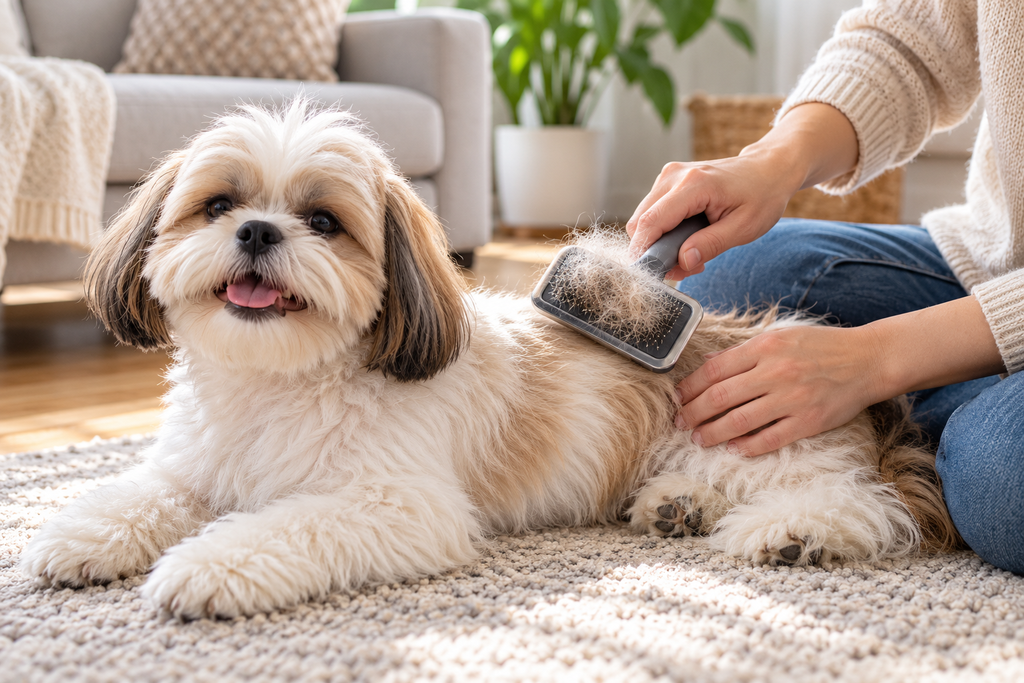
Brushing your pet regularly catches dead hair before it lands on your furniture. Grooming needs depend on your pet’s specific coat type:
- Brushing Frequency: Choose brushes or combs suited to your pet’s species, coat type, and skin condition. Long-haired breeds and double-coated pets benefit from frequent brushing using slicker brushes or deshedding tools. Short-coated pets need less frequent grooming.
- Bathing Guidelines: Bathe pets as appropriate for their coat, health, and activity level, following veterinary advice and product label directions. Always rinse shampoos thoroughly to prevent skin irritation.
Simple Weekly Cleaning Schedule
- Daily Quick Passes (2–3 Minutes): Give high-traffic sofa cushions a quick pass with a material-compatible tool. Use only vacuuming or light dry brushing on Code-X upholstery. A washable protective layer can simplify cleanup; see our dog sofa cover fit and fabric guide.
- Weekly Focus: Vacuum high-traffic rugs, carpets, and hard floors. Wash pet blankets and bedding using the warmest water allowed by their care labels.
- Appliance Maintenance: Clean the dryer lint screen after every load. Inspect vacuum filters periodically and clean as needed to maintain proper suction. Check home HVAC filters monthly and replace as required.
Frequently Asked Questions
Why does pet hair stick so stubbornly to fabrics?
Pet hair clings to furniture and clothes due to static electricity and natural friction. Synthetic fabrics and dry indoor air increase static cling, while physical pressure from sitting pushes loose strands deeper between woven threads.
What is the best way to remove pet hair from couch cushions?
Start with a compatible upholstery vacuum attachment. Use a reusable roller or rubber detailer only where the maker allows friction tools and a hidden-area test is safe. On Code-X upholstery, stick to vacuuming or light dry brushing; S-coded fabric should not be treated with damp tools. W or W/S codes do not override restrictions for delicate pile or loose loops.
Can running clothes in the dryer remove pet hair before washing?
Yes, for dryer-safe garments. Running clothes through a no-heat (air-only) dryer cycle—checking after about 10 minutes—tumbles loose fur out of fabric fibers and into the lint trap before washing. Always clean the lint screen immediately afterward.
Are metal pet-hair scrapers safe for clothes?
No. Metal-toothed tools can easily catch, snag, or pull threads on knitted sweaters, delicate garments, and soft upholstery. Use a soft garment brush or a gentle lint roller for clothing instead.