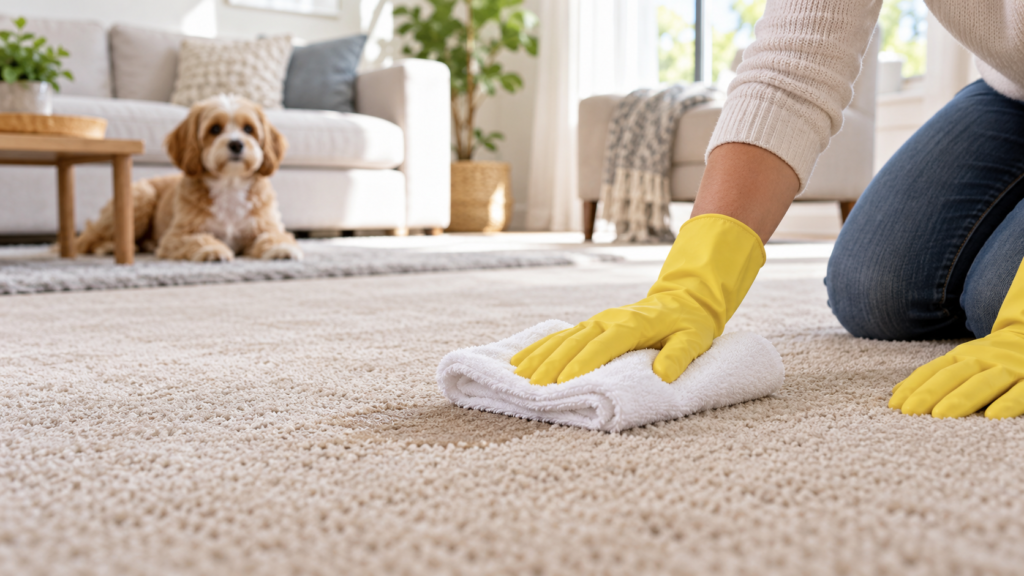
If your dog just peed on the carpet, act immediately:
- Keep your dog away from the area to prevent tracking urine across the house.
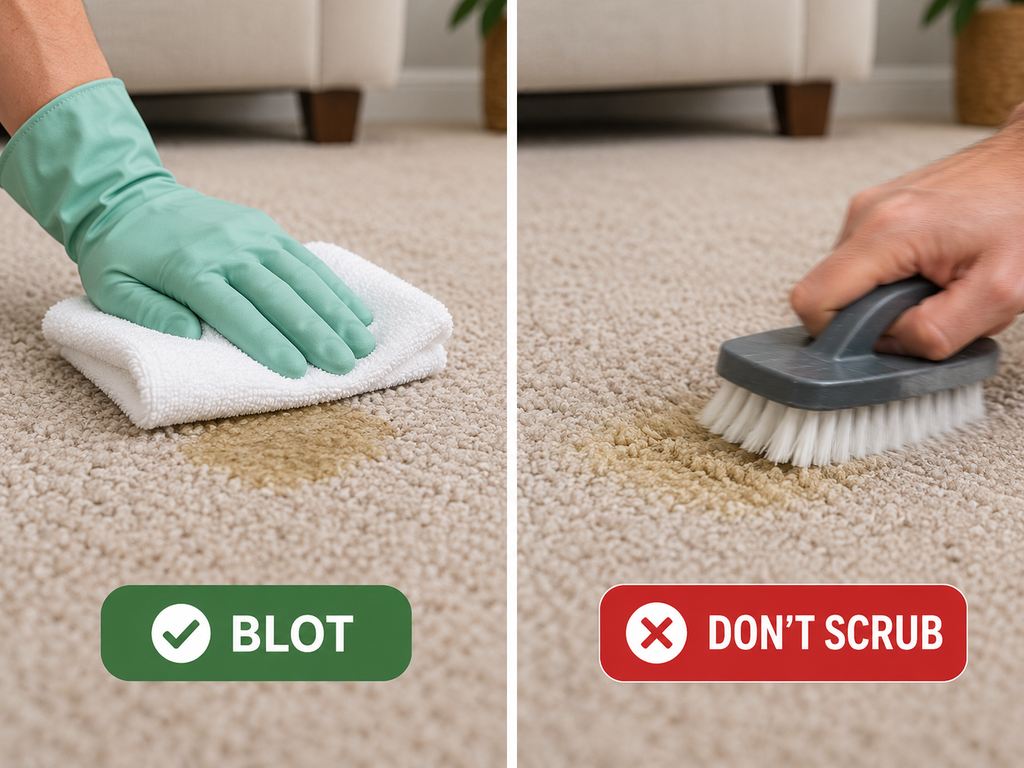
- Blot—never scrub—using a thick layer of plain white paper towels or clean white cloths to absorb liquid from the carpet surface CRI — Cleaning and Maintenance.
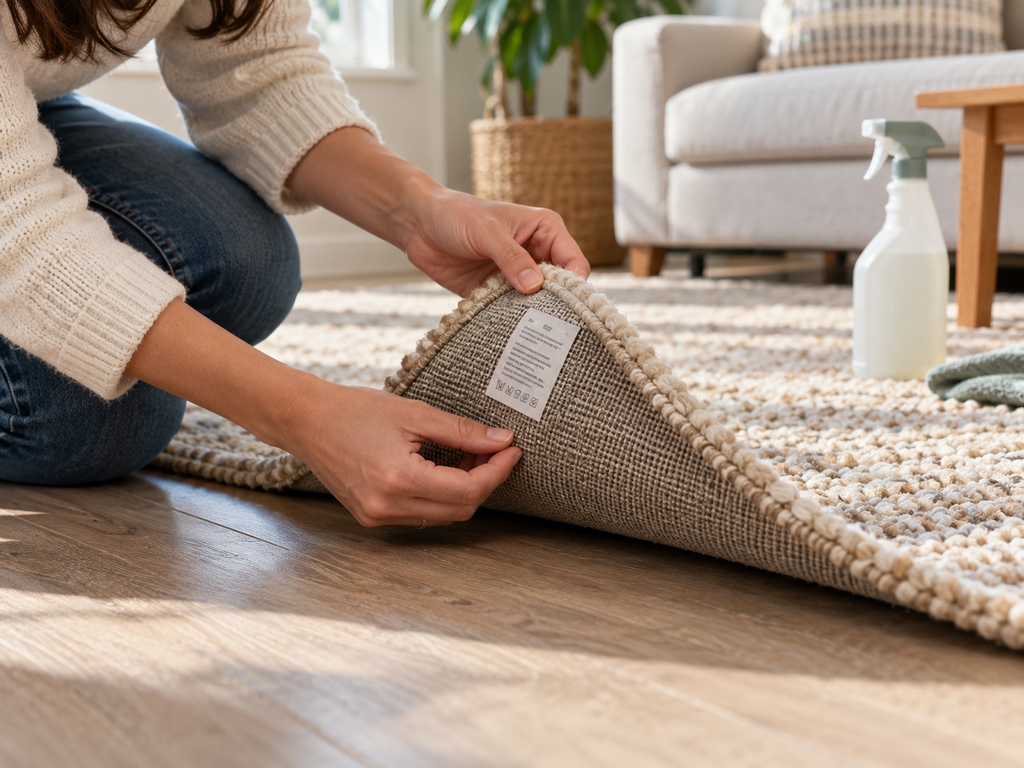
- Check your carpet’s care directions before applying water or cleaning solutions.
- Use a carpet-compatible pet stain cleaner following the exact directions on the product label US EPA — Read the Label First: Protect Your Pets.
Avoid household steam cleaning directly on urine spots, as the Carpet and Rug Institute CRI — Cleaning and Maintenance warns that heat can set urine stains and odors.
Knowing how to get dog pee smell out of carpet and how to clean dog urine from carpet safely requires choosing the right steps for fresh wet spots versus dried stains, and checking your carpet’s fiber material before applying liquid.
What to Do Right Now: Step-by-Step Fresh Accident Cleanup
When learning how to clean dog pee from carpet after a fresh wet accident, follow this safe 6-step cleanup procedure for standard synthetic fibers.
- Isolate the Area and Protect Your Hands
Move your dog to a separate room so they do not track urine across the house. Put on clean household cleaning gloves. Ensure good room ventilation if recommended by your cleaning product’s label CDC — When and How to Clean and Disinfect Your Home. - Blot and Absorb Liquid (Never Scrub)
Place a thick stack of unprinted white paper towels or clean white absorbent cloths directly over the wet spot CRI — Spot Solver: Urine, Dry. Apply firm downward pressure—or stand on the towel stack—to pull moisture out of the carpet pile.- Crucial Rule: Never scrub, rub, or use stiff brushes. Scrubbing frays carpet fibers, untwists yarns, and spreads the stain wider CRI — Cleaning and Maintenance.
- Optional Cool-Water Rinse and Extraction (If Compatible)
After blotting, check both your carpet’s care instructions and your cleaner’s directions. If they allow a preliminary rinse, pour a small, controlled amount of clear, cool water over the spot to dilute remaining urine CRI — Technical Bulletin: Pet Urine and Carpet. Immediately extract the liquid using a wet-dry vacuum or small spot extractor, or by pressing dry white towels firmly into the area. Otherwise, move directly to the cleaner’s stated application method.- Safety Warning: Never use a standard dry household vacuum on wet carpet, as liquid damages dry vacuum motors and creates electrical hazards. Avoid over-wetting or soaking the carpet.
- Test Your Cleaner in a Hidden Spot
Before treating the stain, apply a small amount of your chosen cleaner to an inconspicuous area (such as inside a closet or room corner). Follow the cleaner’s patch-test instructions, and allow the test area to dry completely before evaluating for color bleeding, dye transfer, or texture changes CRI — Spot Solver: Urine, Dry. - Apply Cleaner According to Bottle Directions
Apply a cleaner suitable for your carpet and specifically labeled for pet stains and odors US EPA — Read the Label First: Protect Your Pets. Follow its exact bottle directions for how much product to use, required contact time, and application method. Do not add excess free water or repeatedly soak the carpet to compensate for suspected padding contamination. - Follow Label Instructions for Drying and Pet Re-Entry
Finish by blotting or rinsing only if your product’s label directs you to do so US EPA — Read the Label First: Protect Your Pets. Accelerate drying by turning on fans, opening windows, or running a dehumidifier. Keep pets and children away from the treated area until the product label indicates re-entry is safe—often once the surface is completely dry US EPA — Read the Label First: Protect Your Pets. If carpet backing or padding remains persistently wet, seek professional help rather than applying more liquid US EPA — Mold Course, Chapter 4.
How to Handle Dried Urine Stains & Hidden Spots
Old urine spots can be harder to remove, and prolonged contact may leave lasting discoloration or damage to carpet materials. CRI — Technical Bulletin: Pet Urine and Carpet.
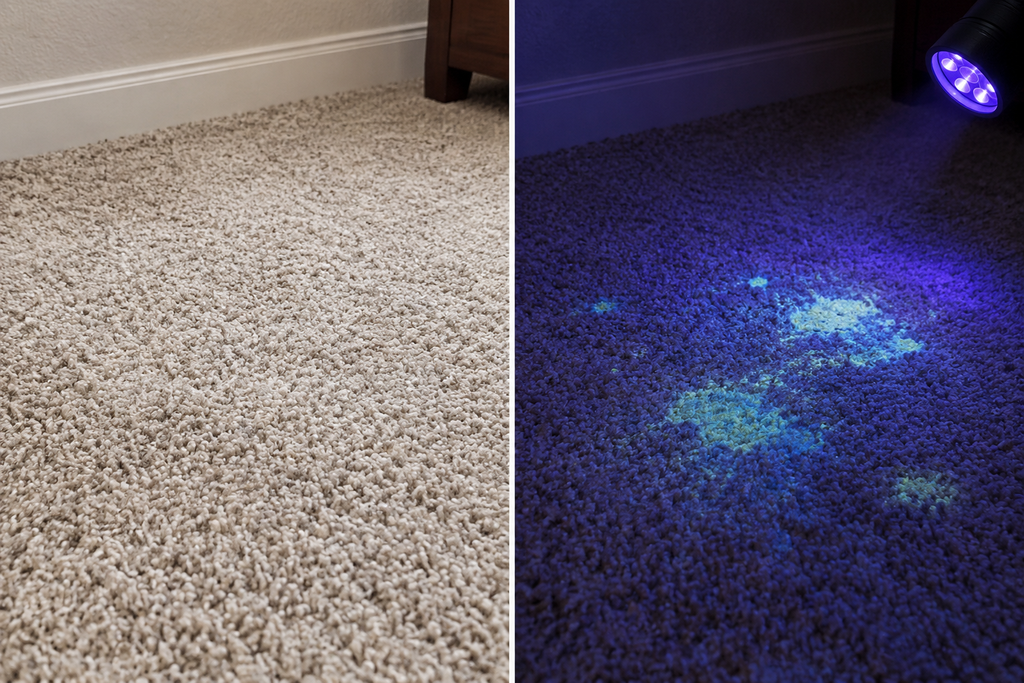
- Locating Hidden Spots (Optional UV Flashlight Tool): A UV flashlight in a darkened room can help reveal some suspected dried urine spots because some dried urine residues may fluoresce under ultraviolet light Carpet Care Cleaners — Urine Mapping and Detecting Urine in Carpet.
- Note: A UV light is an optional troubleshooting tool, not a required step. Other household residues (like detergent traces or spilled drinks) can also fluoresce under UV light, and an absence of glow does not guarantee a spot is completely clean.
- Cleaning Dried Stains: Choose a carpet-compatible product labeled for set-in pet stains. Lightly rehydrate or rinse only if your carpet care instructions and product directions permit it CRI — Spot Solver: Urine, Dry. Avoid uncontrolled soaking.
Check Your Carpet Material Before Cleaning
Different carpet constructions and area rugs react differently to moisture and cleaning chemicals. Understanding how to clean a rug with dog pee or treat installed carpet starts with checking your carpet manufacturer’s care guidelines before applying any liquid CRI — Cleaning and Maintenance.
Synthetic Carpets (Nylon, Polyester, Triexta, Olefin)
Many synthetic fibers absorb relatively little moisture, but urine liquid can still move through the pile into the backing and pad beneath CRI — Technical Bulletin: Pet Urine and Carpet. Synthetics generally tolerate standard CRI Seal of Approval pet spot cleaners when used as directed CRI — Why Are Seal of Approval Products Right for Your Home?. Avoid excessive soaking to protect latex backing adhesives.
Cleaning Wool and Wool-Blend Carpets
Wool is a natural protein fiber that requires specialized care, so knowing how to get dog pee out of rug fibers made of wool differs from cleaning synthetic pile WoolSafe — Services for Carpet Owners.
- What to Avoid on Wool: Avoid harsh cleaners, unapproved chemicals, or strong alkaline products on wool WoolSafe — Product Testing. Avoid ammonia-based cleaners; the smell may encourage some dogs to mark the same spot again. Connecticut Humane Society — Housetraining Your Dog. Never scrub wool, as friction causes permanent pilling and fuzzing.
- WoolSafe Cleaning Protocol: Use cool water and a cleaner specifically certified as WoolSafe-approved WoolSafe — Services for Carpet Owners. Always perform a hidden patch test, blot gently, and consult a professional cleaner if you need to know how to get dog urine smell out of rug fibers with set-in stains.
Delicate, Jute, Plant-Fiber & Silk Rugs
Plant-fiber rugs (sisal, coir), jute backings, and silk face-fibers are highly moisture-sensitive. When considering how to get rid of dog pee smell on rug materials like jute or silk, avoid excess moisture, which can cause jute backings to shrink, discolour, or stain CRI — Technical Bulletin: Pet Urine and Carpet. Delicate natural fibers should be handled by a professional rug cleaning specialist.
Quick Decision Table for Pet Owners
| Scenario | Recommended Action | What to Avoid |
|---|---|---|
| Fresh Wet Spot (Synthetic Carpet) | Blot immediately with plain white towels; perform an optional cool-water rinse if carpet and cleaner directions allow; apply a carpet-compatible pet stain cleaner following label directions CRI — Spot Solver: Urine, Dry. | Do not scrub; do not use hot water or household steam mops CRI — Cleaning and Maintenance. |
| Dried Urine Stain (Synthetic Carpet) | Locate spot (UV flashlight optional); apply a carpet-compatible pet cleaner following label instructions for set-in stains CRI — Spot Solver: Urine, Dry. | Do not over-soak carpet or layer multiple chemical products haphazardly US EPA — Read the Label First: Protect Your Pets. |
| Fresh Accident on Wool Carpet | Gently blot surface liquid with plain white towels; apply a WoolSafe-approved pet spot cleaner following label directions WoolSafe — Services for Carpet Owners. | No household ammonia, chlorine bleach, or harsh rubbing WoolSafe — Product Testing. |
| Delicate, Jute, or Silk Rugs | Gently blot surface moisture; consult a professional rug cleaning specialist CRI — Technical Bulletin: Pet Urine and Carpet. | Do not perform DIY wet extraction or heavy soaking CRI — Technical Bulletin: Pet Urine and Carpet. |
Why Dog Pee Odors Keep Coming Back (Subsurface Contamination)
If you are trying to figure out how to get rid of dog urine smell in carpet when an odor returns after cleaning, especially in humid weather, urine residue may remain in the carpet, backing, or cushion pad CRI — Technical Bulletin: Pet Urine and Carpet. Depth cannot be confirmed from odor alone.
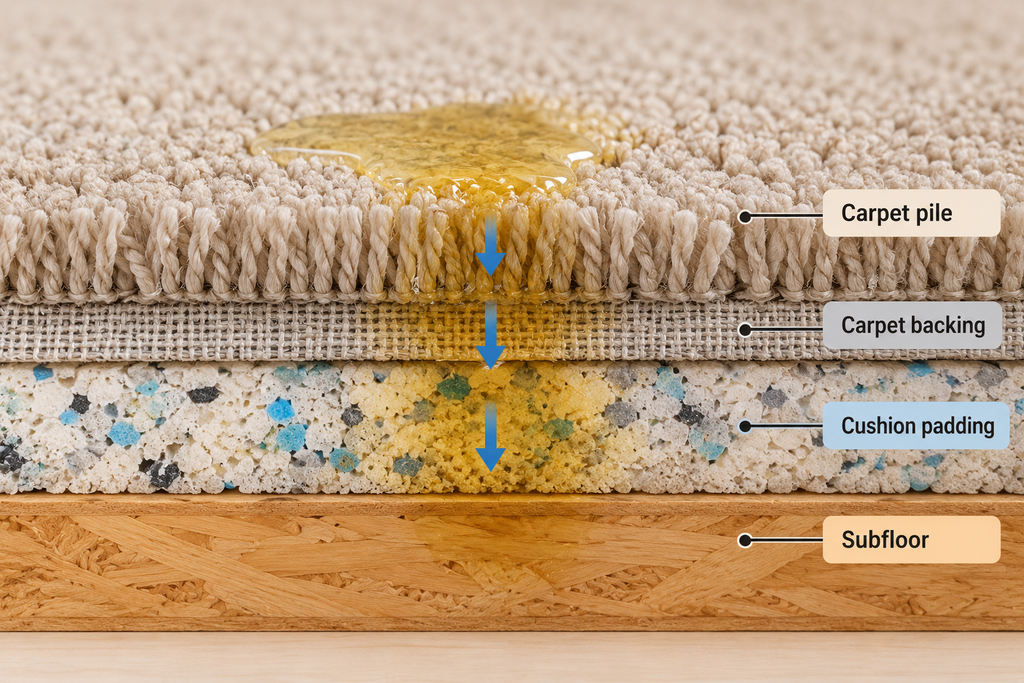
Potential Signs of Deeper Contamination
- Recurring Stains (Wicking): A spot that reappears after cleaning and drying may be caused by wicking: residual material from deeper in the carpet yarns or backing moves toward the surface as the area dries. A recurring stain does not, by itself, prove that urine reached the padding. IICRC — Consumer Floor and Furnishings Care Information, §22: Wicking (PDF, p. 31).
- Humidity Odor Spikes: Urine-related odors can become noticeable again during humid conditions CRI — Technical Bulletin: Pet Urine and Carpet; this does not by itself identify a particular chemical process or contaminated layer.
- Backing Damage: Prolonged urine exposure can weaken latex adhesives, potentially causing carpet backing layers to separate over time CRI — Technical Bulletin: Pet Urine and Carpet.
When to Call a Professional Carpet Cleaner
- Suspected Subsurface Contamination: When urine has deeply saturated the carpet cushion or subfloor, surface cleaning is insufficient. A professional can assess whether the cushion pad needs replacement and the subfloor requires sealing.
- Delicate & Specialty Materials: Delicate wool, silk, or plant-fiber rugs with set-in stains should be cleaned by certified professional rug technicians WoolSafe — Services for Carpet Owners.
- Routine Deep Cleaning: The Carpet and Rug Institute recommends professional deep cleaning about every 12 to 18 months; check your carpet manufacturer’s specific warranty requirements CRI — Cleaning and Maintenance.
Frequently Asked Questions (FAQs)
Can I use vinegar or baking soda on dog pee in carpet?
While a dilute white vinegar solution is included in certain specific carpet spot-cleaning protocols CRI — Spot Solver: Urine, Dry, vinegar is not an enzyme cleaner and will not break down deep urine odor compounds. Do not mix household cleaning products. Never mix bleach with ammonia, vinegar, or other cleaners , because hazardous fumes can be released. Follow the product label before combining or applying any treatments. CDC — Cleaning and Disinfecting with Bleach. Baking soda is not a substitute for removing urine residue; do not apply powders unless both the carpet and vacuum manufacturers allow them. Use a vinegar protocol only if the specific carpet care instructions permit it. Wool needs a compatible WoolSafe-approved product; silk, jute, sisal, and other delicate rugs need specialist advice rather than a generic DIY treatment.
What if I don’t have an enzyme cleaner right now?
If an accident happens and you do not have a pet cleaner on hand: blot the area immediately with plain white towels to absorb as much liquid as possible CRI — Spot Solver: Urine, Dry. On water-cleanable synthetic carpet, if the care instructions permit it, use a small amount of cool water and absorb it with clean white towels after blotting the urine. Do not wet-extract silk, jute, sisal, or other delicate rugs yourself; seek specialist advice. For wool, follow its care instructions and use a compatible WoolSafe-approved product when available. Avoid over-wetting. When you obtain a suitable pet stain cleaner, follow its label—including whether it permits or requires a preliminary rinse—before applying it. Do not scrub or apply random household chemicals. Once you obtain a compatible pet stain cleaner, treat the area following its bottle label directions US EPA — Read the Label First: Protect Your Pets.
Why does my carpet smell worse after I clean it?
Cleaning can make previously unnoticed odor more apparent as old deposits become wet CRI — Technical Bulletin: Pet Urine and Carpet. Allow the area to dry completely with good room ventilation, and re-treat following your cleaner’s label instructions. If odor persists after thorough drying, consider professional assessment rather than repeatedly soaking the area.
Can I use a household steam cleaner on dog pee?
No. Avoid household steam cleaning directly on pet urine spots CRI — Cleaning and Maintenance. The Carpet and Rug Institute warns that high heat can set urine stains and odors into carpet fibers. For compatible synthetic carpet, use a controlled cool-water rinse and extraction only if the carpet and cleaner directions allow it. Do not wet-extract silk, jute, sisal, or other delicate rugs yourself; seek specialist care. Wool requires its own care instructions and compatible WoolSafe-approved treatment.
Related Guides & Resources
- Enzyme Cleaners for Dog Urine: How to Choose and Use Them — How to check surface compatibility, choose an enzyme-based urine cleaner, and follow label directions.
- How to Get Rid of Dog Smell in Your House — Practical steps for eliminating pet odors from air, furniture, and rooms.
- How to Get Dog Pee Out of a Mattress — Step-by-step cleanup guide for pet accidents on mattresses and bedding.
Primary Sources & References
- Carpet and Rug Institute — Cleaning and Maintenance — Covers blotting technique, no-scrubbing warnings, spot testing, Seal of Approval products, pet-urine steam cautions, and general professional cleaning recommendations.
- CRI — Technical Bulletin: Pet Urine and Carpet — Covers potential permanent dye changes, moisture-related backing separation, and humidity-associated return of odor.
- CRI — Spot Solver: Urine, Dry — Covers pre-testing, blotting, cool water rinsing, and specific spot protocols.
- CRI — Why Are Seal of Approval Products Right for Your Home? — Covers performance-based testing for carpet spot removers and pet stain/odor products.
- WoolSafe — Services for Carpet Owners — Covers WoolSafe-approved products, wool carpet care standards, and certified professional service providers.
- WoolSafe — Product Testing — Covers product safety and testing criteria for wool carpets.
- US EPA — Read the Label First: Protect Your Pets — Covers chemical product label precautions, protective ventilation, and keeping pets and children away from treated areas.
- US EPA — Mold Course, Chapter 4 — Covers general moisture control, extracting water, and drying carpet/backing.
- CDC — When and How to Clean and Disinfect Your Home — Covers cleaning soft surfaces, ventilation, and following product instructions.
- Carpet Care Cleaners — Urine Mapping and Detecting Urine in Carpet — Explains that blacklight fluorescence can suggest urine but is not conclusive.
- Connecticut Humane Society — Housetraining Your Dog — Advises against ammonia-based accident cleaners because the smell may encourage repeat marking.