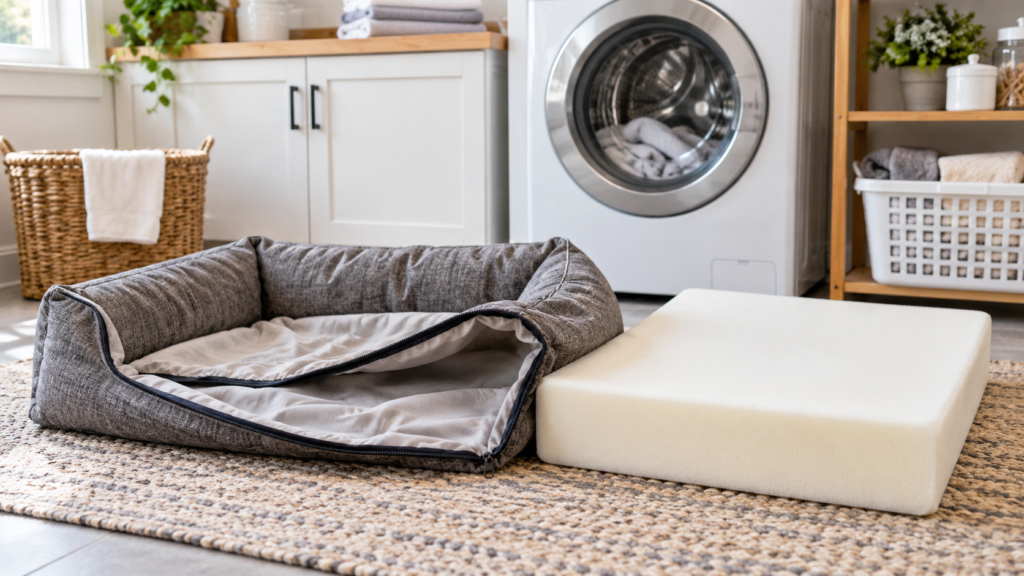
If your dog’s bed is looking muddy, covered in fur, or smelling less than fresh, tossing the whole thing into the washing machine might seem like the quickest fix. However, laundering a dog bed without checking its construction first can ruin it. Solid memory foam cores can tear and lose their shape when soaked, polyester filling can clump into hard lumps, and high heat can shrink fabric covers or crack protective waterproof coatings.
To wash a dog bed without damaging it, the best approach is to clean each component according to its care instructions: machine-wash removable covers only when approved, keep solid memory foam out of the washer and away from soaking, and follow the foam manufacturer’s instructions for dry airing or limited surface cleaning. Let every part dry completely before reassembling the bed.
Routine care and accident cleanup both start with understanding care label symbols, pre-wash preparation, safe drying methods, and knowing when routine washing is enough versus when special disinfection is needed.
Quick Care Rules: The Basics of Dog Bed Laundry
Before applying water or detergent, keep these simple safety rules in mind:
- Check the Care Tag First: Product labels on the outer cover, inner liner, and cushion core are your best guide. Never assume “washable” on the bed’s packaging applies to every internal layer.
- Never Machine-Wash or Submerge Solid Memory Foam: Soaking solid foam in water fills its internal air pockets, making it heavy, fragile, and extremely difficult to dry completely. Follow the exact foam manufacturer’s directions: some allow limited damp spot-cleaning, while others require dry care only. Do not assume water or detergent is permitted.
- Dry Everything Completely: Trapped moisture inside foam cores or dense fiberfill leads to musty odors and mold. Always verify that every component is dry all the way through before reassembling.
1. Read the Care Label & Identify Bed Parts
Dog beds are built from contrasting materials—such as heavy cotton canvas, faux fur, waterproof plastic backing, and orthopedic foam—so a single bed often carries different care instructions for each part.
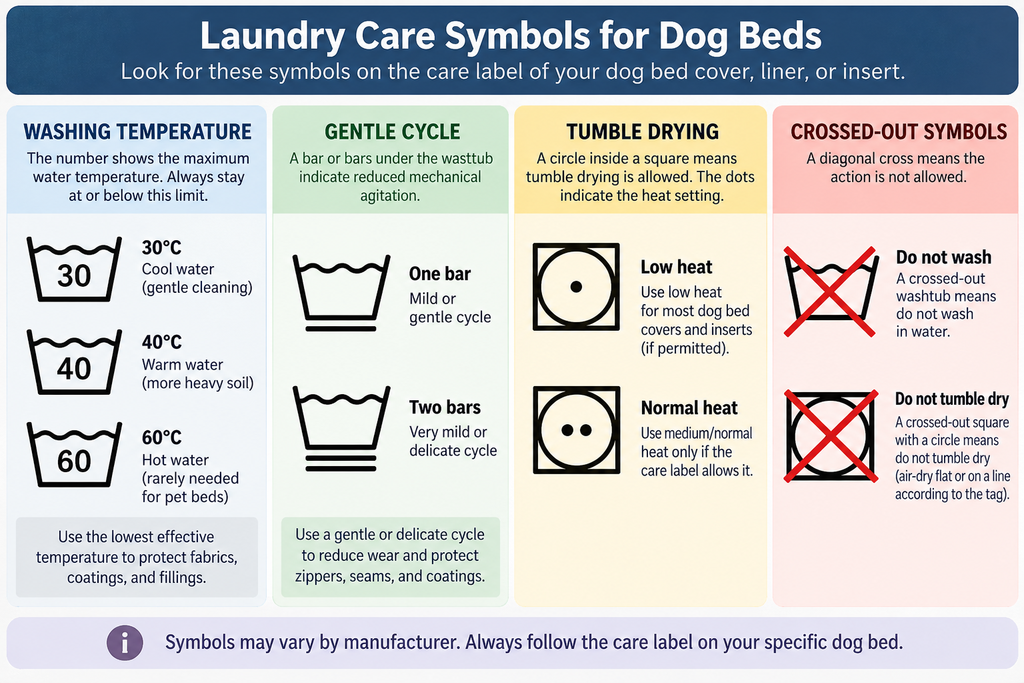
Key Care Symbols to Look For
- Washtub with Number: Shows maximum recommended water temperature (e.g., 30°C or 40°C). Always stay at or below this limit.
- Bar Under Washtub: Indicates a mild or gentle cycle (reduced mechanical agitation). Two bars indicate a very mild cycle.
- Circle Inside a Square: Tumble drying is permitted. One dot indicates low heat; two dots indicate normal heat.
- Crossed-Out Symbols: A crossed-out washtub means do not wash in water. A crossed-out square containing a circle means do not tumble dry (air-dry flat or on a line according to the tag).
What to Do If the Care Tag Is Missing
If the care label has been cut off or faded, do not assume the bed or foam core is safe for the washing machine. Search the manufacturer’s website for your specific bed model or contact customer support.
If you cannot confirm whether a part can be machine-washed, do not assume that cold or gentle washing will be safe. Until the material and care restrictions are confirmed, limit care to gentle dry hair removal where suitable. Do not assume a damp cloth, mild soap, or a successful hidden-area test makes wet cleaning safe; ask the manufacturer before applying liquids. Only machine-wash a part when its construction and care instructions explicitly support that method.
Identify Your Bed’s Components
Before cleaning, unzip accessible compartments and separate the bed into individual layers. Taking a quick photo of the assembled bed before taking it apart makes reassembly much easier later.
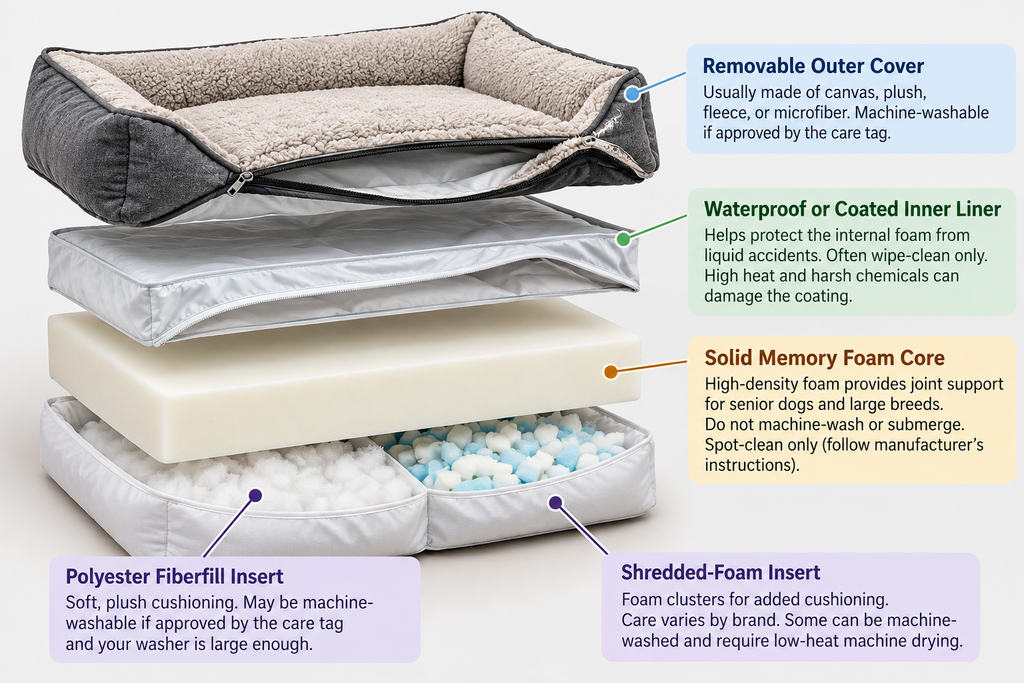
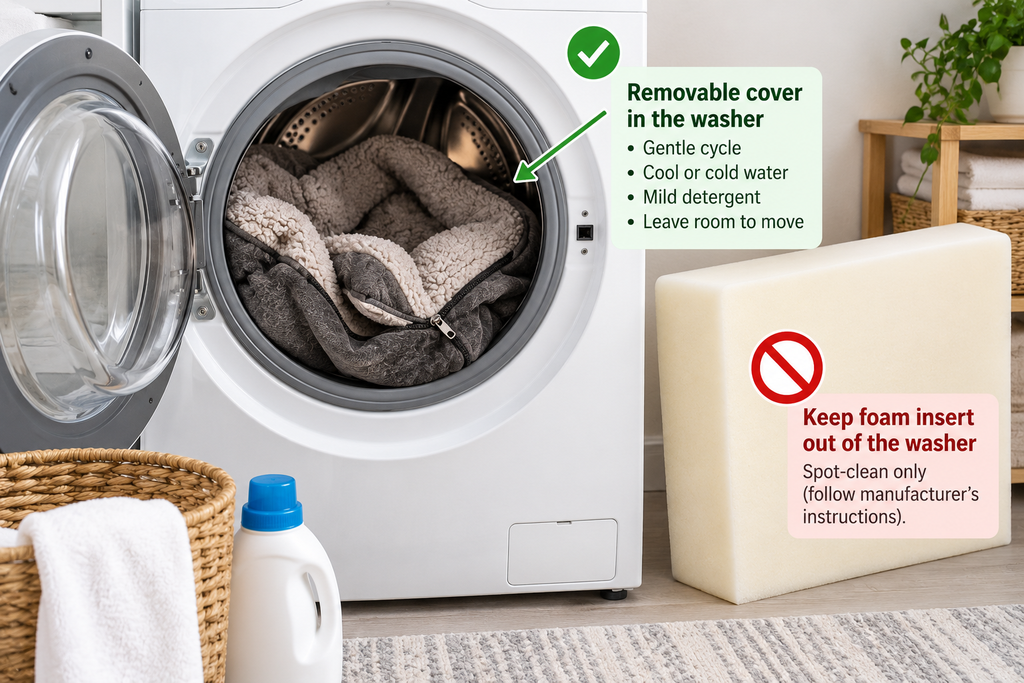
- Removable Outer Covers: Usually made of canvas, plush, fleece, or microfiber. When planning how to wash a dog bed with a removable cover, unzip the fabric cover from the core and machine-wash on a gentle cycle if approved by the care tag.
- Waterproof or Coated Inner Liners: Designed to protect internal foam from liquid accidents. Many coated liners and water-resistant covers (such as certain FurHaven models) are wipe-clean only—high water temperatures, harsh chemicals, or dryer heat can crack or peel the protective coating.
- Polyester Fiberfill Cushion Inserts: Loose polyester fiber clusters provide plush cushioning. When figuring out how to wash dog bed stuffing, check if the interior fiberfill is approved for machine washing on a gentle cycle and tumble drying on low heat in a sufficiently large washer drum.
- Shredded-Foam Inserts: Care varies significantly by brand and construction. For example, enclosed channelled shredded-foam mattresses (such as K9 Ballistics) can be machine-washed cold and require low-heat machine drying (not air drying) to dry the interior foam clusters thoroughly. However, for this K9 Ballistics design, do not machine-wash the mattress if the liner zipper opens easily, as the manufacturer warns it may open during the cycle and release foam. Always check the exact bed’s construction and instructions before washing.
- Solid Memory Foam Cores: High-density foam bases provide joint support for senior dogs and large breeds. Solid memory foam should never be machine-washed, submerged in a tub, or wrung out. Check the manufacturer’s care instructions: some permit light surface spot-cleaning with a damp soapy cloth, while others specify dry airing and vacuuming only.
- Non-Removable One-Piece Beds: Beds stitched together without zippers cannot be separated. Small one-piece beds can be machine-washed whole if the care tag permits and the bed fits comfortably inside your washer. For large non-removable beds, use only the dry-care or spot-cleaning method explicitly permitted by the manufacturer.
At-a-Glance Component Care Matrix
| Component | Typical Care Approach (If Approved by Label) | Drying Method (If Approved) | Key Caution |
|---|---|---|---|
| Removable Outer Cover | Machine wash gentle cycle at or below max tag temp (e.g. 30°C) | Air dry flat or tumble dry low heat if tag permits | Close all zippers and Velcro before washing |
| Waterproof Inner Liner | Wipe clean with damp cloth; machine wash only if tag permits | Air dry flat; avoid dryer heat | Heat, bleach, and harsh chemicals crack plastic backing |
| Polyester Fiberfill Insert | Machine wash gentle cycle in large drum if permitted | Tumble dry low heat with dryer balls if approved, or air dry | Ensure center is completely dry to prevent clumping |
| Shredded-Foam Insert | Machine wash gentle cycle only if explicitly approved | Low-heat tumble dry if required by maker; check tag | Follow brand instructions; some require dryer heat to dry core |
| Solid Memory Foam Core | Vacuum surface; damp spot-clean only if maker permits | Air dry flat in well-ventilated area | Do not submerge or machine wash; some makers require dry care only |
| Non-Removable One-Piece Bed | Machine wash only if approved; otherwise use maker-approved dry care or spot-cleaning | Air dry flat or tumble dry low if approved | Confirm bed moves freely in drum before washing |
2. Pre-Wash Preparation & Machine Setup
Taking a few minutes to prepare the bed before washing protects your laundry machine and helps fabrics get cleaner.
Pre-Wash Checklist
- Remove loose pet hair while dry (using a rubber brush or vacuum)
- Blot fresh liquid stains (never scrub or apply heat)
- Close all zippers and hook-and-loop (Velcro) fasteners
- Turn fabric covers inside out (if recommended by care label)
- Confirm the bed moves freely in your washer drum
Step 1: Remove Loose Pet Fur While Dry
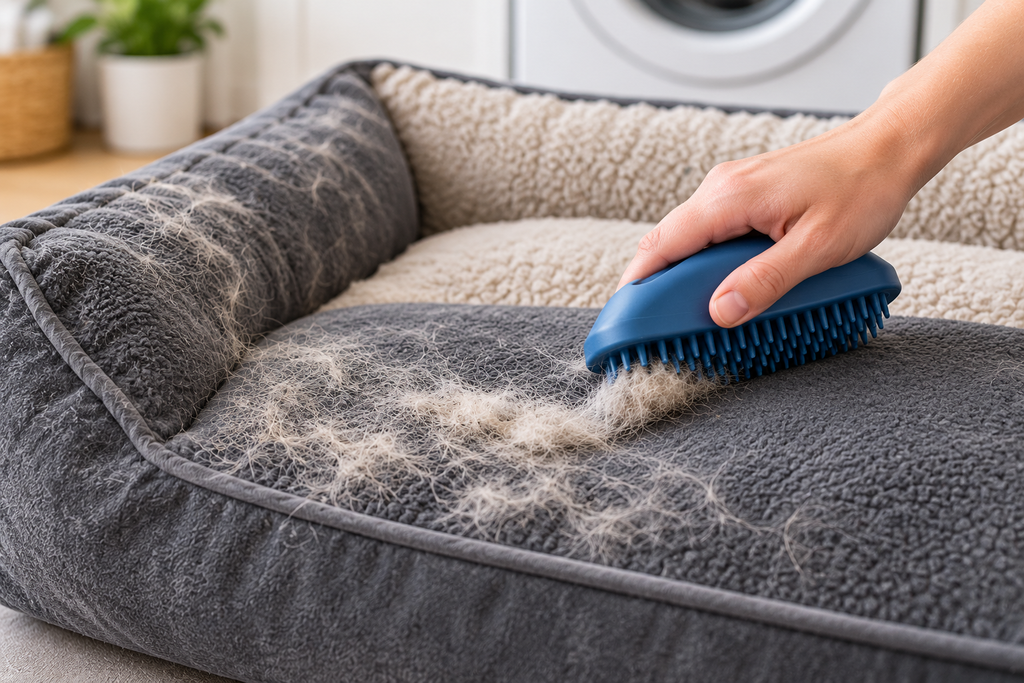
Pet hair does not dissolve in water. When wet, loose fur clumps into fabric weaves, sticks to soap residue, and can clog your washing machine’s drain pump and filters.
- Use a rubber pet hair brush or a rubber-palmed glove on dry fabric to loosen and collect hair before vacuuming seams and corners. For deeper fur removal techniques across carpet and furniture, see our guide on How to Remove Pet Hair Throughout Your Home.
- Vacuum the cover thoroughly, paying close attention to seams, corners, and zipper tracks.
Step 2: Pre-Treat Accidents & Stains
For fresh liquid accidents or urine, blot up liquid immediately using absorbent paper towels.
- Do not scrub aggressively, which forces liquid deeper into fabric fibers or foam.
- Avoid steam or hot water on fresh stains, as heat can make certain protein stains and odors harder to remove.
- Pre-treat the spot with an enzymatic pet stain cleaner suitable for washable fabrics, following the instructions on the bottle.
Step 3: Fasten Zippers & Prepare Covers
Unzip covers carefully so you don’t strain the seams or tear the zipper track. Before putting the cover in the washer:
- Close all zippers and hook-and-loop (Velcro) fasteners so they don’t snag on fabric or plush fur during the cycle.
- Turn fabric covers inside out if recommended by the care tag to protect the outer surface and flush out trapped dander from inner seams.
Step 4: Check Washer Capacity
The bed or cover must fit loosely inside the washer drum. Forcing a bulky bed into a crammed machine stops water and soap from circulating properly, leaves detergent streaks, and can throw the spin cycle off balance.
- Avoid washers with a center post agitator if possible, as the central spindle can catch and tear bulky bed covers.
- If a bed is confirmed machine-washable but too large for your home machine, take it to a commercial laundromat with high-capacity front-loading washers.
3. How to Wash a Dog Bed in the Washing Machine
When deciding how to wash a dog bed in the washing machine (or its removable cover and machine-safe inserts), follow these steps to protect both the bed and your laundry appliance:
- Select an Approved Gentle Cycle: Choose a delicate or gentle cycle on your machine to minimize rough agitation. Note that standard “bulky” or “bedding” cycles do not always provide gentle agitation, so check your washer’s manual.
- Stay Within Maximum Water Temperature: Always stay at or below the maximum water temperature printed on the care tag (e.g., 30°C for cool water). Do not assume 40°C or warm water is safe for all fabrics, zipper tapes, or waterproof backings.
- Use a Mild Detergent: Add a small amount of mild, fragrance-free, dye-free laundry detergent. Dogs have sensitive skin and a keen sense of smell; heavy perfumes or excess soap residue can cause skin irritation or discomfort.
- Add an Extra Rinse: Run an extra rinse cycle to make sure all soap residue is thoroughly washed out of heavy canvas or fleece fabrics.
4. How to Clean a Memory Foam Dog Bed (and Non-Removable Cores)
Do not machine-wash or submerge solid orthopedic foam. Follow the exact model’s care restrictions: some manufacturers permit limited damp spot-cleaning, while others specify dry care only. The method below applies only when the maker permits damp cleaning and the proposed cleaner; otherwise, use its approved dry-care method.
Why Solid Foam Shouldn’t Be Washed in a Machine
Solid memory foam acts like a dense sponge. If submerged, water fills the internal structure, making the pad extremely heavy. When lifted wet, the weight of the water causes the foam to tear easily. Deeply saturated foam can be very difficult to dry completely, leading to lingering odors and mold.
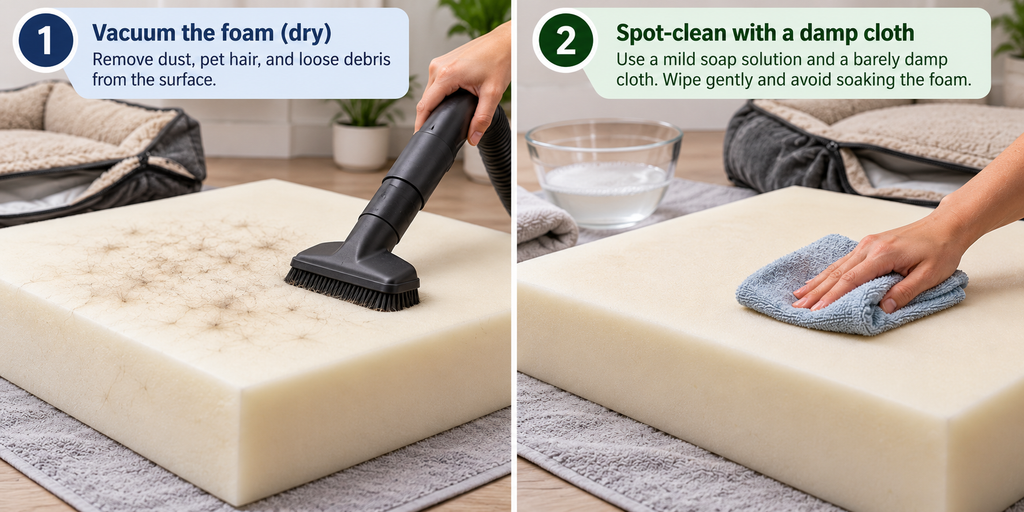
Step-by-Step Spot Cleaning Method (Only If Approved)
- Check Instructions, Remove Cover, and Vacuum: Confirm that damp spot-cleaning and the cleaner are permitted for this foam. Remove only covers intended to come off, then gently vacuum with a clean upholstery attachment if the maker allows it. If the instructions require dry care, stop here and follow those instructions instead.
- Prepare the Approved Cleaner: Use only the cleaner, dilution, and water temperature allowed by the foam manufacturer. Do not substitute dish soap or laundry detergent unless specifically permitted.
- Damp-Wipe the Surface: Dampen a microfiber cloth with the approved cleaning solution and wring it out until it is barely damp. Gently wipe away surface spots or dirt.
- Remove Residue as Directed: If the instructions call for it, wipe with a fresh, barely damp cloth to remove cleaner residue. Do not pour rinse water onto the foam.
- Deodorize (Optional): If permitted by the bed manufacturer, you can sprinkle a light dusting of baking soda over dry foam, allow time to absorb surface odors, and vacuum it off thoroughly before reuse.
5. How to Wash a Dog Bed Without a Removable Cover
If you need to know how to wash a dog bed without a removable cover, start by checking whether the entire one-piece bed is machine-safe:
- If Machine Washable: Check the care tag to confirm the entire bed is machine-safe. Wash on a gentle cycle in cool water (at or below the tag’s max temperature) with mild detergent, and run an extra rinse cycle.
- If Non-Washable or Too Bulky: Follow the manufacturer’s approved dry-care or spot-cleaning method; non-washable does not automatically mean damp cleaning is permitted. If the bed is confirmed machine-washable but too large for a home machine, use a large front-load washer at a commercial laundromat.
6. Drying Safely & Preventing Mold
Drying every layer completely is just as important as washing.
Air Drying vs. Low-Heat Machine Drying
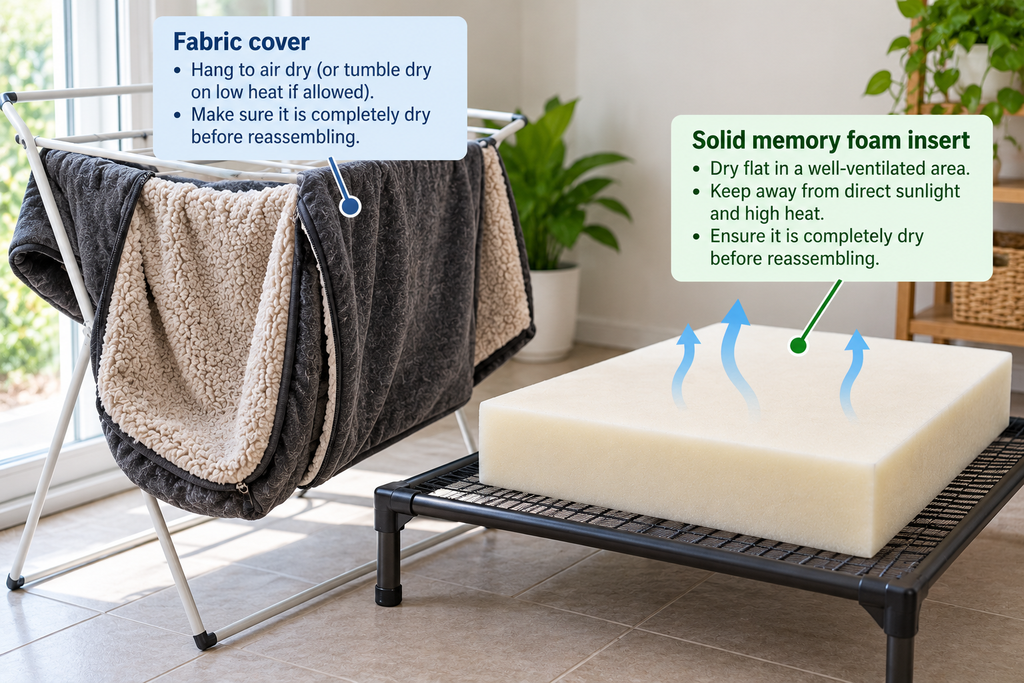
- Fabric Covers & Liners: Hang covers on a drying rack or line in a well-ventilated space away from direct, high heat sources. Drying outdoors on a warm, breezy day helps fabrics dry quickly.
- Solid Memory Foam: Always air-dry solid foam cores flat in a warm, dry room with good air circulation. Never place solid foam in a tumble dryer.
- Shredded-Foam Inserts: Follow the insert’s specific care label. While solid foam should always be air-dried flat, certain enclosed shredded-foam inserts (such as K9 Ballistics channelled mattresses) require low-heat machine drying—not air drying or unheated “Air Fluff” cycles—to dry the internal foam clusters thoroughly.
- Fiberfill Inserts: If the care symbol explicitly permits tumble drying, use low heat. Adding 2 or 3 clean dryer balls can help break up fiber clumps if approved by the manufacturer.
The Complete Dryness Check
Before putting the bed back together, squeeze deep into the corners, cushion centers, and zipper seams. Note that a surface feeling dry to the touch does not guarantee that a thick insert is dry inside. If any part feels cool or damp when squeezed, leave it out to dry longer. Never zip a cover over a damp foam insert.
7. When a Dog Bed Needs Disinfecting (and When Washing Is Enough)
It is helpful to know the difference between routine cleaning and chemical disinfecting.
Routine Washing Is Standard
Clean pet beds regularly. The U.S. Centers for Disease Control and Prevention (CDC) lists weekly cleaning of pet beds, blankets, and habitats as a general example. That does not mean every component should be machine-washed weekly: use the method permitted for the bed, and clean sooner when it is visibly dirty or smells bad.
When Disinfection Is Needed
Extra hygiene precautions are appropriate if your dog has been sick with an infectious illness (such as parasites or a contagious skin condition), if someone in the household is particularly vulnerable to infection, or if the bed has been heavily soiled by bodily waste.
Safe Disinfection Practices
- Clean First: Always wash away surface dirt and waste before applying any sanitizer or disinfectant. Disinfectants cannot work effectively through layers of mud or soil.
- Choose Treatment for the Actual Goal: Routine washing removes dirt and many germs. If your veterinarian or public health guidance recommends additional disinfection, use a method or product specifically labelled for the intended disinfecting use on that fabric, with a relevant efficacy claim, and follow all wash-cycle, contact-time, rinsing, and drying instructions. A product labelled only as a laundry sanitizer is not necessarily a substitute for a disinfectant.
- Avoid Hard-Surface Cleaners & Bleach Recipes on Bedding: Do not pour household bleach solutions or harsh bathroom sprays onto soft bed covers, liners, or foam cores. Bleach can ruin fabric, strip waterproof coatings, and irritate your dog’s skin and paws.
- Pet Safety Rules: Keep pets away from treated items until they are completely dry and ventilated. Avoid phenol-based disinfectants (which are toxic to cats in multi-pet homes). Never mix bleach with ammonia, vinegar, or other household cleaners.
- Consult Your Vet: If the bed cannot tolerate a suitable disinfecting treatment or if you are dealing with a contagious illness, ask your veterinarian whether cleaning or replacement is the safer option.
8. When to Replace a Dog Bed
Sometimes a bed is past the point where washing will help:
- Flattened Joint Support: The interior foam or filling has sagged so much that your dog rests directly on the hard floor.
- Irreversible Contamination: Liquids or urine have soaked deep into a non-washable foam core, causing persistent odors or suspected internal mold. For persistent household odors, check our guide on How to Get Rid of Dog Smell in Your House.
- Safety & Fabric Damage: Torn seams, broken zippers, or exposed filling that your dog could chew or swallow.
9. Frequently Asked Questions (FAQ)
How often should I wash my dog’s bed?
The CDC uses weekly cleaning as a general example. For removable, machine-washable covers, washing weekly or every couple of weeks may be practical depending on the bed, how dirty it gets, and the manufacturer’s instructions. Use the maker-approved dry-care or spot-cleaning method for other components.
Can I wash a dog bed in warm or hot water?
Always follow the care tag. A 30°C symbol indicates 30°C is the maximum allowed water temperature, not just a description of cool water. A hotter wash (such as 60°C) should only be used if explicitly permitted by the care label.
What detergent is safest for my dog?
Use a mild, fragrance-free, dye-free laundry detergent. Dogs have sensitive skin and a powerful sense of smell, so avoiding artificial perfumes and heavy dyes helps prevent skin irritation and keeps your pet comfortable.
How do I handle a urine accident on a dog bed?
For a urine accident, blot liquid immediately using absorbent paper towels without rubbing. Unzip and wash the cover using an enzymatic pet stain cleaner designed for washable fabrics per bottle instructions. Avoid applying steam or heat before treating the stain. If liquid reached a solid memory foam core, check whether the manufacturer permits damp spot-treating or specifies dry care. If urine has soaked deep into a non-washable foam core, replacing the core or bed is the safest option.
What if my dog’s bed still smells after washing?
Persistent odor can result from remaining soiling in the cover or liner, incomplete drying, or deep urine contamination inside a non-washable foam core. If the core itself is deeply contaminated, replacement is recommended.
Internal Resource Links
Sources & References
- U.S. Centers for Disease Control and Prevention (CDC): About Cleaning and Disinfecting Pet Supplies (February 18, 2026). Official guidance distinguishing routine cleaning from chemical disinfection for pet items and providing an example schedule of weekly cleaning for pet beds and blankets.
- GINETEX International Textile Care Labeling: Care Symbols (ISO 3758:2023). Defines wash-tub temperature maximums, cycle bars, and tumble-dry vs. natural-drying symbols.
- K9 Ballistics Care Guidelines: Can the foam mattresses be washed?. Care instructions contrasting washable channelled shredded-foam (requiring low-heat machine drying) with non-washable solid orthopedic foam.
- FurHaven Pet Products: How to Wash Your Dog Bed, Cat Bed, and Cover (January 26, 2024). Instructions specifying cold machine washing for removable covers, wipe-clean care for water-resistant liners, and cautious foam spot cleaning.
- Health Canada: Guidance on Efficacy Requirements for Biocides: Soft-Surface Disinfection and Sanitization. Regulatory distinctions between soft-surface sanitization and disinfection claims.
- U.S. Environmental Protection Agency (EPA): Ten Things You Should Know About Mold. Moisture control and mold prevention principles for furnishings.