Quick Answer:
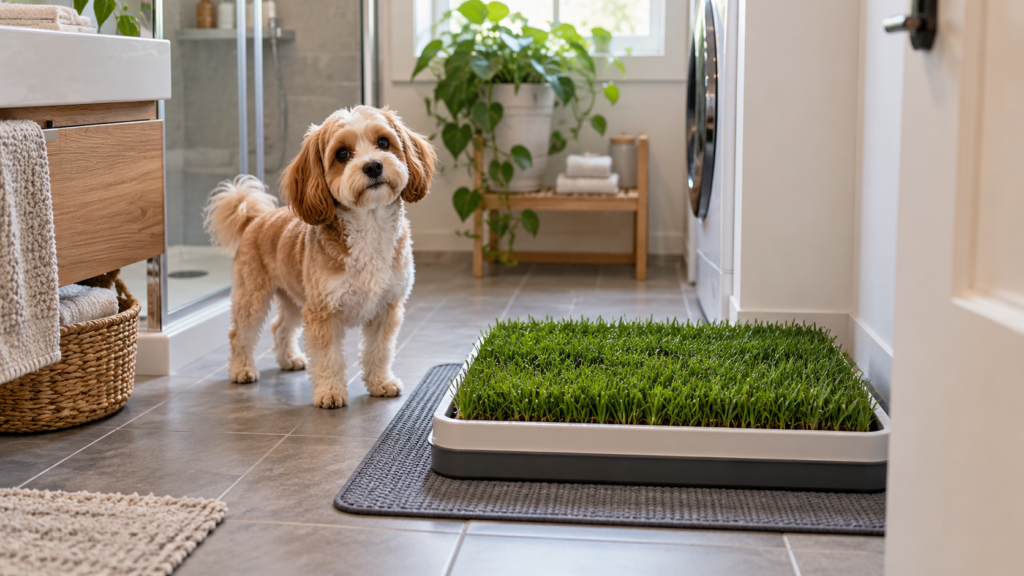
An indoor dog toilet provides a designated relief area for apartment dogs when immediate outdoor access isn’t practical. It can serve as a regular planned option or an occasional backup for high-rise elevator delays, puppies before full vaccination, older dogs with mobility limits, severe weather, or handler physical limitations. An indoor toilet is a situational accommodation—it does not replace physical exercise, mental stimulation, outdoor exploration, or human care during long absences. Success relies on choosing a comfortable surface, verifying interior usable space, placing the unit on waterproof floor protection in a ventilated spot, and following a consistent cleaning and sanitation routine.
Who Benefits From an Indoor Dog Toilet (and Who Doesn’t)?
Living in an apartment or condo comes with unique daily routines. Setting up an apartment dog potty or indoor dog toilet can be a practical solution in specific situations, but it isn’t necessary or beneficial for every household.
Practical Apartment Applications
- High-Rise and Condo Living: Waiting for elevators, navigating long hallways, and crossing lobbies can turn a quick potty trip into a ten-minute trek. For puppies or older dogs with urgent bladders, an indoor option can help prevent accidents.
- Puppies During Vaccination Windows: Before puppies complete their core vaccination series, stepping into heavily trafficked apartment lawns or shared dog relief areas carries infectious disease risks. Creating an indoor dog potty area offers a controlled space during early house training. Important: An indoor station should not cause total isolation. The American Veterinary Society of Animal Behavior (AVSAB) emphasizes that early, veterinary-guided socialization (such as carried outings or controlled puppy classes) remains vital before full vaccination.
- Senior Dogs, Surgery, and Mobility Challenges: Aging dogs with arthritis, reduced bladder control, or post-operative movement restrictions benefit from a close, non-slip indoor dog bathroom. Always follow your veterinarian’s specific activity and recovery guidelines after surgery.
- Severe Weather and Emergencies: Heavy rain, severe snowstorms, extreme heat, dangerous smoke alerts, or sudden elevator breakdowns make outdoor trips unsafe or impractical.
- Handler Mobility Limits and Work Schedules: Owners with chronic pain, temporary injuries, or long work hours can provide their dog with a reliable relief option. However, an indoor toilet provides bathroom access only—it does not replace exercise, interaction, or human check-ins during extended absences.
Critical Limitations: What an Indoor Setup Cannot Do
- It Does Not Replace Outdoor Exercise: Indoor bathrooms satisfy a biological need, but they do not provide the physical exercise, scent exploration, and social engagement your dog gets from outdoor walks.
- It Isn’t Necessary for Every Dog: Healthy adult dogs living on ground floors or with easy outdoor access generally do best sticking to a standard outdoor routine.
Enrichment Tip: On days when extreme weather keeps you both indoors, pair your dog’s bathroom routine with mental games and puzzle toys. Learn more in our guide to Indoor Dog Enrichment Activities for Small Homes.
Comparing Your Options: Grass, Turf, Trays, and Pads
Whether you choose real grass, synthetic turf, or a dog litter box for apartments, picking the right format depends on your dog’s preferences, your living space, cleaning facilities, and ongoing budget.
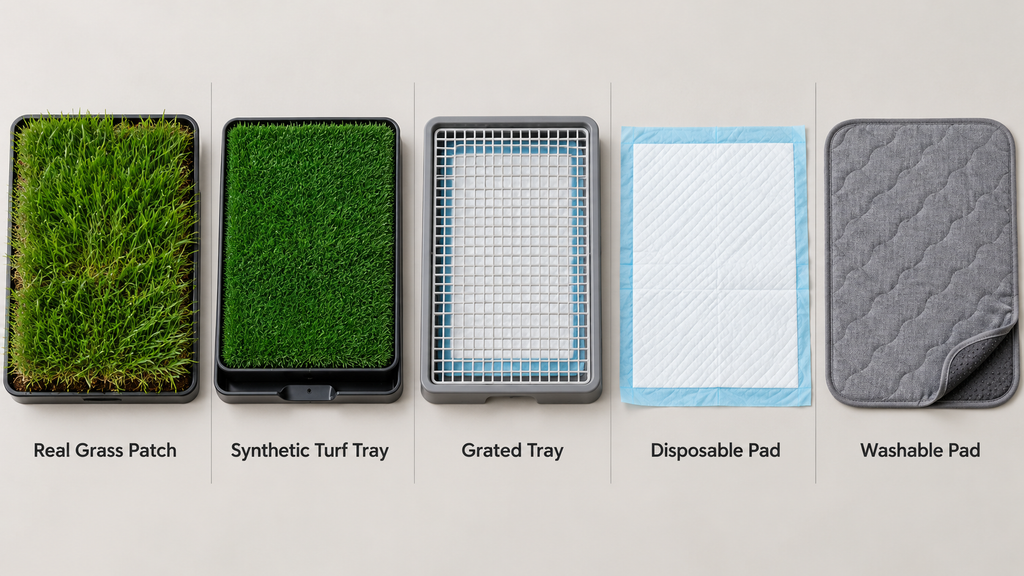
1. Real Grass Patches (Living Sod or Hydroponic)
Living grass patches use real sod grown in soil trays or hydroponic (soil-less) mats.
- Surface Considerations: May be familiar to dogs already accustomed to eliminating on outdoor grass.
- Odor & Moisture: Grass and its growing medium can absorb liquid and help manage initial urine odors. However, saturation, dog size, airflow, and replacement frequency determine long-term odor control.
- Maintenance & Cost: Remove solid waste promptly after each bowel movement. Follow manufacturer guidance for replacement—frequently used patches typically last 1 to 2 weeks, while lighter use may extend up to 4 weeks (Fresh Patch; DoggieLawn). Replace sooner if the patch becomes saturated, develops mold, or smells strongly. Recurring grass purchases and delivery may cost more than some reusable options; compare current prices, replacement frequency, and cleaning costs for your household.
2. Synthetic Turf Systems with Drainage Trays
These feature artificial grass blades sitting over a tray that drains liquid into a lower basin or absorbent pad.
- Surface Considerations: Some dogs accept the grass-like texture readily; others need gradual introduction. Synthetic fibers lack natural soil scent.
- Odor Control: Depends heavily on drainage and cleaning routines. Trapped urine residue in synthetic fibers will produce persistent smells if unwashed.
- Maintenance & Cost: Reusable, with potential long-term savings depending on purchase price, turf replacement, water, and cleaning costs. Requires prompt solid waste removal after each bowel movement, frequent water rinsing, and periodic cleaning with a pet-safe urine cleaner.
3. Mesh and Grated Trays (Pad or Reservoir Underneath)
Grated trays feature a plastic or metal grid elevated above a pee pad or collection tray.
- Surface Considerations: Can reduce paw contact with pooled urine and restrict access to the underlying pad for puppies that shred paper. However, rigid grid surfaces can feel unnatural, making this a challenging format if you need an indoor dog toilet for large dogs.
- Maintenance & Cost: Remove solids promptly after each bowel movement, wash the grid, and change the lower pad. This design works especially well as an indoor potty area for small dogs and puppies.
4. Disposable Pee Pads
Multi-layer absorbent paper pads with a waterproof plastic backing.
- Convenience & Portability: Inexpensive upfront, easy to pack for travel, and simple to discard.
- Limitations: Loose pads shift easily, tear under claws, and carry high landfill waste. They can also create “surface confusion,” leading some dogs to mistake bath mats or area rugs for potty pads.
5. Washable Absorbent Pads
Reusable fabric pads with an absorbent core and waterproof backing.
- Sustainability & Economy: Can reduce disposable pad waste, provided you have reliable home laundry access.
- Maintenance: Requires a rotation of spare pads based on your laundry routine. Machine wash according to the pad’s care label. Avoid high dryer heat, fabric softeners, or bleach if forbidden on the label, as these can ruin the waterproof backing.
Format Comparison at a Glance
| Potty Format | Best Suited For | Surface Considerations | Daily Maintenance | Key Trade-offs |
|---|---|---|---|---|
| Real Grass Patch | Outdoor-trained dogs, high-rise living | Familiar grass scent and texture | Remove solids promptly after each bowel movement; replace patch every 1–4 weeks based on use | Recurring grass and delivery costs vary; perishable |
| Synthetic Turf Tray | Daily apartment use with convenient rinsing access | Grass-like feel; requires gradual training for some dogs | Remove solids promptly after each bowel movement; rinse turf and tray regularly | Requires regular rinsing access (shower/tub) to prevent odor |
| Mesh / Grated Tray | Small breeds, puppies that shred paper pads | Keeps paws off wet surfaces; rigid texture | Remove solids promptly after each bowel movement; wash grid and swap lower pad | Grid surface can feel unnatural to medium/large dogs |
| Disposable Pads | Emergency backup, travel, lining trays | Highly portable; soft paper surface | Replace pad after each use or when wet | High recurring waste; risk of edge spills and rug confusion |
| Washable Pads | Low-waste homes with easy laundry access | Fabric surface with grip backing options | Rotate spare pads; machine wash regularly | Requires regular laundry; follow care label to preserve backing |
Which Format Should You Start With?
- Dog is already used to going on outdoor grass: Start with a real grass patch to take advantage of their natural instinct.
- Daily apartment use with easy shower or utility sink access: Choose a synthetic turf tray system, making sure you can rinse and dry it thoroughly.
- Small dog or puppy that chews or shreds paper pads: Try a mesh/grated tray with a pad secured underneath.
- Occasional emergency backup or travel: Keep disposable or washable pads on hand, paired with a waterproof floor mat.
- Senior dog with stiff joints or mobility limits: Prioritize a wide surface with a low, easy step-in edge and a non-slip base, regardless of material.
Simple Ongoing-Cost Formula
Before buying, calculate your estimated monthly investment:Monthly Cost = (Replacement Grass or Pads) + (Cleaning & Disinfecting Supplies) + (Laundry Costs) + (Delivery / Shipping Fees)
Note: Estimate each term on a monthly basis, and compare the initial tray purchase price separately.
Where to Place and How to Size an Indoor Dog Toilet
Picking the Best Spot
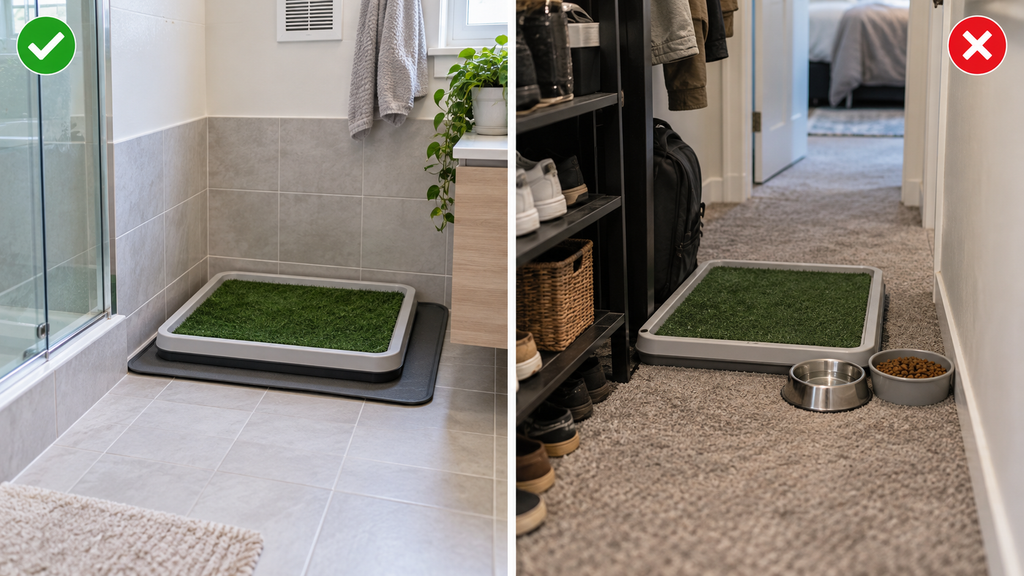
- Choose a Hard-Surface Room: Bathrooms, laundry rooms, or utility nooks with tile or linoleum flooring offer the best moisture resistance and ventilation.
- Keep Pathways Clear: Whether you buy a ready-made tray or assemble a diy indoor dog potty area, ensure doors along the route remain open and clear of clutter so your dog can access the spot independently.
- Locations to Avoid: Never place the potty station on carpet, directly next to food and water bowls, or in cramped, high-traffic hallways.
- Balcony Safety: A sheltered balcony provides good natural airflow, but always check your lease and building rules first. Ensure the balcony is secure (no gaps where a dog could slip) and never allow liquid runoff to drip onto lower balconies or shared property.
Getting the Right Size for Your Dog
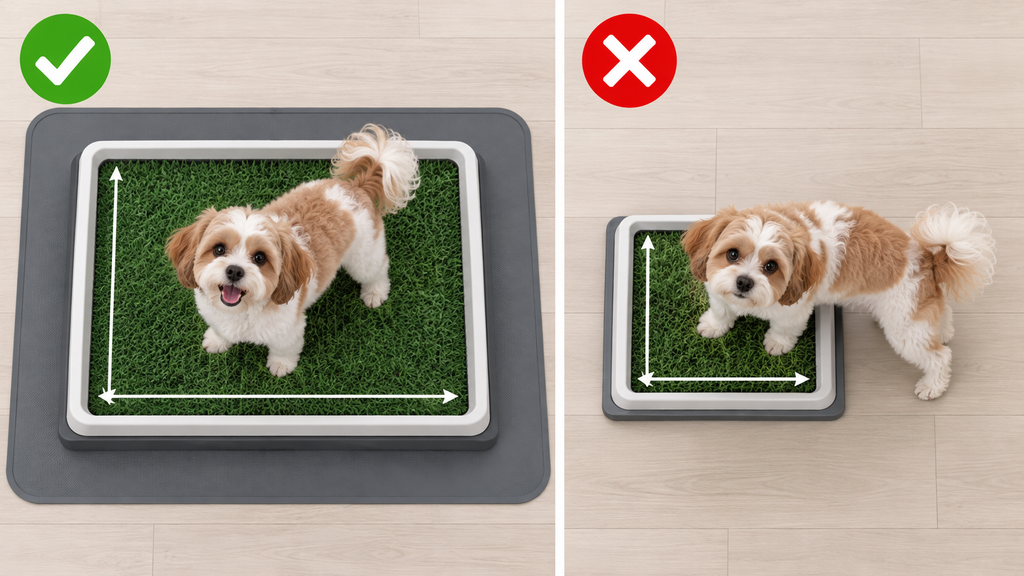
Purchasing a tray that is too small is a common, preventable cause of indoor accidents. Dogs naturally sniff, step forward, and turn in circles before eliminating.
- Check Usable Interior Space: Focus on the usable interior surface rather than the exterior packaging dimensions. Your dog should be able to step on with all four paws, turn around comfortably, and eliminate without stepping off or missing an edge. Check both length and width.
- Male Leg-Lifting Protection: For male dogs that lift a leg, choosing an indoor dog potty with sides (high three-sided splash guards) or adding a vertical post protects baseboards and walls.
- Senior Step-In Height: For aging or arthritic dogs, choose a low, stable entry border so they don’t have to step or jump awkwardly.
Floor Protection
Always place a non-slip, waterproof floor mat or tray liner beneath the toilet unit, extending several inches beyond all four edges. This protects your flooring from stray drips, edge-misses, and damp paws.
Accident Cleanup: If urine escapes onto surrounding flooring, check out our practical guides on How to Get Dog Pee Out of Carpet and How to Get Rid of Dog Smell in Your House.
How to Clean and Maintain an Indoor Dog Toilet
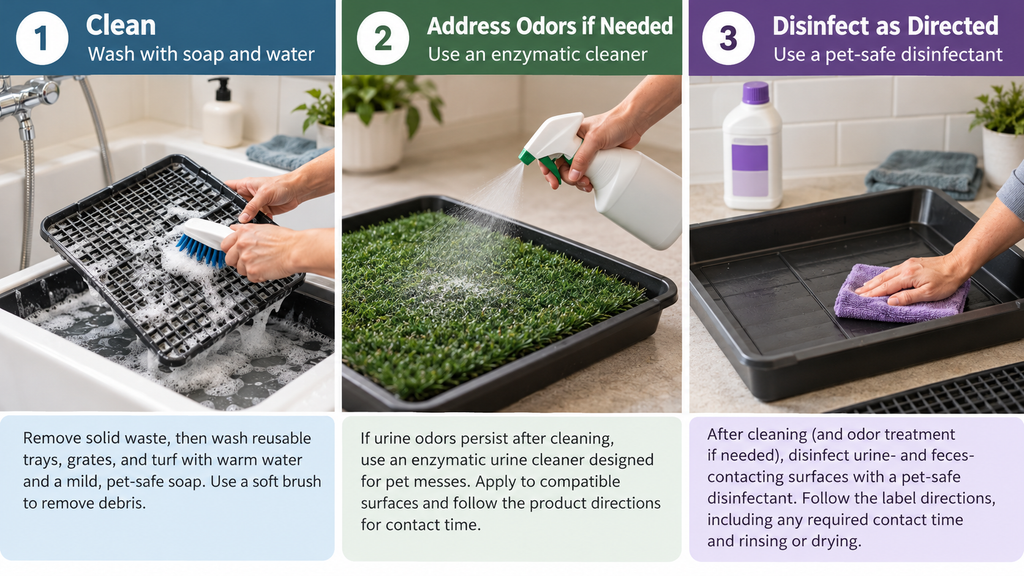
Keeping an indoor dog toilet hygienic requires understanding three distinct steps: cleaning, addressing odors, and disinfecting.
The 3-Step Hygiene Routine
- Clean (Wash): Remove solid waste promptly. Wash reusable trays, grids, or synthetic turf with warm water and soap or detergent to remove physical dirt and liquid urine residues.
- Address Odors When Needed: Clean surface dirt doesn’t always eliminate urine scent. If an odor remains, apply an enzymatic pet-urine cleaner suitable for the material according to its label. Enzymes break down organic urine residues that attract repeat accidents. (Note: Deodorizing removes scent, but it does not disinfect surfaces.)
- Disinfect Urine- and Feces-Contacting Surfaces: To kill harmful pathogens, use a disinfectant labeled for the particular washable surface and intended use. Follow all directions for pre-cleaning requirements, contact time, rinsing, drying, and pet re-entry instructions. As a general benchmark, the Centers for Disease Control and Prevention (CDC) recommends disinfecting pet items that contact waste as often as you disinfect your toilet or bathroom, or more frequently if illness is present or a household member is vulnerable to infection. Disposable pads and real grass patches are replaced rather than disinfected.
Crucial Chemical & Safety Warnings
- NEVER Mix Bleach and Ammonia (or Urine): Mixing chlorine bleach with ammonia or urine creates toxic chloramine gas, which causes severe respiratory damage.
- Never Mix Cleaning Products: Never combine bleach with ammonia, acids, or other cleaners. Use products only as directed on their labels, and follow any required washing, rinsing, and drying instructions before using another product or allowing pets back onto the surface.
- Avoid Ammonia-Based Cleaners: Their strong ammonia odor may make them a poor choice for an area where you are trying to control urine scents. Use a compatible cleaning product according to its label instead.
- Vinegar Is Not a Disinfectant: Diluted vinegar can help neutralize light odors, but the CDC notes there is insufficient evidence to rely on vinegar as a disinfectant.
Smart Cleaning Locations & Waste Handling
To prevent household exposure to germs and bacteria, follow these sanitation guidelines (CDC Pet Supplies Guidance; CDC Hygiene Practices):
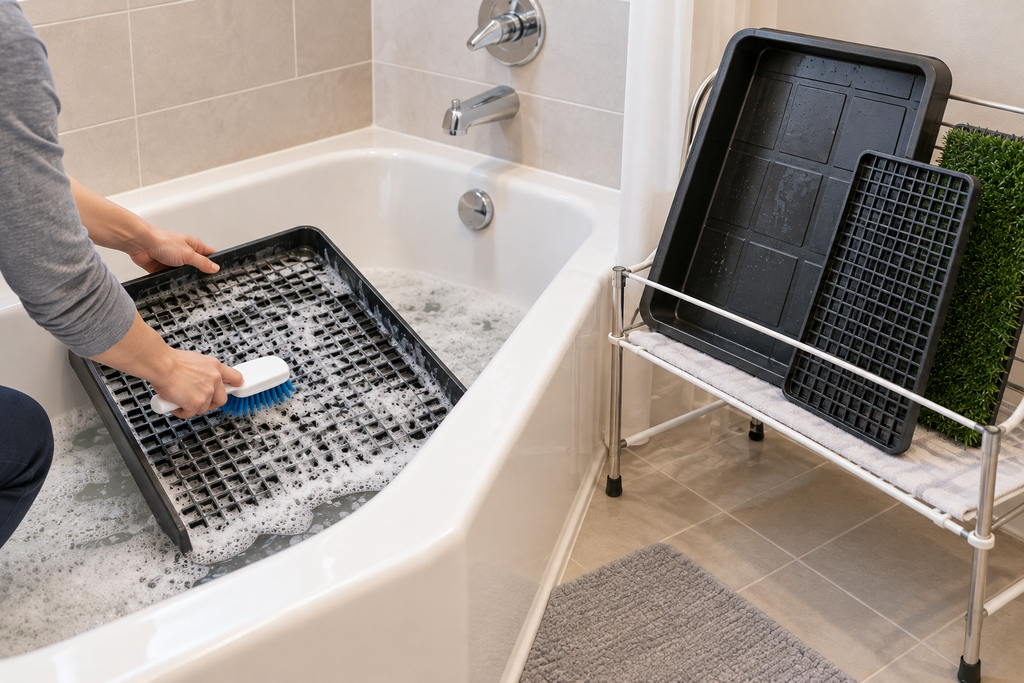
- Avoid Kitchen Sinks: Prefer a dedicated wash tub, laundry sink, or bathtub for cleaning potty gear. The CDC warns that washing pet items in kitchen sinks can contaminate food-preparation areas. If a kitchen sink is your absolute only option, thoroughly clean and disinfect the sink and surrounding countertops immediately afterward.
- Bathtub & Shower Washing: If using a home bathtub or shower stall, remove all personal items (towels, loofahs, sponges) first. Wash the pet gear, then clean and disinfect the tub surfaces before human use.
- Apartment Waste Routine: Bag solid waste promptly and dispose of it according to building rules. Empty liquid waste from collection reservoirs carefully into the toilet if permitted by product instructions and local rules; avoid splashing. Do not flush pads or turf debris. Wash your hands thoroughly with soap and water after handling pet waste or cleaning equipment. Let reusable inserts dry completely before reassembling.
Setup and Maintenance Checklist
- Location & Fit Audit
- Select a ventilated, hard-floor room (tile or linoleum) away from food bowls and bedding.
- Verify your dog can stand, turn, and eliminate comfortably within the interior usable area.
- Choose a low, step-in entry border for senior dogs or puppies.
- Floor Protection & Assembly
- Lay a non-slip waterproof mat extending beyond all four edges of the toilet unit.
- Install splash guards or vertical wall panels if managing a leg-lifting male dog.
- Daily Waste & Maintenance Routine
- Bag and dispose of solid waste immediately.
- Rinse synthetic turf or replace soiled paper pads.
- Follow your grass supplier’s moisture care instructions (avoid waterlogging real grass).
- Wash hands with soap and water after handling waste or gear.
- Sanitation & Deep Clean
- Wash trays and grids with warm soapy water; use an enzymatic cleaner if urine odor lingers.
- Disinfect waste-contacting washable surfaces using a labeled disinfectant, observing required contact time and drying before pet re-entry.
- Launder reusable fabric pads according to care label instructions.
Training Your Dog to Use an Indoor Toilet
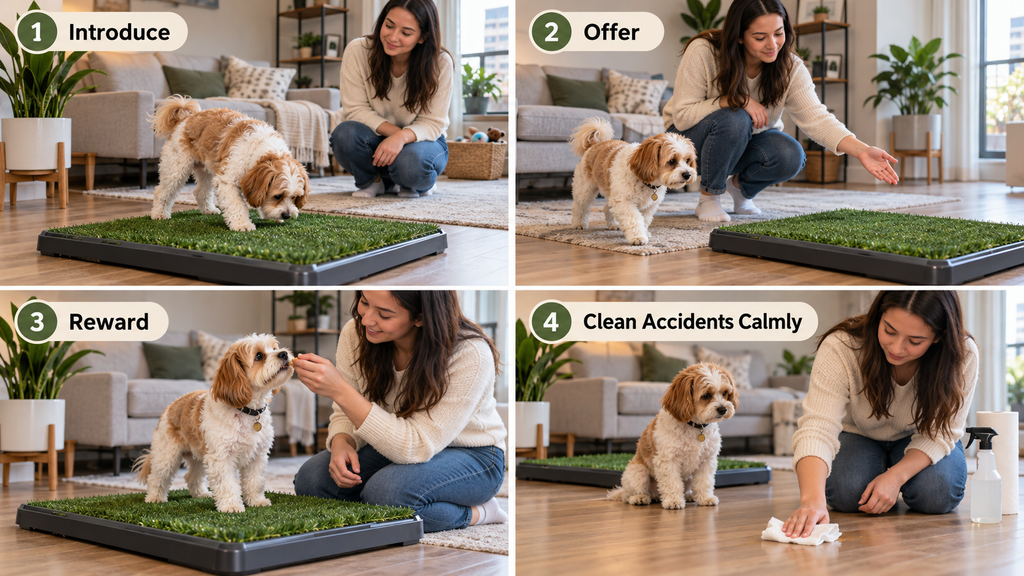
Simple 4-Stage Training Sequence
Training requires patience and consistent schedule management (AKC Indoor Training Guide):
- Introduce the Surface First: Let your dog sniff and step onto the surface voluntarily. Reward comfortable interaction with praise and a treat before expecting them to eliminate.
- Offer It at High-Probability Times: Guide your dog to the toilet (use a leash if helpful) right after waking up, 15 to 30 minutes after meals, after play, and before bed.
- Cue and Reward the Elimination: As your dog begins to eliminate, say a short, clear verbal cue (like “Go potty”). The second they finish, reward immediately with enthusiasm and a high-value treat.
- Clean Accidents Without Punishment: Never yell, swat, or rub a dog’s nose in a mess. Physical punishment causes fear, submissive urination, or hidden accidents behind furniture. Clean spills with an enzymatic cleaner and reassess tray placement or size.
When to Seek Professional Guidance
Sometimes indoor house-soiling isn’t a training issue. Know when to consult a professional:
- Prompt Veterinary Consultation: If a previously house-trained adult dog suddenly starts having accidents indoors or shows increased urgency, schedule a vet appointment. UTIs, bladder stones, kidney disease, or pain must be evaluated (Edmonton Humane Society).
- EMERGENCY Veterinary Care: Seek immediate emergency veterinary attention if your dog is straining to urinate, producing little to no urine, or appears unable to pass urine. This can indicate a life-threatening urinary obstruction (Merck Veterinary Manual).
- Certified Behaviorist / Trainer Support: Consult a certified force-free trainer or animal behaviorist if house-soiling is driven by severe separation anxiety, panic, fear, or resource guarding around the potty area.
Frequently Asked Questions (FAQs)
Do indoor dog toilets make an apartment smell?
Regular waste removal, cleaning, timely replacement, and ventilation help limit odors, but no indoor station is guaranteed odor-free. Remove solid waste promptly after each bowel movement, use enzymatic cleaners on reusable trays, replace grass or paper pads regularly, and keep the setup in a well-ventilated room.
Will an indoor potty ruin my dog’s outdoor house training?
Many dogs can learn both indoor and outdoor toileting. Establish one location reliably, then introduce the other gradually with consistent cues and immediate rewards. A distinct indoor surface and regular outdoor walks can help preserve both routines (AKC Indoor Training Guide).
How often do I need to replace a real grass patch?
Replacement depends on the specific grass product, dog size, and usage frequency. For frequently used patches, a 1-to-2-week schedule is common; light-use options can last up to 4 weeks (Fresh Patch; DoggieLawn). Replace the patch sooner if it becomes saturated, develops mold, or smells strongly.
What is the best indoor dog toilet option for a senior dog?
Senior dogs do best with a wide surface, a low, easy step-in border, good traction, and an unobstructed pathway. Real grass patches or synthetic turf trays can work if the entry is low enough for the individual dog, the surface has good traction, and the dog can step in and turn without discomfort. Avoid narrow trays or high grids that force stiff joints to balance awkwardly.
What if my dog refuses to use the indoor toilet?
First, ensure the surface is large enough for your dog to stand and turn comfortably. Go back to step 1 of training: reward your dog simply for stepping on the surface with all four paws. If your dog avoids synthetic turf or a rigid grid, introduce it more gradually or try a different, secure surface that your dog accepts. For dogs that chew or shred pads, keep absorbent liners securely below a properly fitted grid rather than placing a loose pad on top. Never leave a chewing-prone dog unsupervised with a material they might ingest.
Sources & References
- Centers for Disease Control and Prevention (CDC): About Cleaning and Disinfecting Pet Supplies (Feb 18, 2026) & Hygiene Practices Around Animals (Jan 31, 2025).
- American Kennel Club (AKC): Indoor Potty Training for Puppies & The Ins and Outs of Potty Pad Training.
- American Veterinary Society of Animal Behavior (AVSAB): Puppy Socialization Position Statement.
- Merck Veterinary Manual: Noninfectious Diseases of the Urinary System in Dogs.
- Edmonton Humane Society: My dog is house soiling.
- Toronto Humane Society: How to Create Dog-Friendly Spaces in Small Homes.
- Fresh Patch & DoggieLawn: Fresh Patch Product & Maintenance FAQ & DoggieLawn Subscription Frequency Guide.