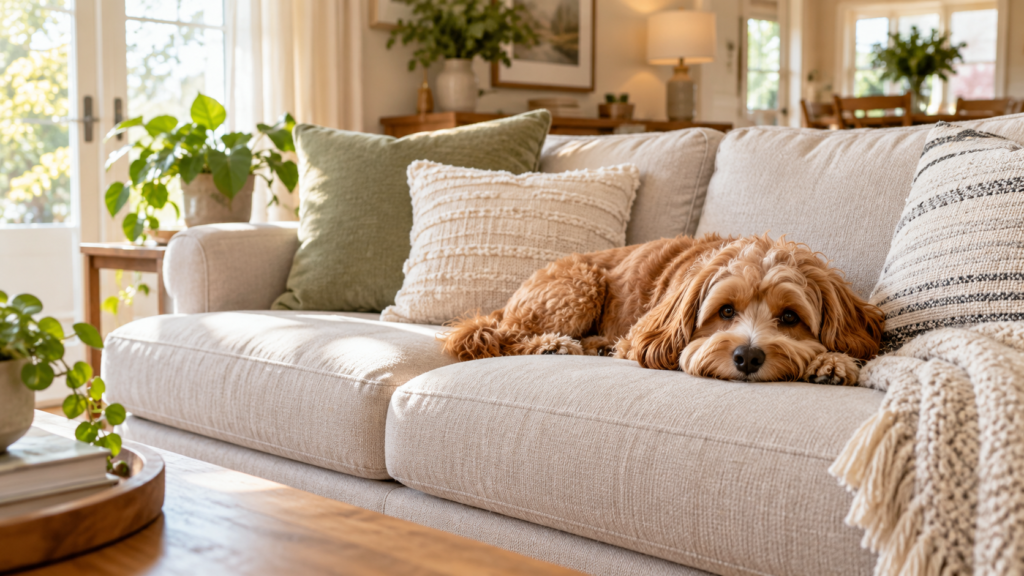
Sitting down on your living room sofa should be relaxing, not ruined by a stale dog smell. Because couches are a favorite lounging spot for pets, upholstery fabrics and cushion padding naturally collect dog hair, skin oils, dander, and the occasional wet accident.
If you are looking for how to get dog smell out of a couch without damaging the fabric, check the upholstery care label first, then vacuum loose fur and dander and improve airflow. If urine, vomit, or another liquid has just reached the sofa, remove any solids and blot up moisture immediately; check the care instructions before applying a cleaning product. Choose a fabric-compatible treatment and avoid soaking the cushion filling.
What Caused the Smell? Quick Decision Guide
| Odor Source | What’s Happening | Immediate First Step | Safe Cleaning Action |
|---|---|---|---|
| Stale Everyday Odor | Body oils and dander built up on dry fabric. | Check care label; keep pet off couch. | Thoroughly vacuum with upholstery attachment; improve room ventilation. |
| Wet Dog Scent | Damp fur transferred moisture into fibers. | Allow couch to air out immediately. | Use fans or open windows for active airflow; vacuum once 100% dry. |
| Fresh Accidents or Liquid | Wet organic spill on surface cover. | Press and blot firmly with dry towels; gently lift solids without rubbing. | Follow fabric care code; choose a compatible spot cleaner or enzyme product per label directions. |
| Lingering Deep Odor | Residual surface odor, trapped dampness, or possible contamination of the cushion core. | Rule out surface residue and dampness first. | Air out removable inserts; seek professional cleaning or insert replacement if core is soaked. |
1. First, Check Your Couch’s Care Label
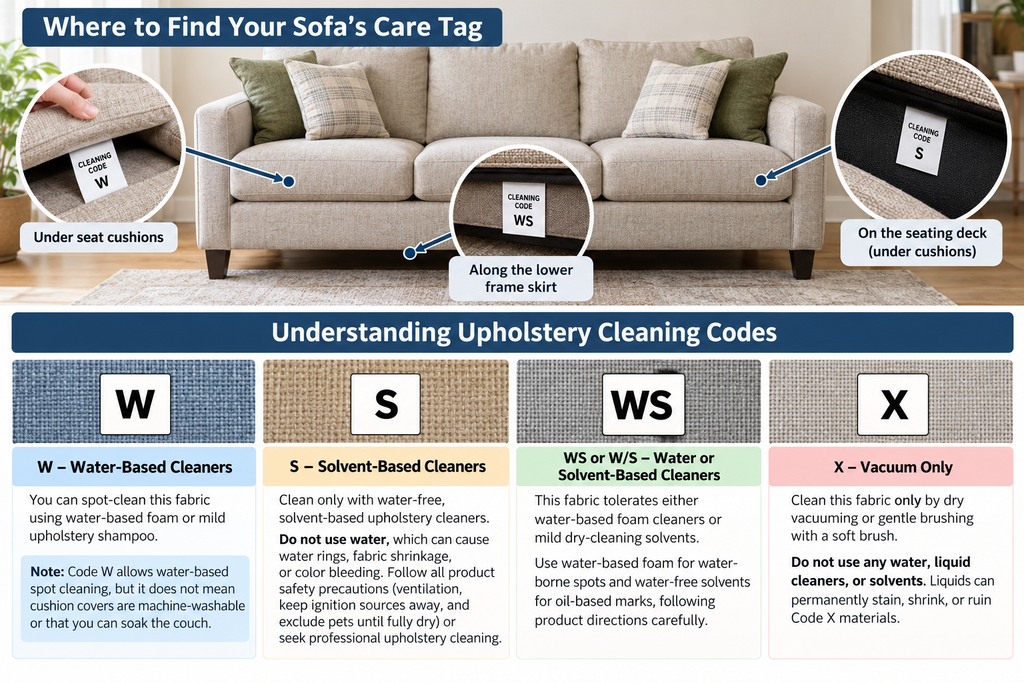
When learning how to get dog smell out of a fabric couch, your first step before applying any water, cleaner, or powder is finding its manufacturer care tag. Look under the seat cushions, along the lower frame skirt, or on the seating deck. This label tells you what cleaning methods your upholstery can safely tolerate.
Decoding the Four Standard Upholstery Care Codes
- Code W (Water-Based Cleaners):
You can spot-clean this fabric using water-based foam or mild upholstery shampoo.
Caution: Code W allows water-based spot cleaning, but it does not mean cushion covers are machine-washable or that you can soak the couch. - Code S (Solvent-Based / Water-Free Cleaners):
This fabric must be cleaned only with water-free, solvent-based upholstery cleaners. Do not use water, which can cause water rings, fabric shrinkage, or color bleeding. Use only a manufacturer-approved upholstery cleaner, follow all label safety precautions (ventilation, keeping ignition sources away, and excluding pets until fully dry), or seek professional upholstery cleaning. - Code WS or W/S (Water- or Solvent-Based Cleaners):
This fabric tolerates either water-based foam cleaners or mild dry-cleaning solvents. Use water-based foam for water-borne spots and water-free solvents for oil-based marks, following product directions carefully. For microfiber sofas, check the exact model’s care label; the material name alone does not establish which cleaners are safe. - Code X (Vacuum Only):
Clean this fabric only by dry vacuuming or gentle brushing with a soft brush. Do not use any water, liquid cleaners, or solvents. Liquids can permanently stain, shrink, or ruin Code X materials.
What if the care tag is missing or unreadable?
Look up your sofa’s model and care instructions online or contact the furniture manufacturer. Do not assume a liquid or solvent cleaner is safe simply because a small hidden-area spot test looks fine—delayed water rings or fabric damage can still occur. If the material cannot be identified, use only gentle dry vacuuming and consult an upholstery professional before applying spot cleaners.How to Get Dog Smell Out of a Leather Couch: Leather upholstery does not use W/S codes. Clean finished leather with a soft cloth and a dedicated, pH-balanced leather cleaner, followed by a manufacturer-recommended leather conditioner when needed. Avoid excess water, bleach, or harsh household soaps.
2. How to Get Rid of Dog Smell from a Couch
If you are wondering how to get rid of dog smell from a couch that is dry and simply smells stale from regular pet use, follow this low-moisture cleaning routine.
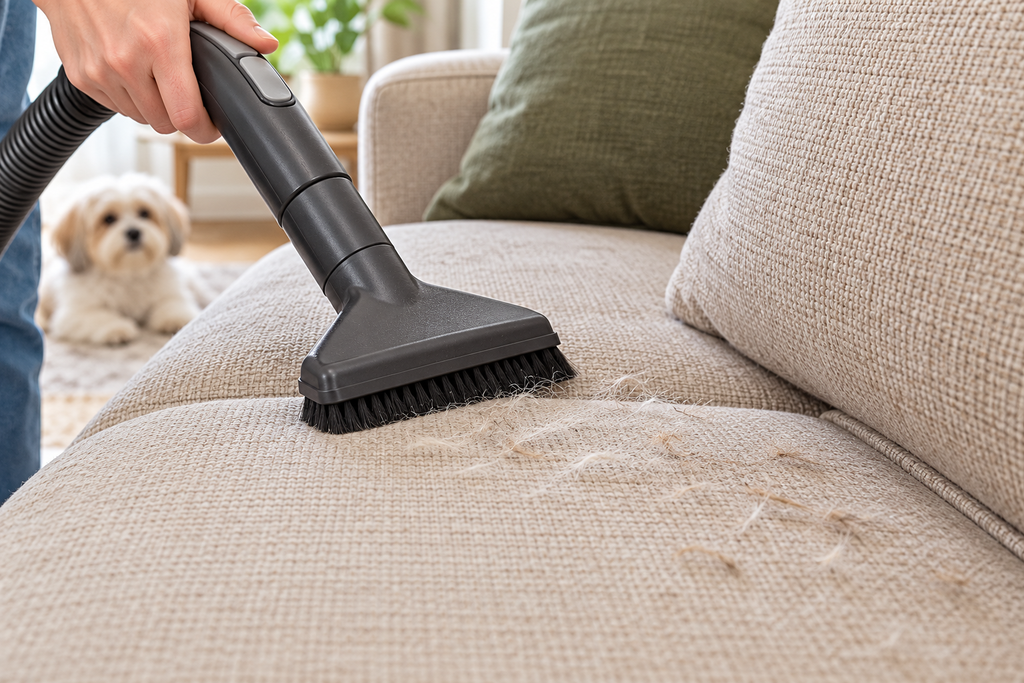
Step 1: Vacuum Fur, Dander, and Crevices
Loose hair and dander carry skin oils that cause stale smells. Removing them dry prevents odors from rubbing deeper into the fabric when cleaned.
- Attach a soft upholstery tool to your vacuum.
- Vacuum cushions using smooth, overlapping passes.
- Use a crevice attachment along seams, tufting, and under seat cushions where dander gathers.
- Tip: Avoid motorized, rotating brush heads on delicate or woven fabrics, as spinning bristles can snag or pill the material.
Step 2: Test Any Product First
When using an approved cleaner or deodorizer, test it on a hidden spot first (such as the underside of a cushion flap). Apply a small amount, wait for it to dry completely, and check for color fading, water rings, or texture changes.
Step 3: Optional Deodorizing with Dry Baking Soda
Baking soda can help absorb mild surface scents on many dry fabrics, but it should be used with care.
- Check both your sofa label and vacuum manufacturer directions to ensure fine powders are safe to use.
- Sprinkle a thin, light layer of dry baking soda over seat cushions and backrests.
- Keep pets away from the room while the powder sits (ingesting large amounts of baking soda can upset a dog’s stomach).
- Let it sit for 15 to 30 minutes.
- Vacuum up all baking soda thoroughly using slow passes before allowing pets or family back on the couch.
Limitations: Baking soda absorbs light surface odors, but it cannot dissolve deep skin oils or remove accidents trapped inside cushion foam. Do not use baking soda on Code X fabrics unless explicitly permitted by the manufacturer.
Step 4: Increase Airflow & Handle Oily Contact Areas
Improve ventilation and direct airflow over damp surfaces to promote drying. Open windows, turn on ceiling fans, or direct a box fan toward the sofa to evaporate lingering surface dampness naturally.
What if dry cleaning isn’t enough? If the couch is completely dry and vacuumed but fabric still smells stale—especially around oily headrests or armrests—check whether your sofa manufacturer permits a low-moisture upholstery cleaner or professional surface extraction.
3. How to Get Dog Urine Smell Out of a Couch (and Handle Wet Accidents)
When a dog has an accident on the sofa, knowing how to get dog urine smell out of a couch safely requires quick blotting before liquid reaches the cushion padding underneath.
Step 1: Clear Solids & Blot Immediately (Never Rub!)
- For Solid Spills: First, gently lift away solid material using a spoon or paper towel without pressing or grinding it into the fabric weave.
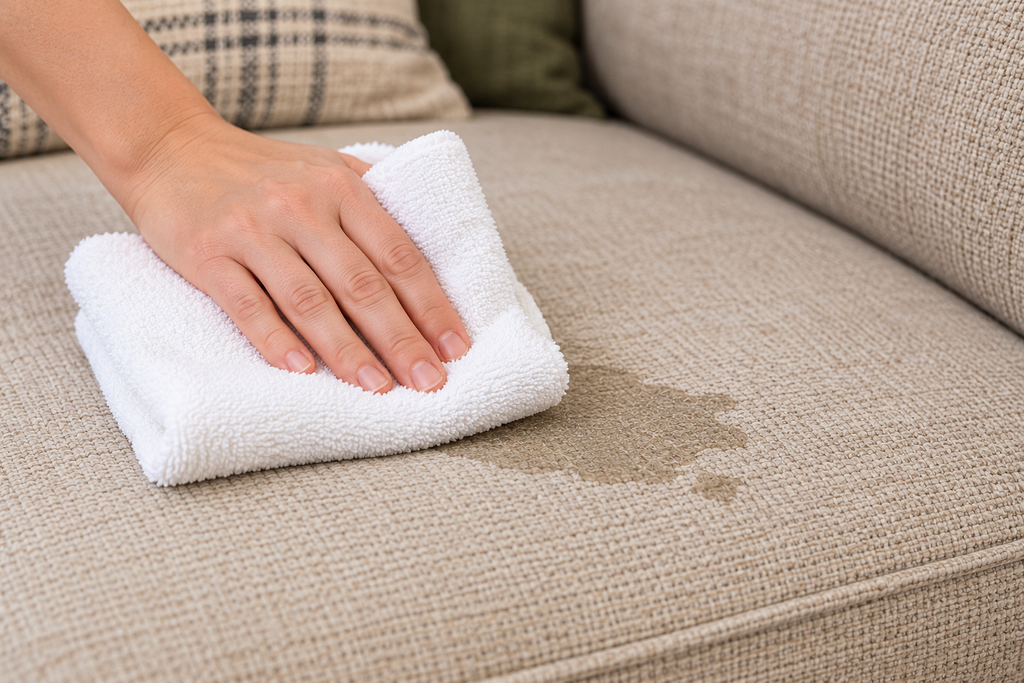
- For Liquid Spills: Place clean, dry white paper towels or absorbent cloths over the wet spot and press down firmly to draw liquid up into the towel.
- Do not rub or scrub in circles: Rubbing pushes liquid deeper into the cushion core and damages fabric fibers.
- For Wet-Dog Odor: If you need to know how to get wet dog smell out of a couch after your pet came in from the rain, absorb surface moisture with dry towels and direct fans at the sofa. Enzyme cleaners or soaps are usually unnecessary unless actual organic waste is present.
- Safety & Hygiene Note: Wear protective gloves when cleaning pet accidents, wash hands thoroughly afterward, and never combine different household cleaners unless product instructions explicitly permit it.
Step 2: Choose a Compatible Treatment Based on Your Care Code & Product Label
Do not assume you must apply soap before using an enzyme cleaner. Choose the appropriate treatment for your sofa fabric and the specific product’s directions:
- For Code W or WS Fabrics: After blotting, choose a product allowed by both the furniture maker and the product label. Mild upholstery-cleaning foam may be appropriate for surface dirt or visible residue. For urine-related odor, a fabric-compatible enzymatic cleaner may be more appropriate if its required application and drying directions can be followed without damaging the upholstery or wetting the cushion core. If the product requires deep saturation to reach the odor source, stop DIY treatment and seek professional upholstery advice.
- Mild Soap Foam Option (Surface Residue Only): If your sofa manufacturer permits a mild detergent foam, mix a small amount of neutral dish soap into warm water (e.g., 1/4 teaspoon per cup) and whisk until stiff foam forms. Dip a clean white cloth into only the dry foam on top and gently press onto the stain. Blot with a second cloth dampened with plain water to remove soap residue, then blot dry with a fresh towel. Do not treat soap foam as a substitute for a proper urine-odor treatment.
- Choose an enzyme pet cleaner labeled as safe for upholstery. When determining how to get dog urine smell out of a couch cushion, check the product label for specific application, contact time (dwell time), and removal directions. Apply only what the cover fabric needs—do not soak or saturate the cushion padding underneath.
- For Code S Fabrics: Do not use water or water-based enzyme cleaners. Blot up liquid with dry towels and prefer professional upholstery cleaning, especially for pet urine. Use a water-free spot cleaner yourself only if the furniture maker explicitly approves that product and procedure; follow all ventilation, ignition, and pet-access precautions.
- For Code X Fabrics: Do not apply liquid cleaners, foams, or sprays. Blot up all moisture with dry towels and contact a professional.
Pet Safety Rule: Keep pets away from treated areas until all cleaners have dried completely and any product re-entry requirements are met.
Safety Warning — Avoid Steam on Urine Stains:
Avoid using steam cleaners or hot water extraction on dog urine or vomit spots. Heat can set protein stains and make odors significantly harder to remove. Also, avoid ammonia-based cleaners, as ammonia’s scent can attract dogs back to re-mark the spot.
4. How to Get Dog Smell Out of Couch Cushions & Deep Padding
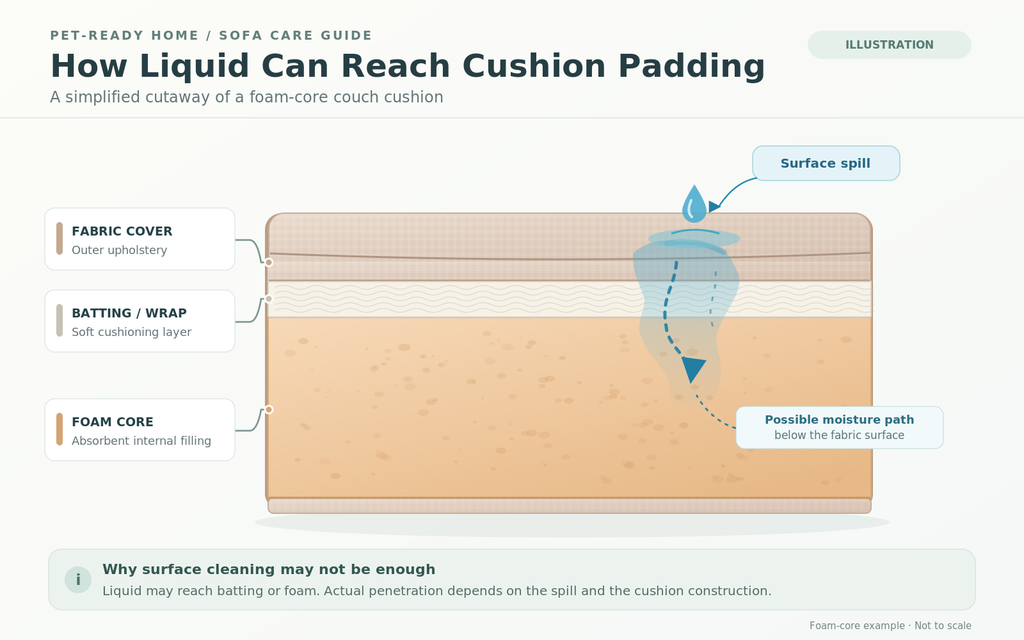
If you are struggling with how to get dog smell out of couch cushions after surface vacuuming and spot cleaning, the odor source may be trapped inside the internal cushion insert or padding.
High-Density Foam Cores
Foam cushions act like dense sponges. If liquid soaks past the outer fabric, pouring liquid cleaners onto the cushion may worsen the problem by leaving more moisture in the filling, which can lead to mold or structural breakdown.
- Safe Action: Press dry towels into the cushion to extract surface moisture, improve room airflow, and let it dry thoroughly. Never submerge fixed foam in water or pour liquids directly onto the cushion core.
Feather and Down Inserts
Feather-filled cushions need special handling:
- Check the Insert Tag: Do not wash or submerge a sofa cushion insert unless its care label specifically allows it. While some removable feather inserts are machine-washable, many sofa feather inserts must remain dry.
- Air Out Outdoors: If the cushion cover is removable, take the feather insert out and place it flat in a dry, well-ventilated, shaded outdoor area for several hours on a clear day. Fresh air helps lift musty scents naturally. Avoid direct harsh sunlight unless permitted by the manufacturer.
- Plump and Vacuum: Vacuum the feather ticking gently with an upholstery attachment, then fluff the cushion by hand to restore loft.
When to Call a Professional or Replace an Insert
- Professional Upholstery Cleaning: Best for Code S fabrics, delicate antique textiles, widespread surface soiling, or persistent odor.
- Evaluating Cushion Replacement: If urine has soaked deep into internal foam or wooden frame parts, cleaning and drying it adequately can be difficult. A qualified upholstery technician can assess whether the affected insert can be treated or should be replaced; heavy core contamination often makes replacing the cushion insert the most reliable option for a clean, hygienic home.
5. How to Keep Dog Smell from Coming Back
A few simple habits can help reduce recurring dog odor between deep cleans:
- Rotate and Flip Cushions Weekly: If your sofa design allows, flip and swap seat cushions weekly to distribute wear and improve air circulation.
- Vacuum Regularly: Vacuum upholstery every 1 to 2 weeks to remove pet dander before it grinds into fabric fibers.
- Use Protective Washable Covers: Shield your sofa with fitted, washable sofa covers or pet blankets.
- Remove Pet Hair Easily: Keep embedded hair under control using effective pet hair removal tools.
- Wash Pet Bedding: Encourage your dog to use their own bed and keep it fresh by regularly washing dog bedding.
- Whole-Home Freshness: For broader household odor management, check out our guide on household dog odor tips.
Quick Reference: Sofa Care & Fabric Code Matrix
| Upholstery / Material | Permitted Cleaners | Recommended Cleaning Method | Important Cautions |
|---|---|---|---|
| Code W (Water-Safe) | Mild dish soap foam, water-based upholstery shampoo, or compatible enzyme spot spray. | Use an approved foam or compatible cleaner according to its label; avoid over-wetting, remove residues as instructed, and allow the upholstery to dry fully. | Do not soak internal cushion foam; does not mean machine-washable. |
| Code S (Solvent Only) | Manufacturer-approved, water-free upholstery cleaner. | Spot-clean gently with solvent on a cloth in a well-ventilated room; keep ignition sources and pets away until dry. Professional cleaning preferred. | No water. Water can cause permanent rings, shrinking, or color bleeding. Professional cleaning recommended. |
| Code WS / W-S | Water-based soap foam OR mild water-free upholstery solvent. | Test first; use water foam for water spots, solvent for oil spots per product directions. | Avoid saturating cushion padding; ensure good ventilation and full drying before pet re-entry. |
| Code X (Vacuum Only) | Dry vacuuming with soft brush attachment; light soft-bristle brushing. | Vacuum regularly to remove hair and dander before it embeds. | No liquids, foams, or solvents. Any liquid can cause staining, shrinking, or pile damage. |
| Finished Leather | pH-balanced leather cleaner, manufacturer-recommended leather conditioner, soft damp cloth. | Wipe gently with a soft cloth; buff dry; apply leather conditioner periodically as recommended. | Avoid bleach, ammonia, harsh dish soaps, or soaking with water. |
| Feather & Down Inserts | Dry vacuuming, outdoor fresh air in a dry shaded area. | Air out on a dry day; vacuum ticking gently; plump by hand. | Do not wash or submerge unless insert care tag explicitly permits it. |
Frequently Asked Questions
How do I get dog smell out of a couch without washing it?
Vacuum the entire couch thoroughly using a soft upholstery attachment and crevice tool. Open windows and use fans to circulate fresh air across the fabric. If your upholstery manufacturer permits baking soda and your vacuum is rated to handle fine powders, you may try an optional light layer on completely dry fabric, letting it sit for 15 to 30 minutes before vacuuming it up completely (keep pets out of the room while powder sits).
Is baking soda or vinegar better for dog odor on a couch?
Baking soda can help absorb light, dry surface odors when used safely. White vinegar mixed with water is sometimes used on certain water-safe fabrics, but vinegar acidity can damage leather finishes and delicate textiles, and its scent does not substitute for removing actual organic stains. Neither baking soda nor vinegar will eliminate deep urine soaked into cushion foam. Always follow your sofa maker’s guidance.
Can I steam clean my couch to get rid of dog smell?
Steam cleaning is not automatically permitted just because a couch has a W or WS care code. Always check your furniture maker’s specific instructions before using heat or steam equipment. Avoid steam on urine or vomit spots, as high heat can set residues and make stains or odors much harder to remove.
What should I do if the dog smell returns after cleaning?
If odor returns once the sofa dries, check for residual soap or hidden dampness first. If the fabric is dry and clean, the scent source may have soaked into the internal polyurethane foam or frame wood. In that case, air out removable cushion inserts, consult a professional upholstery cleaner, or consider replacing the affected cushion insert.
Sources & References
- Association for Contract Textiles (ACT), Cleaning Resources & Considerations (PDF; Appendix I, p. 9) — Upholstery care code definitions, pretesting protocols, and restrictions on wetting and steam.
- Dry Cleaning and Laundry Institute International (DLI), Cleanability Codes for Household Fabrics — Consumer-facing upholstery fabric cleanability codes W, S, WS, and X.
- American Kennel Club (AKC), How to Get Rid of Dog Pee Stains and Smells — Prompt blotting protocols, pet urine treatment, and professional escalation.
- Humane World for Animals, How to Remove Pet Stains and Odors Naturally — Pet accident cleanup, enzyme cleaner principles, and avoiding steam on urine stains.
- Institute of Inspection, Cleaning and Restoration Certification (IICRC), Consumer Floor and Furnishings Care Information, “Urine Odors–Upholstery” (PDF, p. 6) — Deep cushion contamination, drying limits, and core replacement considerations.
- US Environmental Protection Agency (EPA), Read the Label First: Protect Your Pets — Household cleaner label precautions, ventilation, storage, and pet exclusion rules.